
How We Shape a Display That Works in Real Homes
Display planning starts with the room, not the items. We look at where the comics and collectables will sit, how much natural light the space gets, and how much dust or humidity it deals with through the year. A flat in Observatory, a townhouse in Pretoria, or a family home in Durban all need different choices. The aim is simple: keep the collection easy to enjoy, safe to handle, and not crowded.
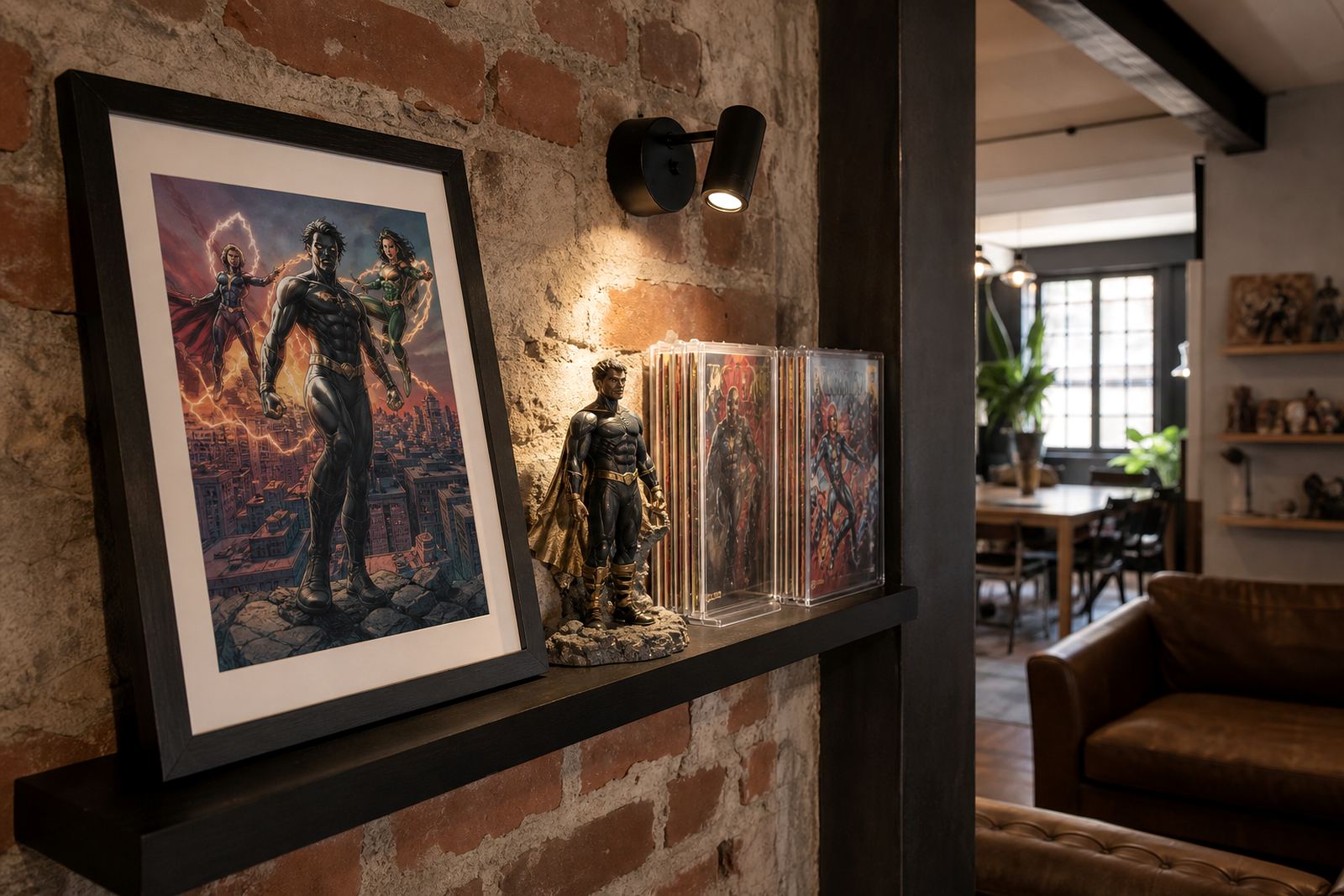
We help you balance visual impact with practical storage. That means deciding which pieces should be upright, which should be flat, and which should stay in sleeves or cases. We also look at viewing height, shelf depth, and whether the room can take closed cabinets or open shelving. If the display is for a lounge, study, pasage or entertainment room, we plan it so it fits the way the home is used, not just how it looks on a phone screen.
- Room-by-room placement advice
- Spacing plans for comics, figures and framed items
- Light and dust exposure checks
- Advice for homes with children or pets
A good display should look sharp and still make sense when you need to clean, move or add to it.
What the Display Planning Service Includes
Our display planning covers the full mix of comics and collectables, from reading copies to graded books, boxed figures, art prints and small memorabilia. We help you build a layout that keeps the strongest items visible while protecting the more delicate ones. If a shelf needs to do double duty, we will show you how to divide it so the collection does not look busy or uneven.
The service is also useful if you are starting with a few pieces and growing over time. We can suggest a layout that leaves room for new arrivals, wishlist items and seasonal swaps. That way you are not forced to redo the whole setup every few months. For some clients, a simple three shelf arrangement is enough.
- Display layout for shelves, cabinets and wall units
- Advice on bookends, risers, stands and support inserts
- Handling notes for graded items and loose issues
- Suggestions for mixing comics with collectables without clutter
Sizing, Spacing and Protection Details
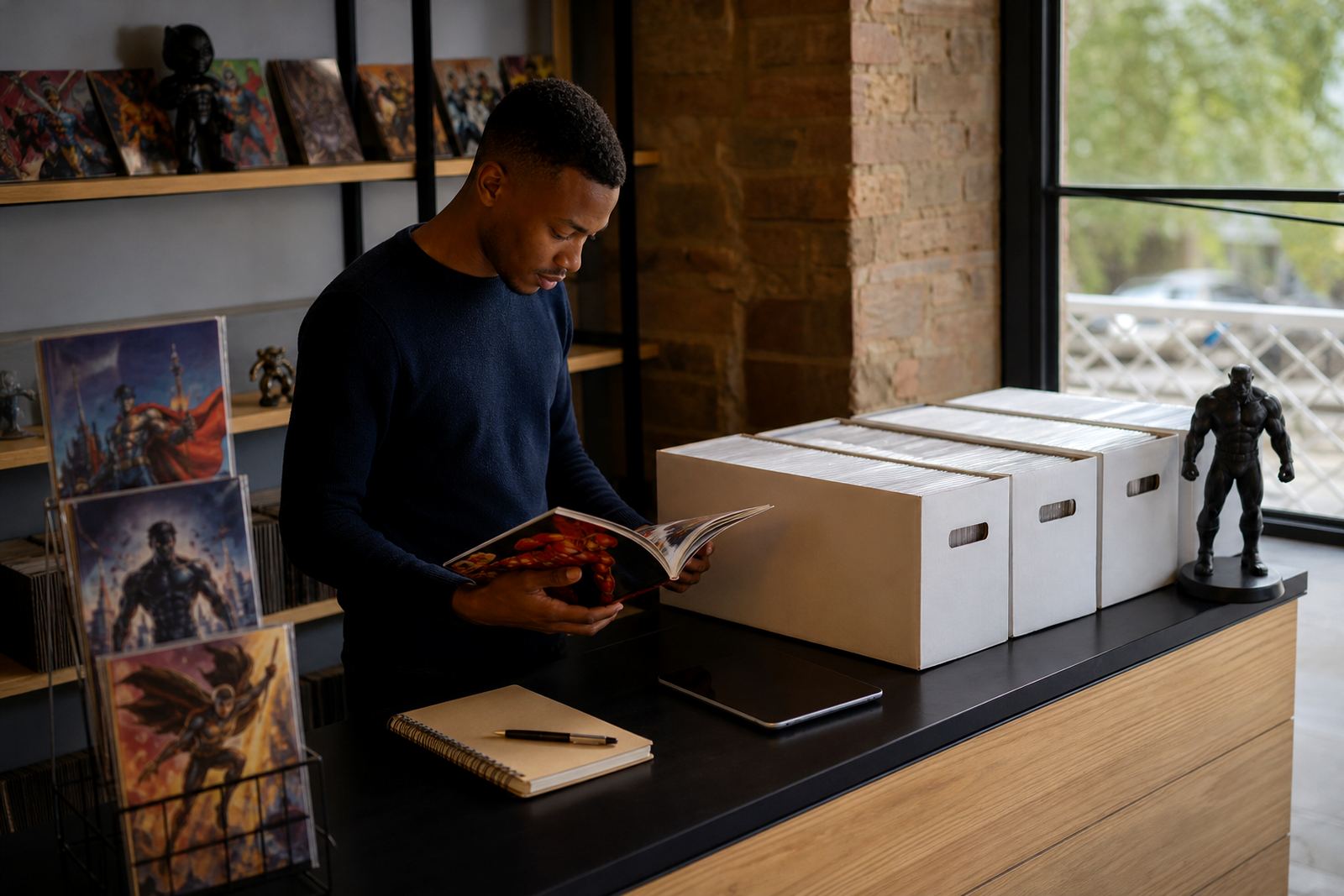
Good display planning depends on the correct measurements. Standard comic boards and bags need enough room to stand straight without bending at the top edge. Longbox and shortbox storage should not be treated as display furniture, because opening and closing them every day can lead to wear. For open shelves, we check the usable depth and height, then allow enough clearance for cases, stands and airflow. If a shelf is too tight, it usually causes scratches, leaning, or bowed backing boards.
We also advise on protection against sunlight, dust and moisture. In Cape Town and other coastal areas, humidity can affect paper and packaging if items are kept against a cold external wall or in a damp corner. In hotter inland homes, direct afternoon sun can fade covers and plastics. We often recommend UV-reducing film, closed-front cabinets, acid-free sleeves, silica gel where needed, and spacing that allows easy dusting. Small choices like these make a proper difference over time, especially if you want the collection to stay presentable for years.
- Recommended shelf depth: 20 to 35 cm for most mixed displays
- Allow at least 1 to 2 cm clearance above bagged comics
- Keep 5 to 10 cm from windows where direct sun hits
- Use closed storage for humidity sensitive areas
Our Step by Step Planning Process
We keep the process straightforward. First, you share what you own, what you want to show, and where the display will go. Then we look at the practical side, including wall space, cabinet sizes, and how often you want to change items. If the collection is growing, we plan for that too. The aim is to avoid a setup that looks good for a week and becomes annoying later.
After that, we map a layout and talk through priorities. Some clients want their favourites front and centre. Others prefer a theme by hero, era, colour or format. We can also help with rotation planning, so you can swap items without disturbing the whole arrangement. Once the layout is agreed, we give you clear notes you can use while setting up at home or while arranging a delivery to the room where the collection will live.
- Step 1: Share your collection size and room details
- Step 2: Review the practical space and display goals
- Step 3: Plan layout, spacing and protection needs
- Step 4: Set maintenance and rotation intervals
Pricing Approach and Turnaround
Display planning is priced according to the size of the collection and the level of detail needed. A small setup with a few shelves and a modest comic run takes less time than a full room plan with cabinets, grading cases and rotating collectables. We quote after we understand the scope, so you only pay for the planning work you actually need. If you want a basic layout with simple storage notes, that is treated differently from a more detailed room-by-room arrangement.
Turnaround depends on the amount of information provided and whether the collection is already sorted. If items are grouped neatly, the plan can be done more quickly. If the collection needs organising first, we allow for that in the schedule. Most of the time, clients want a practical answer rather than a fancy presentation, so we focus on clear guidance and workable steps. If you need a quick update before guests arrive or before a room change, we can prioritise the essentials first and refine the rest later.
- Pricing is based on collection size, room count and detail level
- Basic plans suit smaller shelves and simple displays
- Detailed plans suit large or mixed-format collections
- Turnaround depends on sorting, photos and space details supplied
Keeping the Display in Good Condition
Once the display is in place, maintenance matters. Dust builds up quickly in open shelving, especially near busy roads, windows or kitchens. We suggest a regular cleaning interval based on the room and the materials used. For open displays, monthly dusting is usually sensible. For closed cabinets, a longer interval may be fine, though the glass and seals still need checking. In coastal homes, it is worth checking for moisture on backs, corners and lower shelves after heavy rain or damp weeks.
We also give advice on changing the display seasonally or when new pieces arrive. That might mean rotating comics so the same issue is not under light all year, or reworking a shelf when a new graded book joins the set. If a stand starts to lean or a board warps, we point out what to replace before damage spreads. Good maintenance is not about fussing over every item. It is about keeping the setup tidy, stable and easy to enjoy without extra stress.
- Open shelves: dust and inspect every 3 to 4 weeks
- Closed cabinets: check seals, corners and glass every 6 to 8 weeks
- Rotate light sensitive items every 2 to 3 months
- Review the layout when the collection grows or the room changes
Shelf notes
| Service area | Observatory, Cape Town and courier-supported clients across South Africa |
|---|---|
| Core use | Advice on combining comics and collectables into practical home displays |
| Suitable for | Loose issues, boxed items, graded comics, figures and framed pieces |
| Typical measurements | Shelf depth 20 to 35 cm, with 1 to 2 cm clearance above bagged comics |
| Turnaround | Depends on collection size, room details and sorting status |
| Pricing model | Quoted according to scope, layout complexity and support needed |
Name the title, issue or character you are hunting for, and our comic shop crew will help you track it down.
Contact form