

How to choose the right comics for your shelf
A good collection starts with what you want it to do. Some people buy comics to read and enjoy, others look for key issues in stronger condition, and some build a display around one hero, a team or a particular art style. The best approach is the one that fits your budget, space and reading habits.
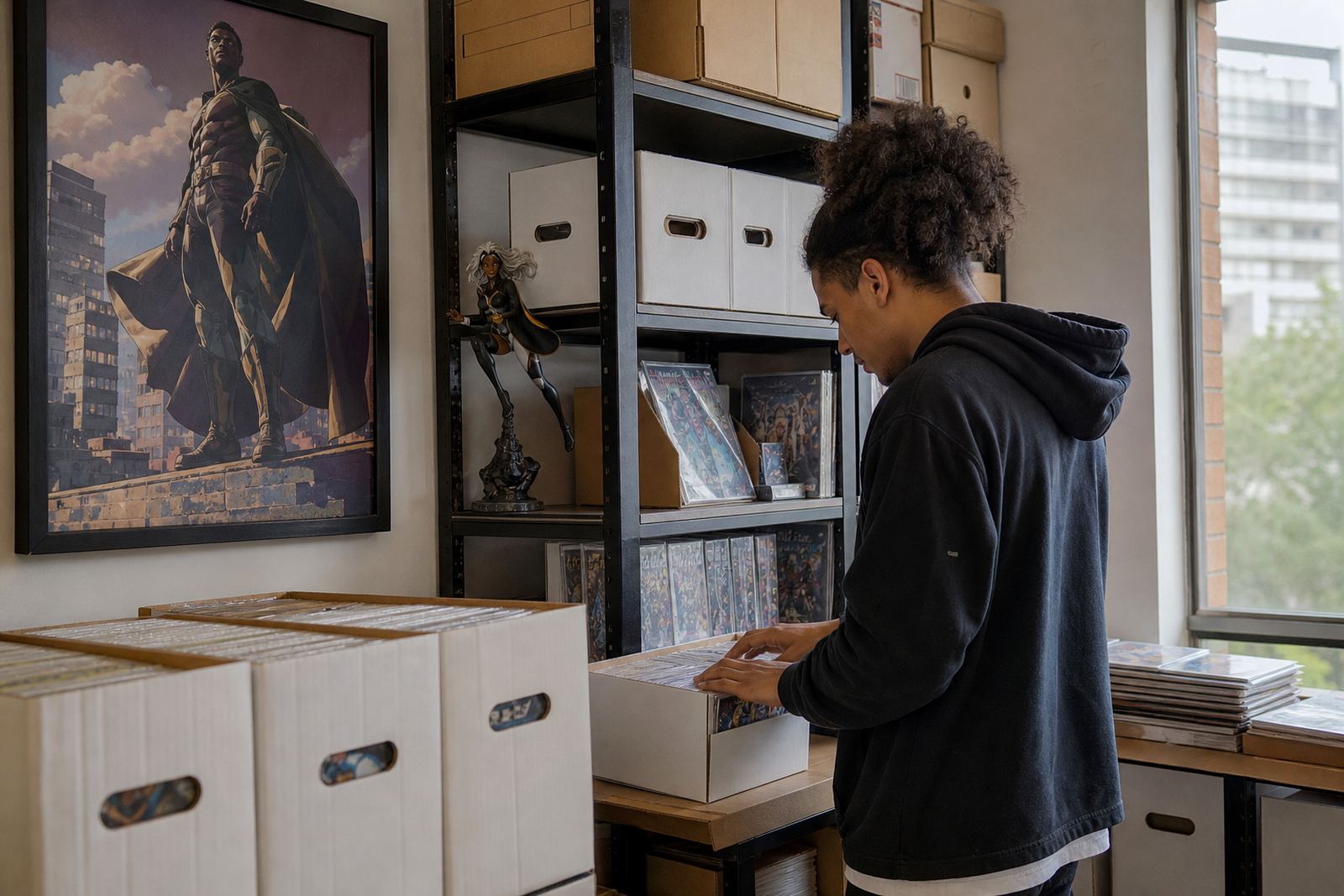
When comparing comics, look at cover condition, spine wear, page colour and whether the book has been stored flat, upright or loose. In Cape Town, humidity near the coast can affect paper faster than people expect, so a comic that looked fine in a box last summer may need a closer check now. A careful look before you buy can save money later.
- Choose reading copies for regular handling and lighter budgets
- Choose higher grade copies for display or long term collecting
- Check for water marks, rolled corners and faded covers
- Match new purchases with the heroes and stories you already follow
Good collecting starts with clear checks, proper storage and the right comic for the right reader.
Grading basics without the confusion
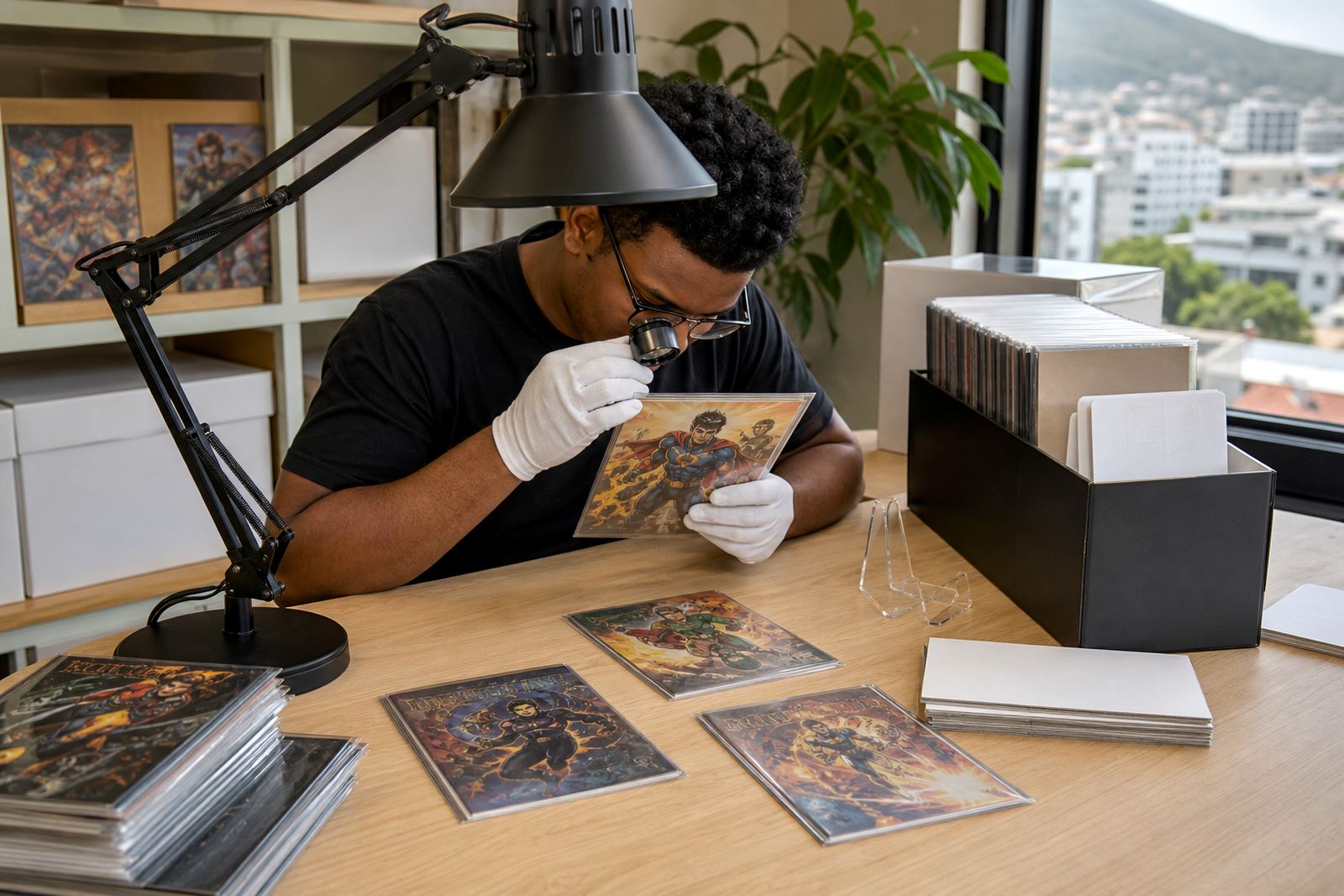
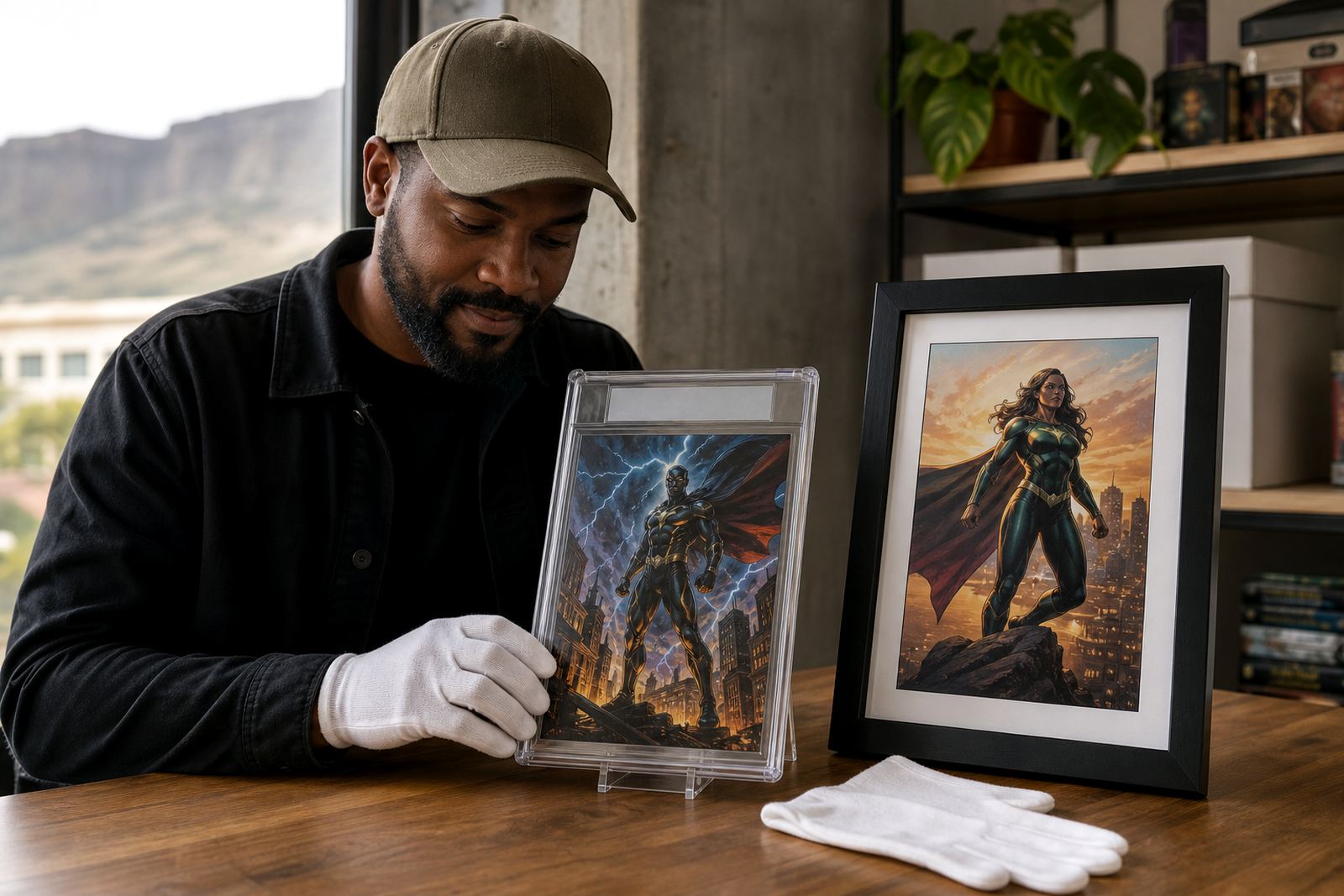
Grading is simply a way of describing condition. It helps collectors compare books fairly, especially when buying online or trading with other fans. You do not need a lot of terms to get started. Focus on the areas that matter most: cover gloss, spine stress, corner sharpness, creases, tears and page quality.
Our grading guidance is useful if you are unsure whether a comic is worth keeping raw, sending for formal grading, or just storing as part of a working collection. A pre-submission check can also flag small issues before a book goes off for grading, which is useful when you want to avoid unnecessary costs and delays.
- Ask whether the book has pressing or cleaning value first
- Look for colour breaks, staple rust and interior marks
- Keep notes on condition so you can compare copies later
- Use grading for value decisions, not to overcomplicate every purchase
Storage that protects paper in South African conditions
Good storage is about controlling the basics. Avoid leaving books near windows, geysers, kitchens or damp exterior walls. If you live closer to the coast, it is worth checking your collection more often for moisture or warping.
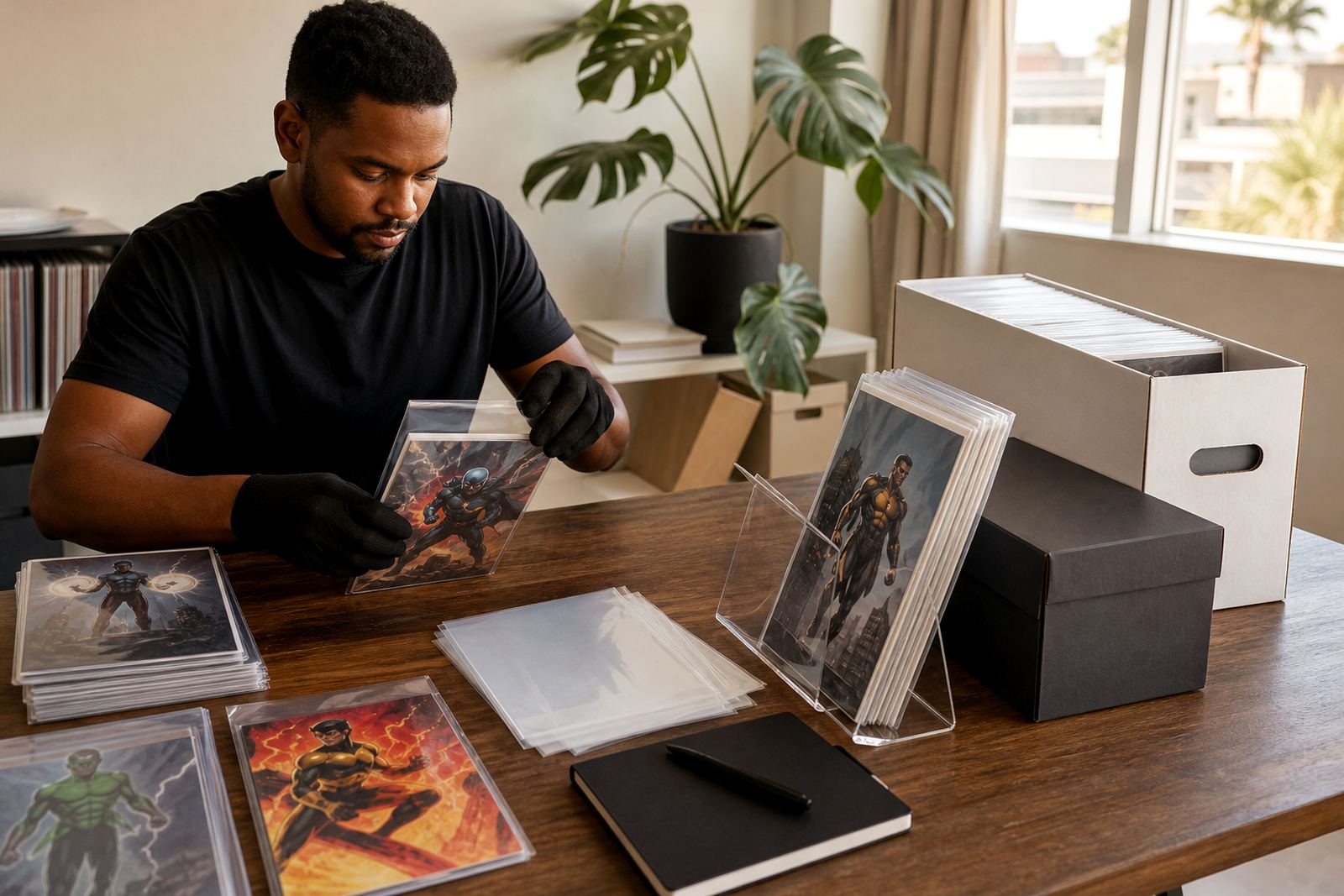
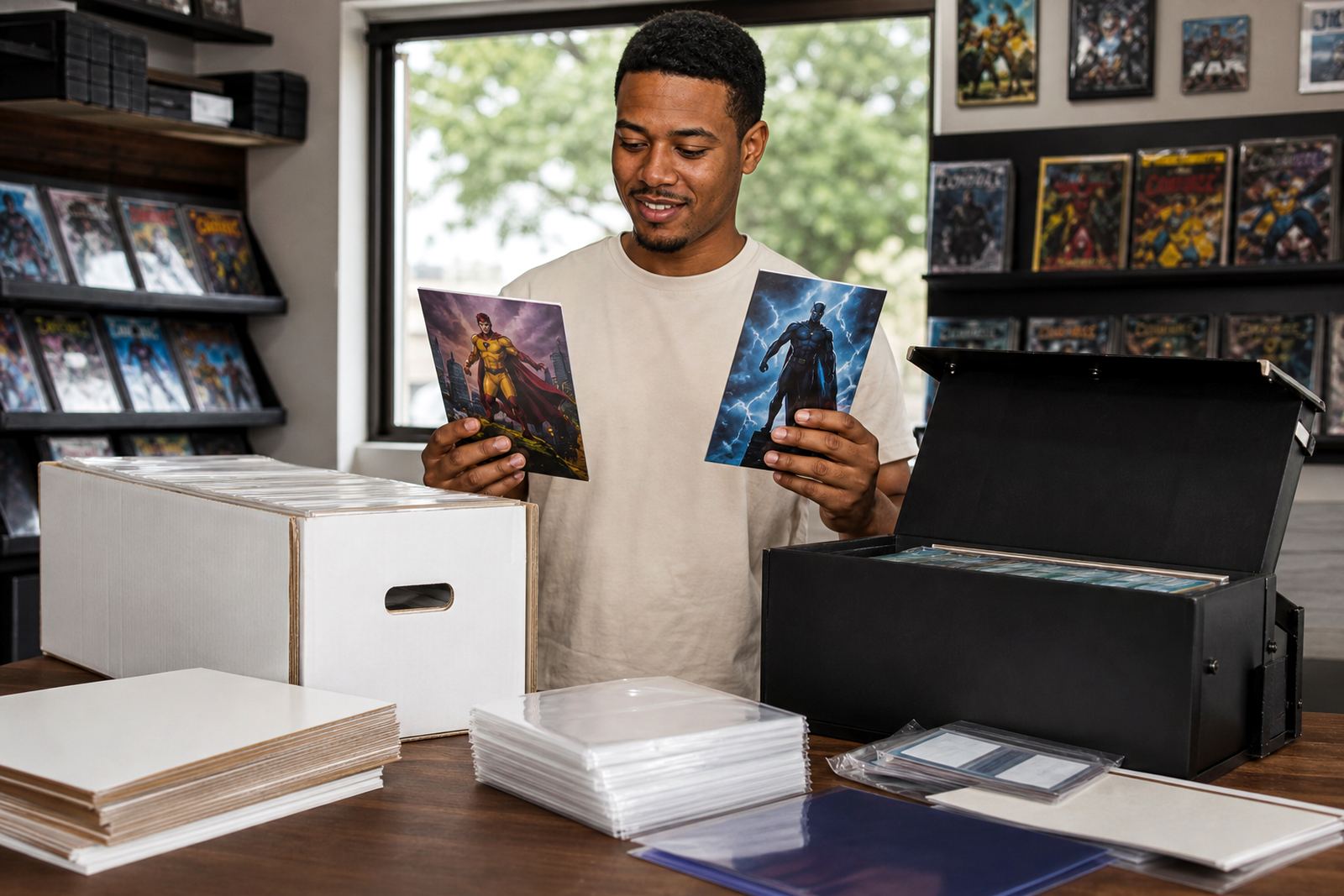
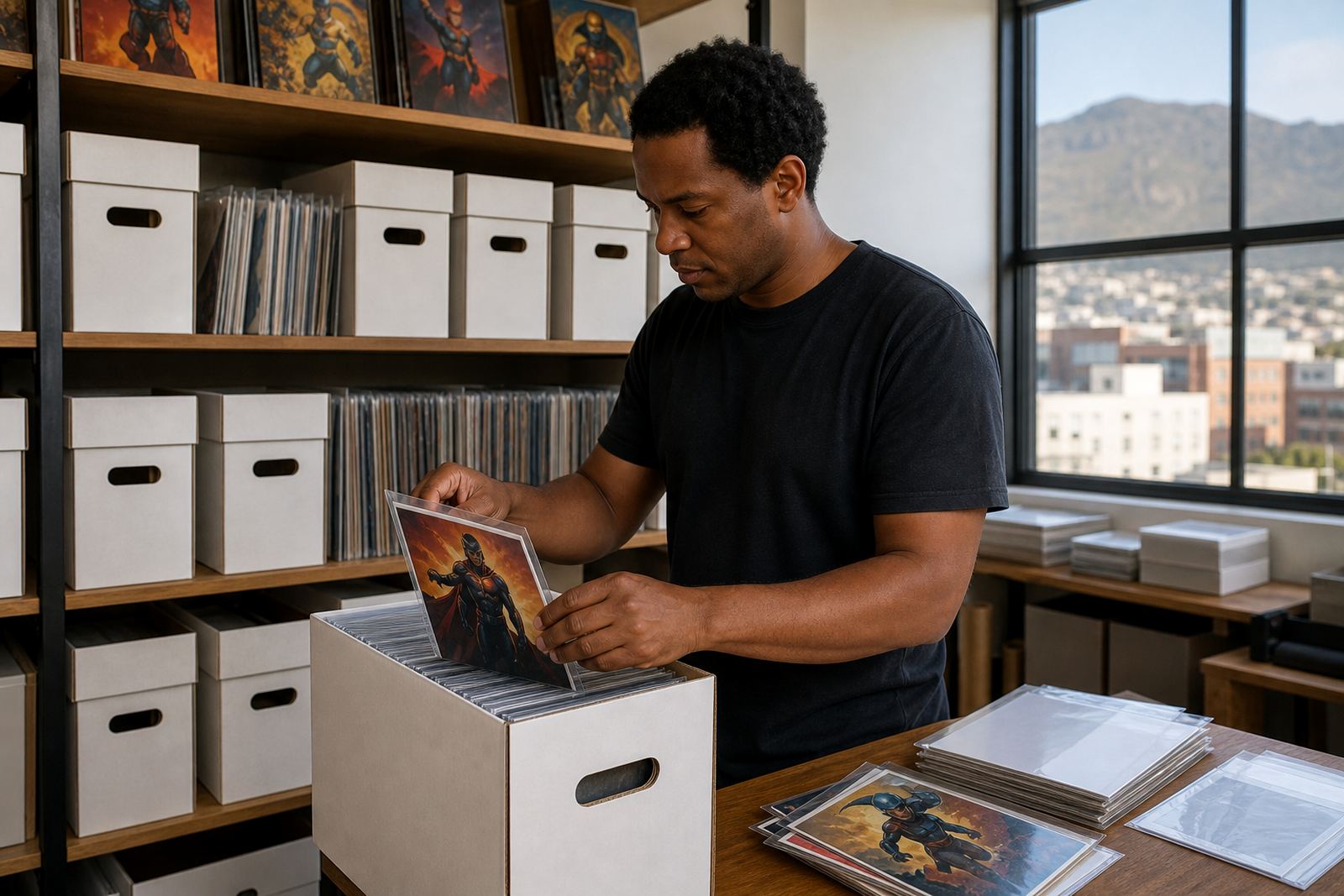
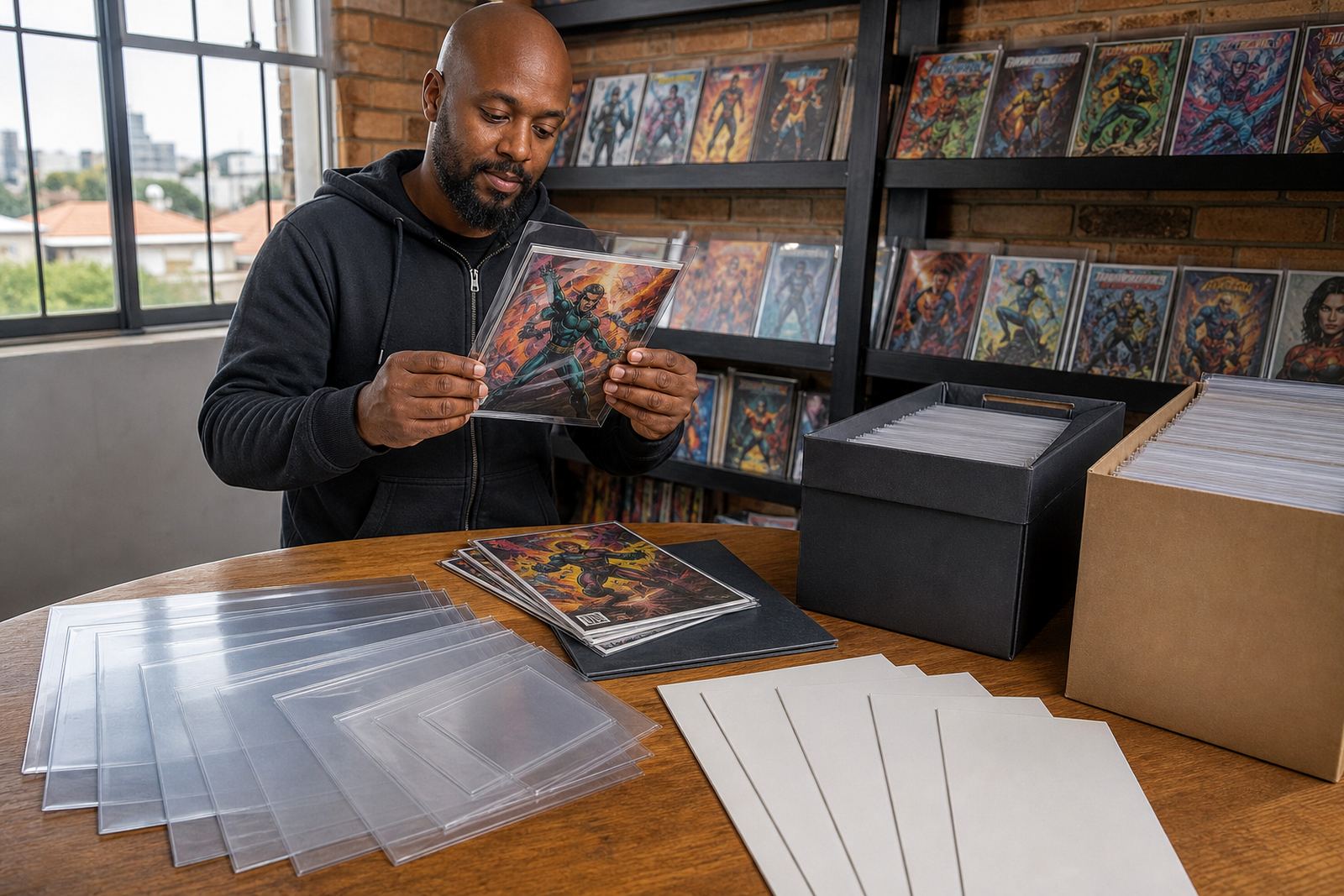
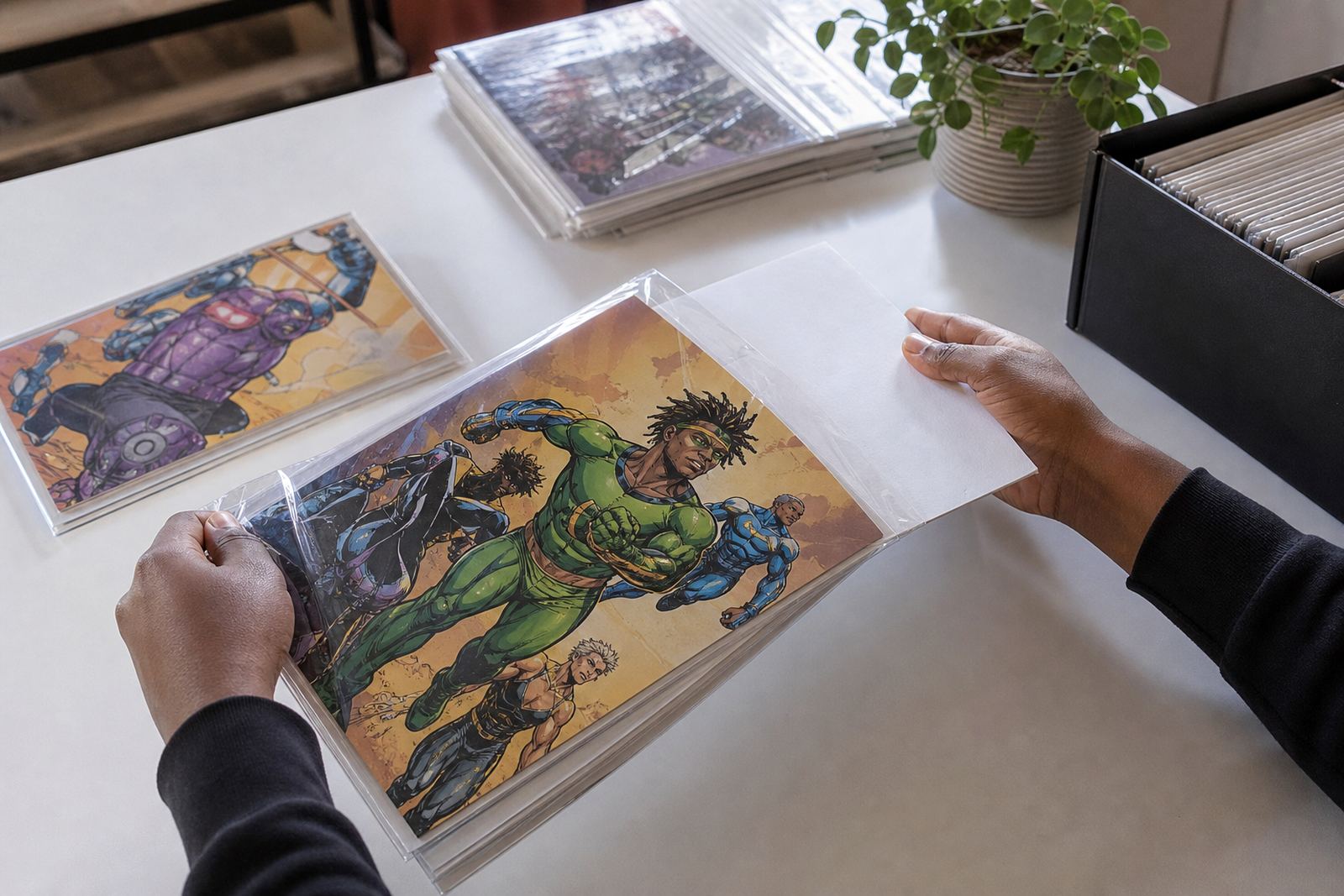
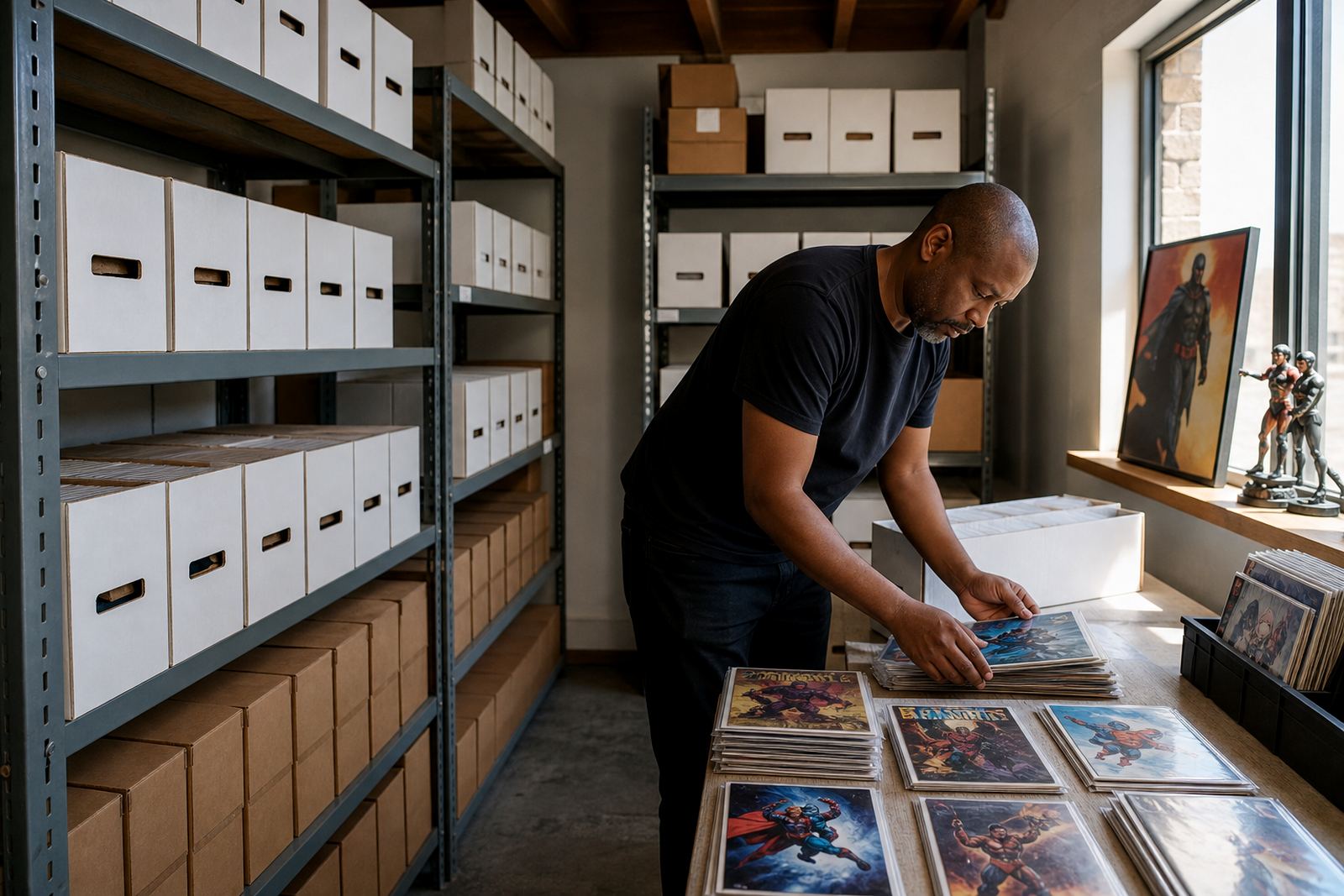
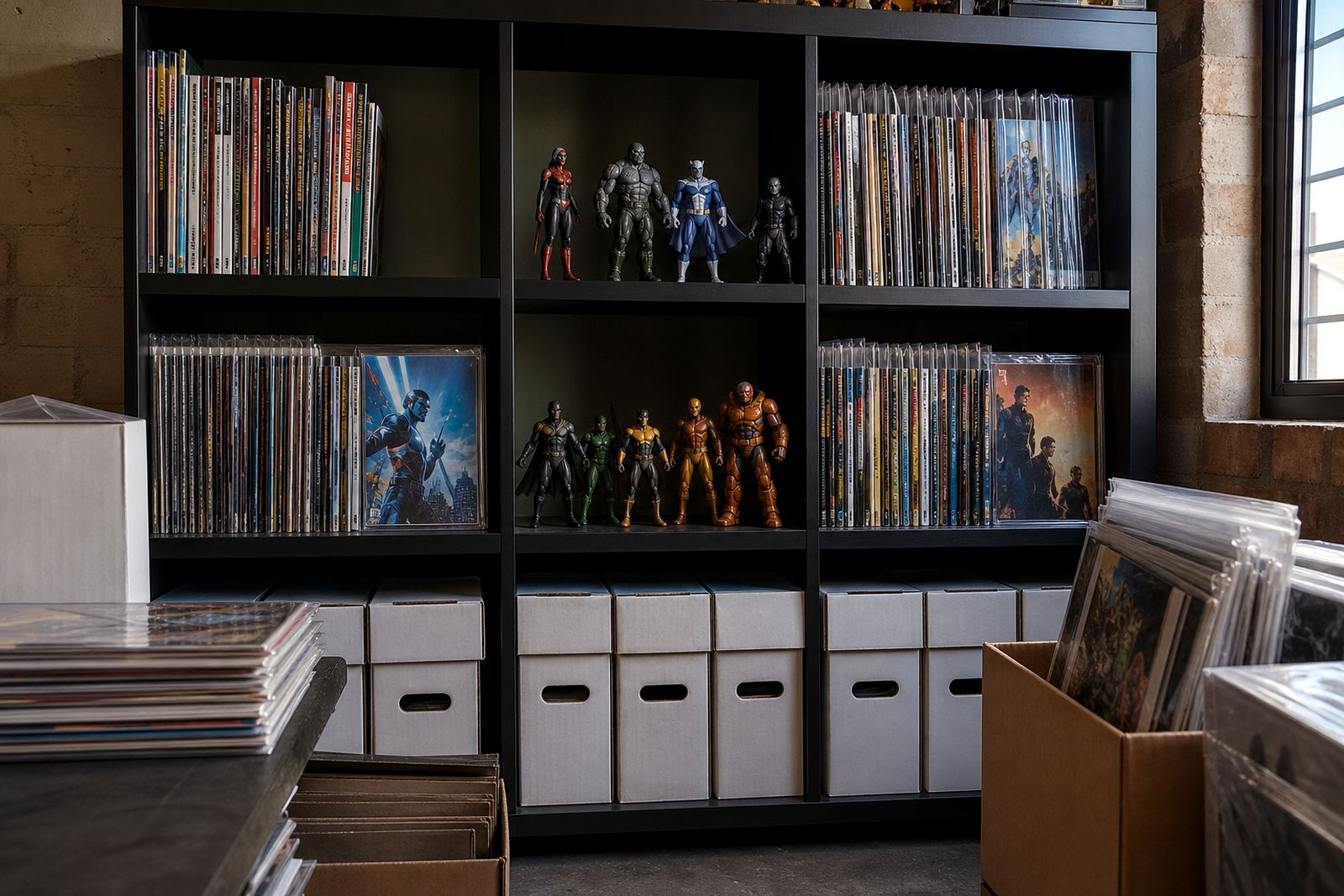
Use protective sleeves and backing where needed, and store books upright in boxes or short rows so they do not bend. Do not overpack boxes, because pressure can flatten spines and damage corners over time. For larger collections, storage planning helps you decide what should be bagged, boxed or displayed. It also makes it easier to find specific issues when you need them.
- Keep comics out of direct sun to reduce fading
- Use clean, dry storage boxes or well supported shelves
- Separate reading copies from higher grade copies
- Check storage space after heavy rain or a damp spell
Display ideas for small rooms and big collections
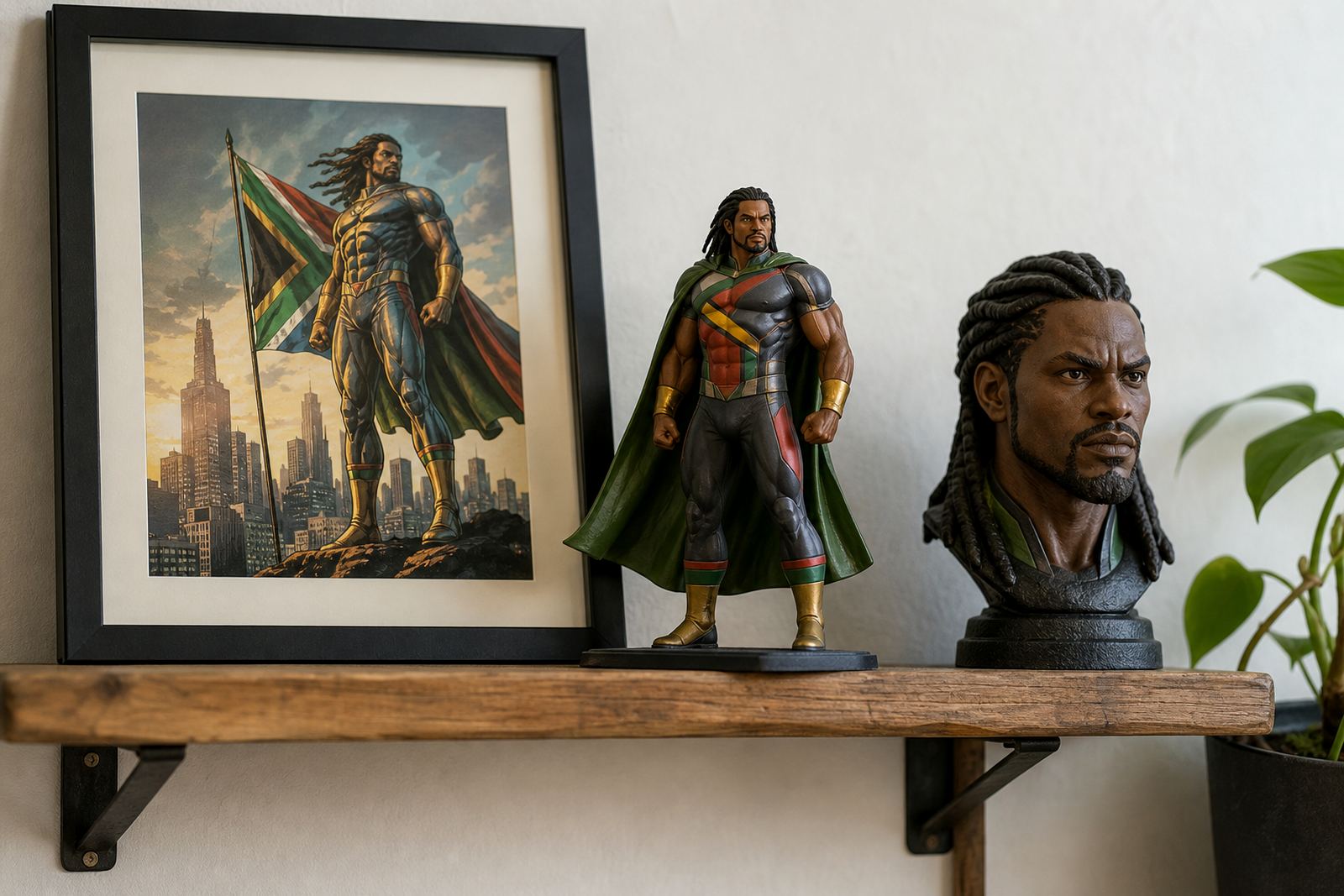
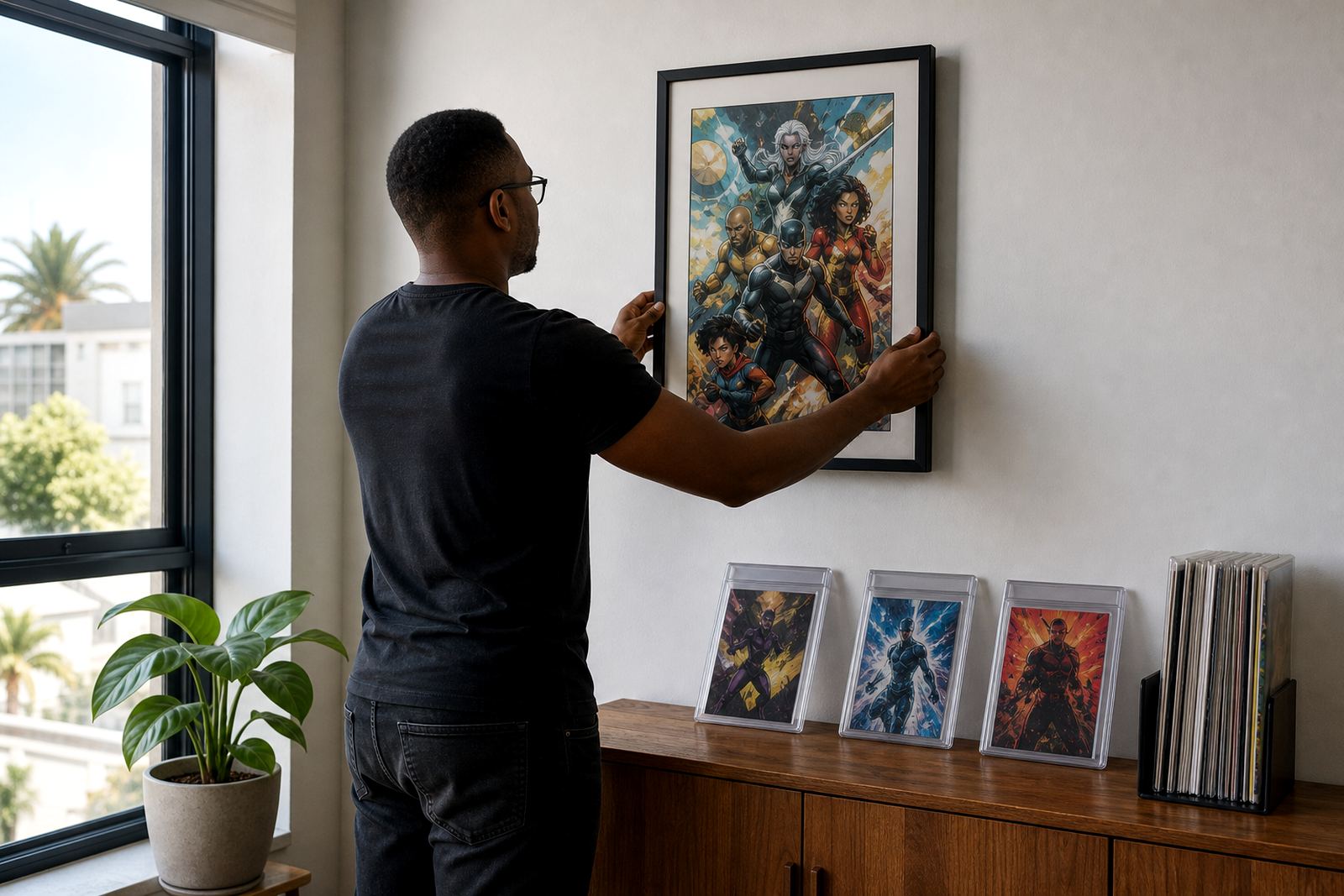
Displaying comics is about showing what matters most without risking damage. A few selected issues on a shelf can look better than trying to show everything at once. If you are using a small flat, a study corner or a family lounge, plan the display so the books are easy to reach but not in direct heat or bright sun.
Display planning is also useful if you rotate your favourites. That way, the same comic is not exposed to light for months on end.
- Rotate displayed books every few weeks or months
- Keep display shelves level so books do not lean
- Use the front covers of key issues for visual impact
- Store the rest safely nearby for easy swaps
Buying gifts, building wishlists and curating a set
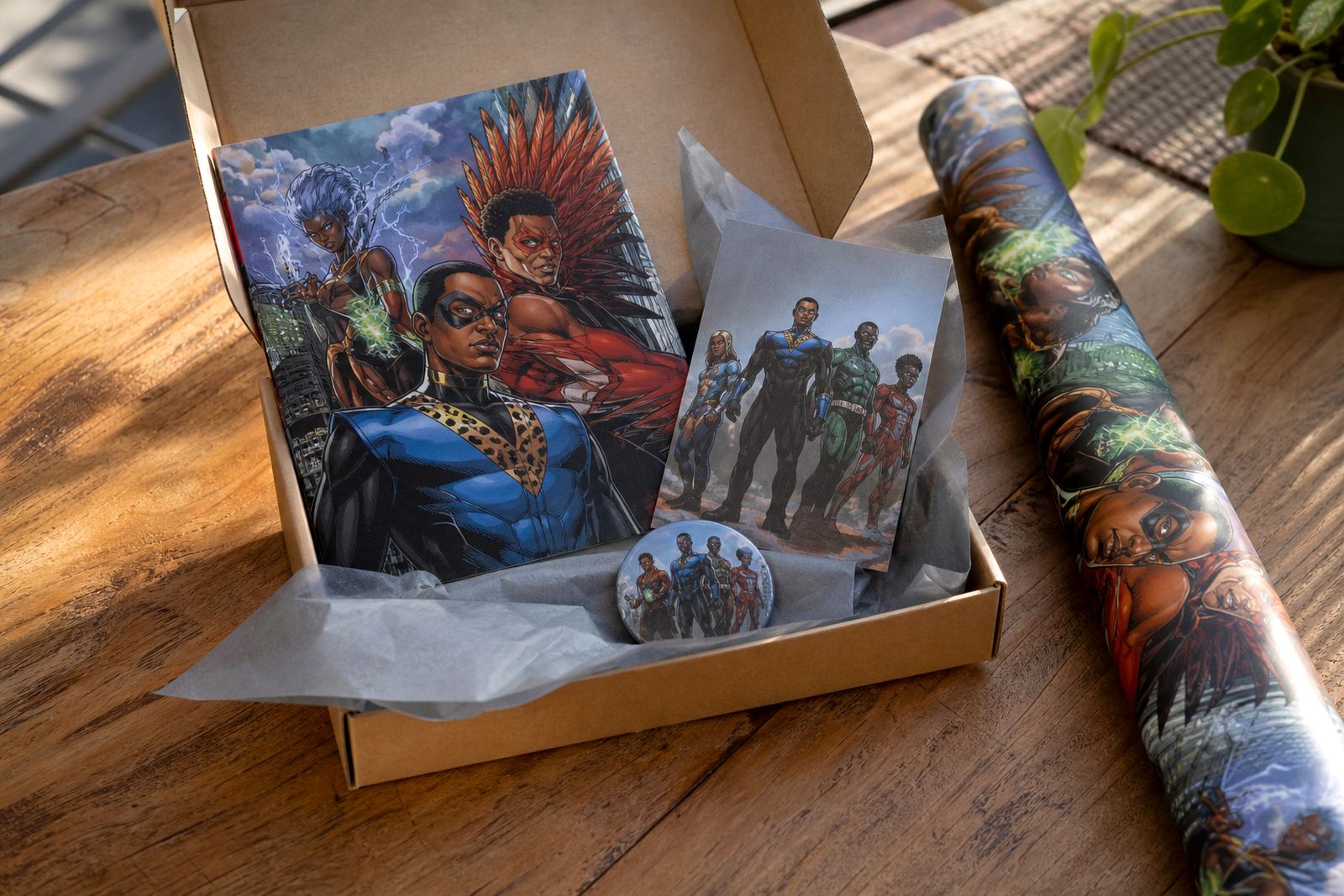
If you are buying for someone else, a little guidance goes a long way. Gift selection help is useful when you know the person likes local heroes, but you are not sure which issue, format or character will suit them. A thoughtful pick should fit the reader, not just the price tag.
Wishlist sourcing and subscription curation are helpful for collectors who want a steady flow of new books without missing out on titles they care about. It also helps when you are trying to build a themed set over time rather than buying random issues. A clear wish list makes it easier to track gaps and avoid duplicates.
- Ask what the reader already owns before choosing a gift
- Pick themes based on heroes, teams or art style
- Use a wishlist to track missing issues and variants
- Keep subscriptions focused so the collection stays manageable
Safe shipping prep for courier orders across South Africa
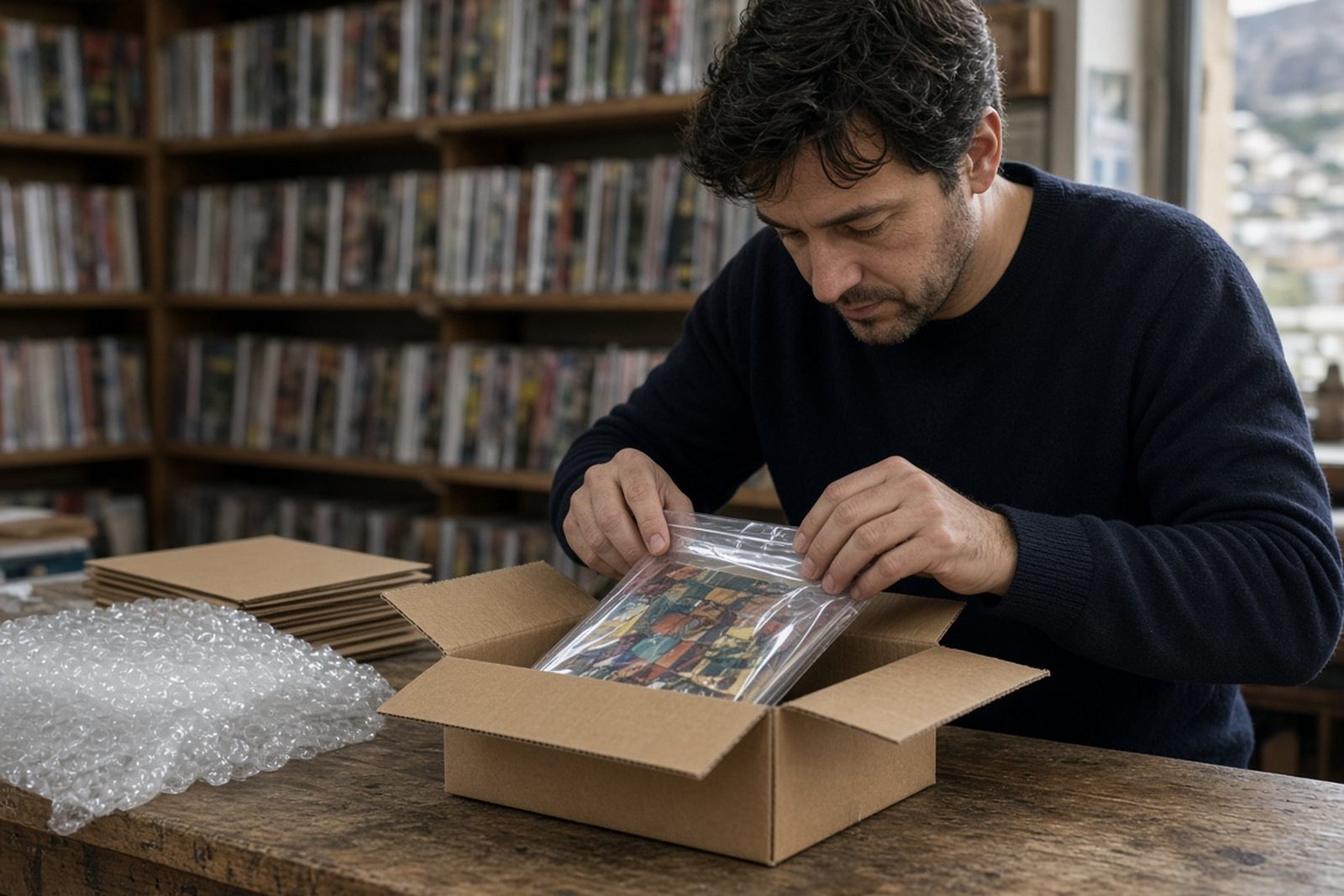
When comics are being sent from Observatory to other parts of South Africa, the packing needs to hold up in transit. Safe shipping prep means protecting corners, keeping books flat and using outer packaging that can handle sorting, stacking and delivery handling. That matters whether the parcel is going to Cape Town, Stellenbosch, Bellville, Durban, Pretoria, Johannesburg or Gqeberha.
Collector consultations can help you decide how to pack mixed orders that include books, graded items and collectables. If you are sending a gift or a prized piece, it is worth planning the packaging carefully so the item arrives in the condition you expected. Good prep also helps when you are moving a collection between home, storage and an event. It saves time and reduces avoidable damage.
- Use protective layers between comics and hard items
- Choose a box size that stops movement inside the parcel
- Mark fragile items clearly for handling
- Keep proof of what was packed before collection or courier handover
Name the title, issue or character you are hunting for, and our comic shop crew will help you track it down.
Contact form