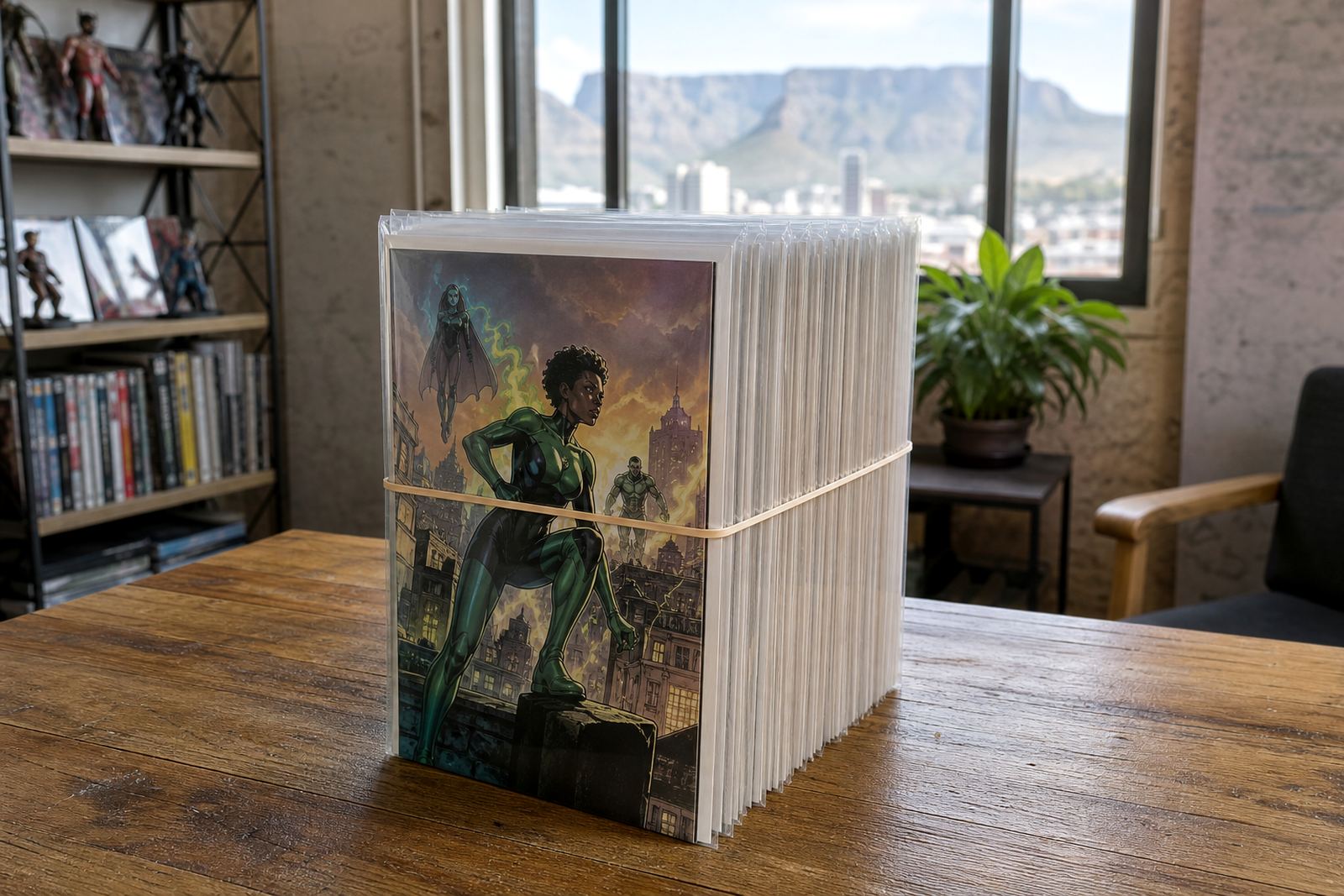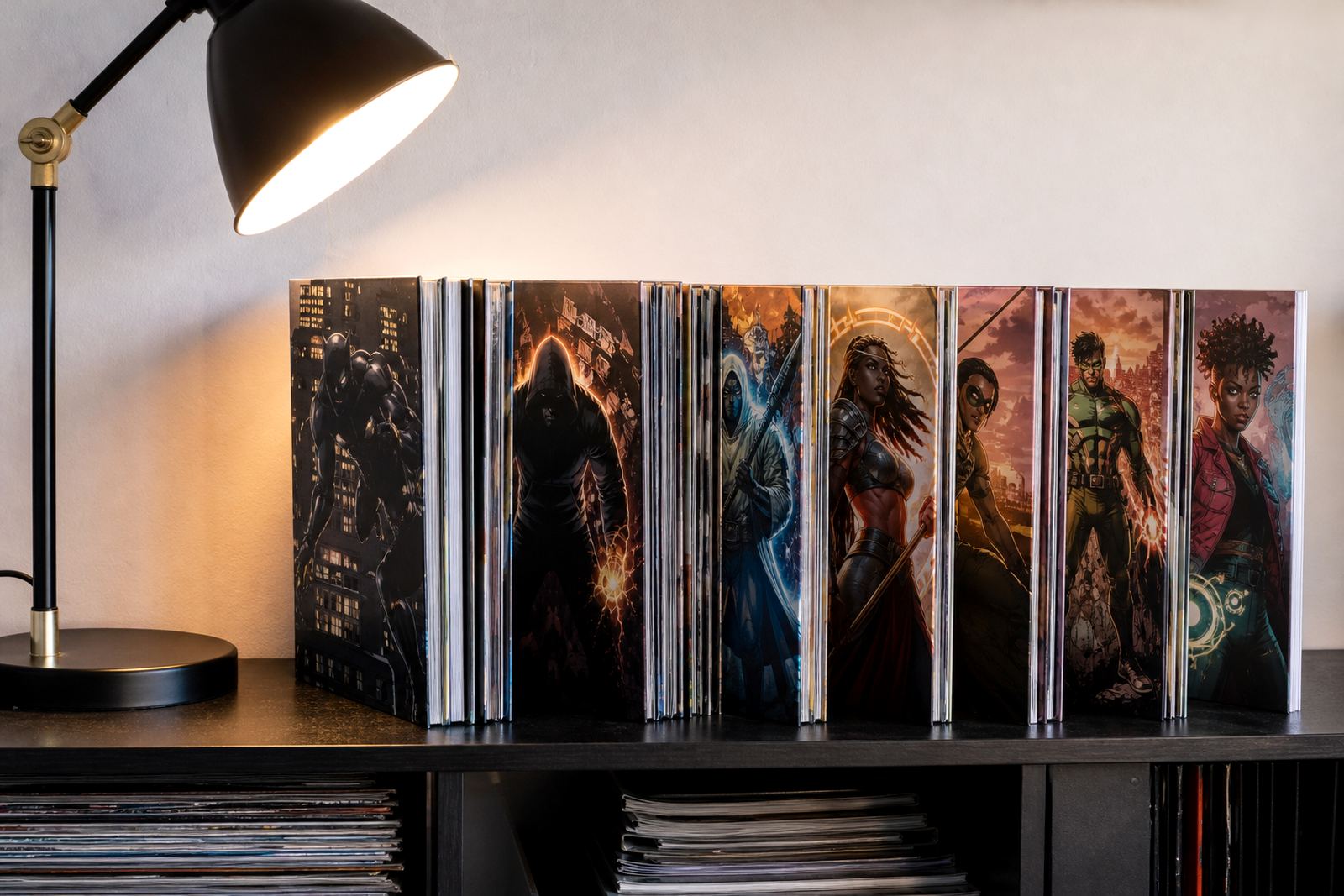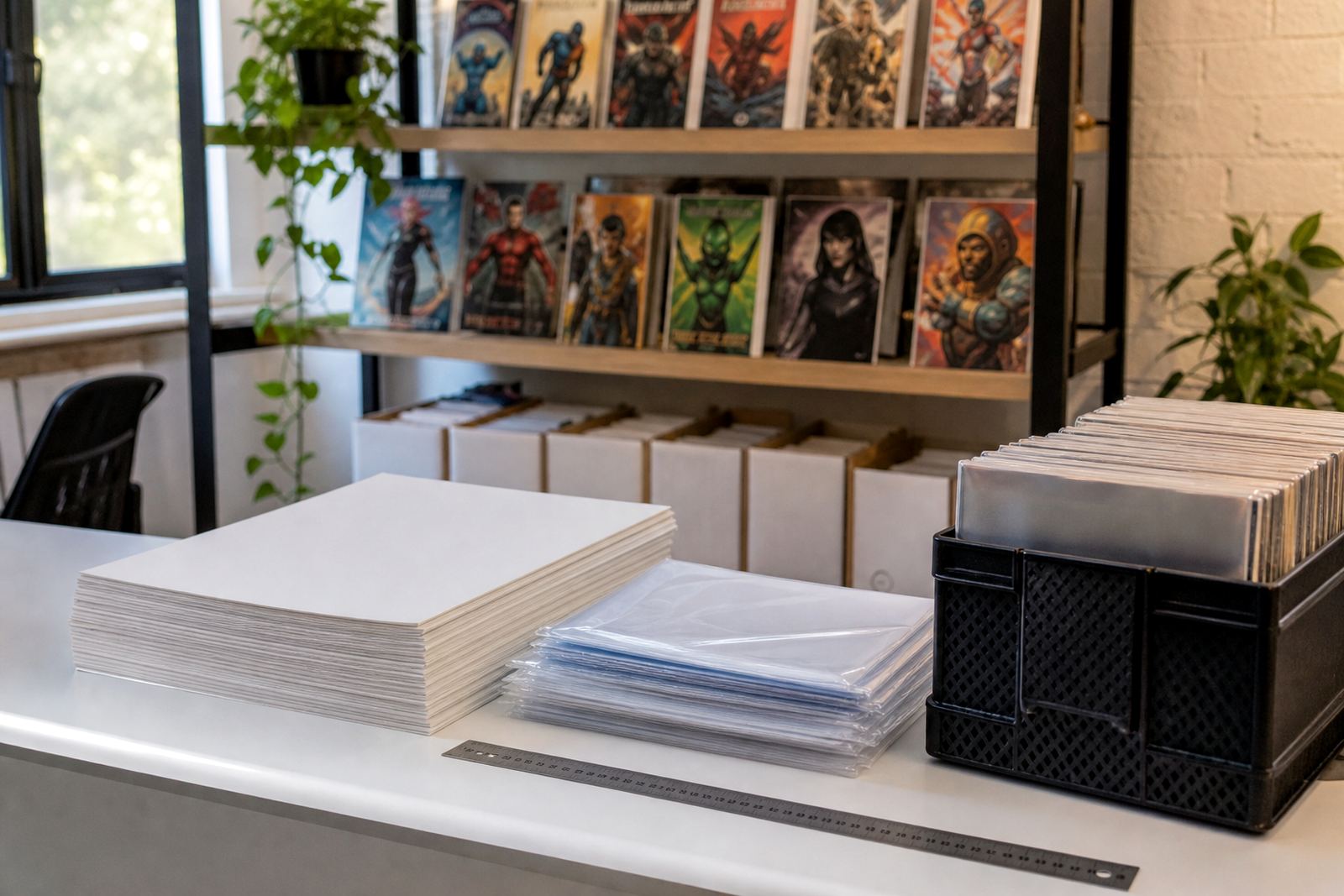


What these display stands are used for
Display stands are small support pieces made to hold comics, cards, figures, graded slabs and other light collectables at a better angle for viewing. They are most useful when you want a clean shelf line, a neat cabinet arrangement or a table setup that does not topple every time someone walks past. For collectors in Cape Town, Johannesburg or Durban, they are a practical way to keep items off damp wood, dusty surfaces and crowded shelves.
These stands are not for heavy objects or loose storage. Their job is presentation and short term holding, so you can see the cover art, label or figure detail without stacking items on top of each other. If you collect across different series or keep items by character, theme or era, stands make it easier to organise them in a way that actually stays tidy.
A good stand keeps the item visible without making the shelf feel crowded.
Size options and common formats for shelves
The right size depends on what you want to show and how much shelf depth you have. Most display stands for comics and small collectables are compact, light and easy to reposition. You can use one stand on a narrow shelf or place several together in a cabinet for a fuller display. For larger books or heavier slabs, a wider base is safer, especially in homes with pets or uneven floors.
- Small stands for single comic issues, trading cards and mini figures
- Medium stands for graded slabs, hard cases and thicker books
- Wide-base stands for heavier collectables or higher-traffic shelves
- Clear or neutral finishes for a low-visual look
- Angled formats for better cover viewing on lower shelves
When choosing sizes, measure the shelf depth first and leave a little space at the back so items do not sit too tight against the wall. In humid coastal areas a bit of breathing room helps reduce moisture build-up behind the display. If you are planning a wall unit or glass cabinet, check the internal clearance before ordering so the stand does not crowd the door or shelf lip.
Where display stands suit best at home or on the road
These stands suit bedrooms, studies, lounge cabinets, shop counters and collector tables at fairs or community events. They are also useful for gift displays when you want one or two standout pieces to sit up front rather than lie flat. In Observatory flats or smaller apartments, they help you keep a few favourite issues visible without taking over the whole room.
For travelling collectors and event organisers, light stands are handy because they pack flat or stack into a storage tub. If you are setting up at a pop-up in Cape Town or a collector meet in Pretoria, they can help create a neat presentation within a small footprint. That makes them useful for both personal collections and short term show tables where you need order and quick pack-down.
- Home shelves and glass cabinets
- Retail counters and display tables
- Collector fairs and swap meets
- Gift displays and wishlist items
- Photo setups for collection records
Display and storage at home
They are simple placement accessories, so you set them on a level surface and position the item in the cradle, slot or support lip. If the shelf is slightly uneven, use a flat mat or reposition the stand so the item sits securely without leaning.
For glass cabinets or higher shelves, check that the stand does not make the item sit too close to the front edge where it could be knocked. On wooden shelving, wipe away dust before placing the stand so it does not slide. If you are using them near windows, remember that direct sun can fade covers and prints over time, especially in bright Cape Town light. A spot with softer light is usually better for long term display.
Some collectors prefer to place small felt pads or a thin non-slip layer underneath, depending on the shelf finish. That helps on smooth laminate and painted surfaces. If you move the stand often for cleaning or stock rotation, keep the placement simple so you can lift and reset it without damaging the item or the shelf surface.
Display and storage at home
Care is straightforward. Dust the stands with a soft cloth and avoid harsh cleaners that can cloud clear plastic or mark painted finishes. If the stand holds graded items or sealed collectables, keep the contact points clean so grit does not scratch the case or wrapper. A dry cloth is usually enough for weekly maintenance, though a lightly damp cloth can be used on tougher marks if you dry it properly afterwards.
In coastal humidity, inspect the display area now and then for moisture or salt residue on nearby surfaces. That does not mean the stand itself is faulty, just that the shelf environment needs a wipe down. If the stand starts to wobble, check for bent supports, worn feet or a warped shelf surface.
- Keep away from direct heat and sunlight where possible
- Do not overload with items heavier than the stand is meant for
- Wipe dust from both the stand and the shelf regularly
- Store flat in a box or sleeve when not in use
- Check for scratches if you use them in public setups
Before you buy
Before you order, check the size of the comic, slab or collectable you want to display. A standard comic issue, a thick hardcover and a graded case all need different support. Also check whether you want the item upright, slightly angled or held low for a more subtle shelf look. If you are building a full collection display, it helps to think about the shelf space first and the items second, because that is where most mistakes happen.
It is also worth checking the finish and colour against the rest of the room. A clear stand usually blends into the background, while a darker stand can frame the item more strongly. If you are ordering for a gift or a collector consultation, consider how many pieces you want to show at once. One neat stand can work well for a favourite issue, while a row of matching stands looks better for a small themed run.
- Measure width, depth and height of the item
- Check shelf or cabinet depth before choosing a base
- Confirm whether the item is light, graded or boxed
- Decide if the display is permanent or temporary
- Think about the room conditions, especially heat and humidity
For collectors in South Africa, courier delivery is available to Cape Town, Johannesburg, Durban, Pretoria and Gqeberha, with local delivery support in areas such as Observatory, Stellenbosch and Bellville. If you are unsure which stand suits your collection, send an enquiry through the contact page and the team can help with a practical recommendation based on the items you already have.
Shelf notes
| Material | Lightweight display-grade plastic or similar rigid support material |
|---|---|
| Finish options | Clear, black, neutral or low-visibility styles |
| Typical use | Single comics, graded slabs, cards, mini figures and small collectables |
| Placement | Shelves, cabinets, counters, tables and photo setups |
| Care | Dry cloth cleaning, keep out of direct sun and excess moisture |
Name the title, issue or character you are hunting for, and our comic shop crew will help you track it down.
Contact form