

Start With One Clear Theme Per Shelf
The strongest displays usually begin with a simple rule: one shelf, one idea. That could be a team of original local heroes, a colour palette, a city inspired section, or a mix of comics and figures that all share the same mood. When everything on the shelf pulls in the same direction, the eye reads it quickly and the collection feels organised rather than crowded.
For South African collectors, this also helps when space is tight. Many homes in Observatory, Bellville and Stellenbosch have limited display room, so a focused theme makes a small unit look intentional. It also makes dusting and stock rotation easier, especially in coastal air where humidity can affect covers and clear cases over time.
- Choose a theme you can explain in one sentence
- Keep repeat colours to a minimum so the shelf stays calm
- Leave a little breathing room between items
A shelf should tell the story of the collection before you say a word.
Build The Shelf Around Focal Pieces
Every good shelf needs a focal point. That might be a graded comic in a protective case, a signed issue with extra care notes, or a larger collectable that anchors the whole grouping. Place the strongest piece slightly off centre so the shelf feels balanced without looking stiff. If all the items are the same height, raise one or two with stands or stacked backing boards inside safe holders.
A useful trick is to think in layers. Put the tallest item at the back, then arrange mid sized comics and smaller collectables in front. This keeps cover art visible and avoids the common problem of everything flattening into one line. If you are preparing a shelf for a lounge, study or reception area, make sure the focal piece is visible from the doorway, not hidden behind a row of similar items.
When grading matters, use the best condition books as your visual anchors. A cleaner copy at the centre gives the whole shelf a tidier feel and makes the rest of the group look more deliberate too.
Mix Comics And Collectables Without Clutter
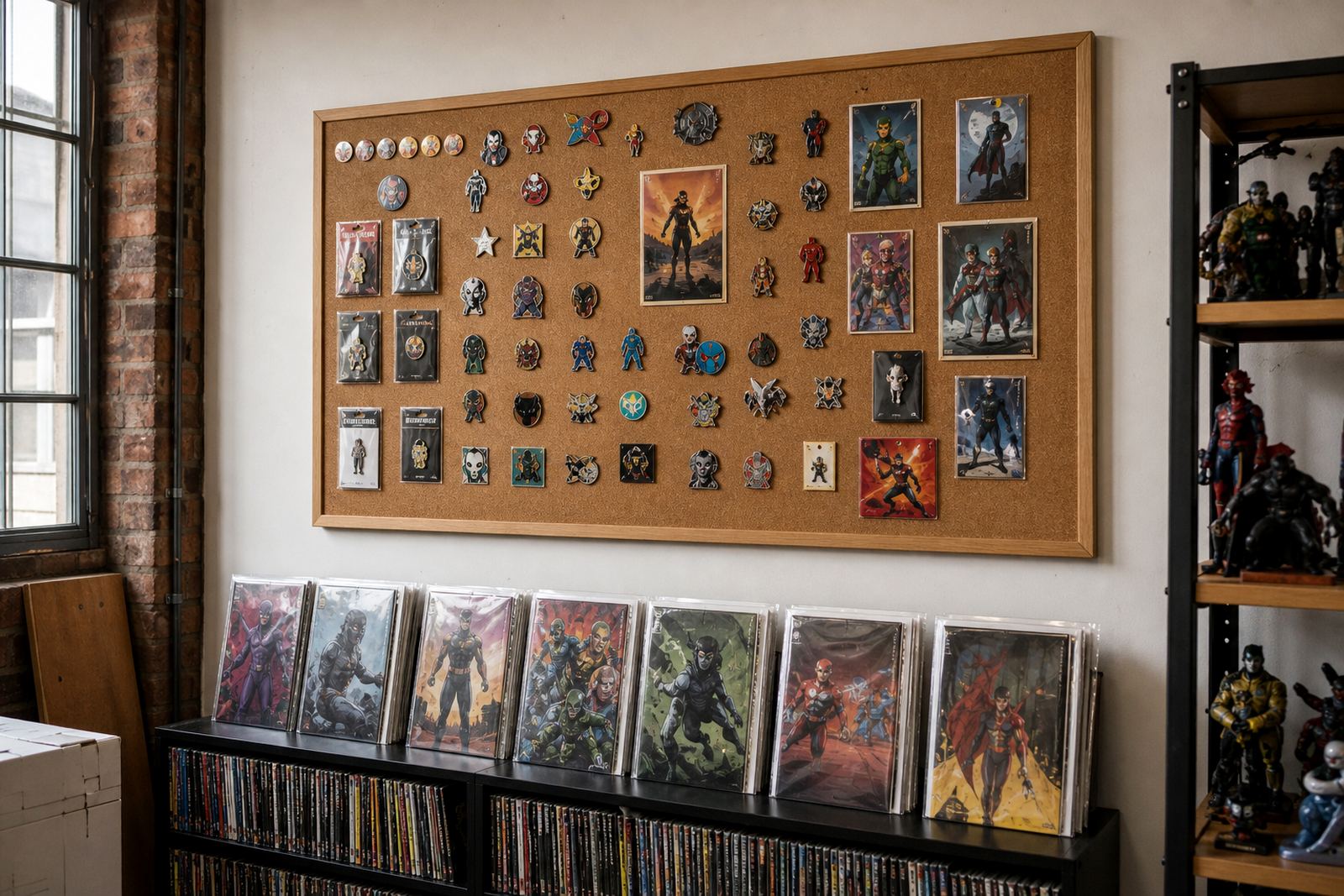
Themed shelves work best when comics and collectables support each other instead of competing for attention. A shelf can hold 6 to 10 items comfortably if each piece has enough space. If you squeeze in too much, the display starts to look busy and the details are lost. That is especially true with glossy covers, reflective cases and small figures that catch the light from different angles.
Try grouping items in threes. One comic, one related collectable, and one supporting piece such as a small prop, print, or storage stand often gives the cleanest result. Keep the colour story under control too. If the comic cover is bold, let the collectable stay neutral. If the figure is colourful, use a simpler book behind it so the shelf does not fight itself.
- Use odd numbers for a more natural visual rhythm
- Keep bright items spaced apart
- Mix vertical and horizontal placement to break up the line
- Do not overcrowd graded slabs with loose items resting on top
Use Storage And Protection As Part Of The Display
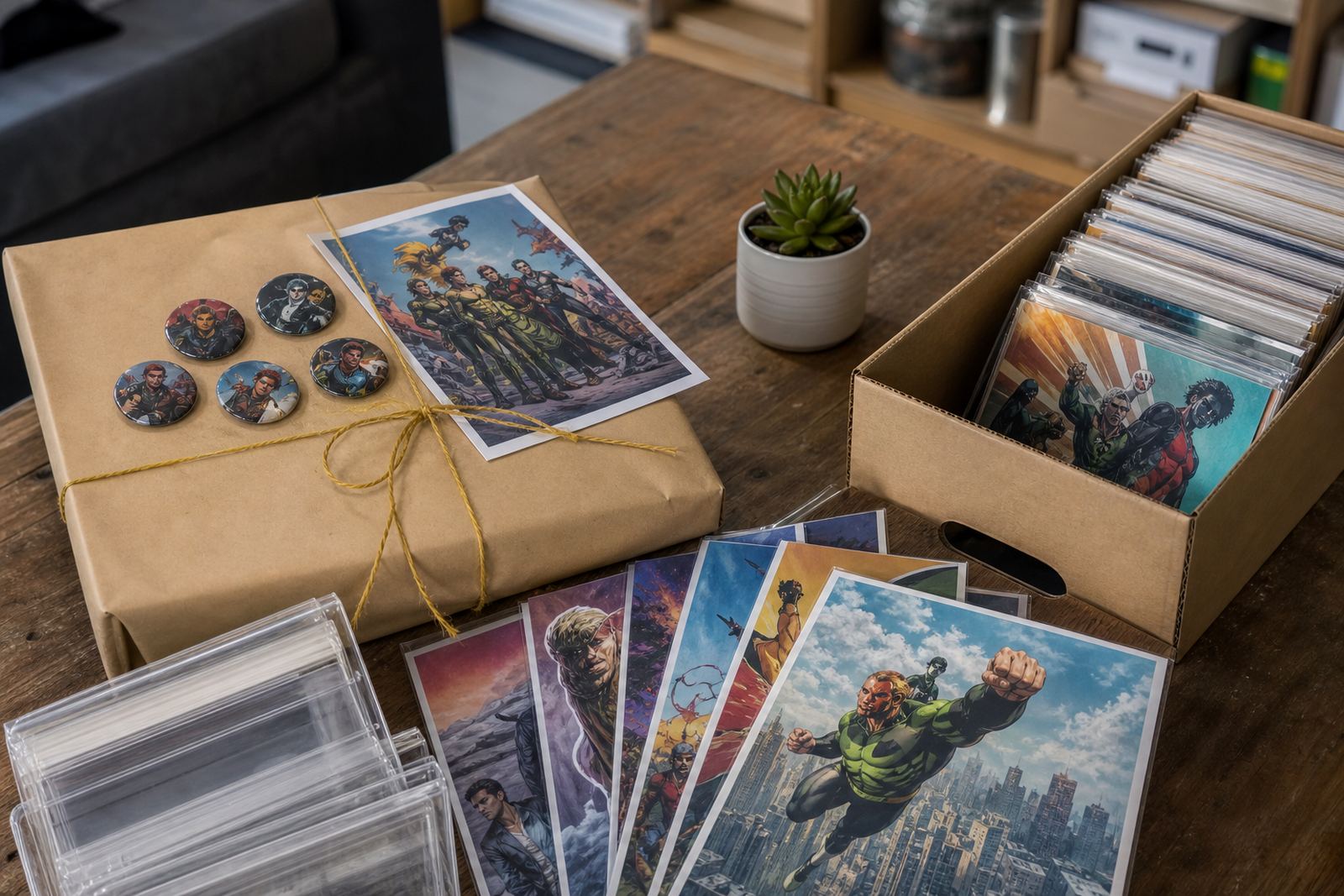
Good shelving should look neat and keep the collection safe. Acid free sleeves, sturdy backing boards and proper comic boxes are still part of the presentation even when they are not on show. If you rotate books often, store the extras in a dry area away from direct sun, then swap them in when you want a fresh look. This works well for collectors in Durban or Gqeberha where coastal conditions can be harder on paper over time.
It also helps to think about light and airflow. A shelf near a window may look good in the morning but fade covers later in the day. A little spacing behind the shelf lets air move and reduces the chance of warping.
If you are planning a long term display, include safe shipping prep in your thinking too. Items that are easy to remove, wrap and reinsert are much easier to manage when you want to move house or send a piece to a collector in another city.
Match The Theme To The Room It Lives In
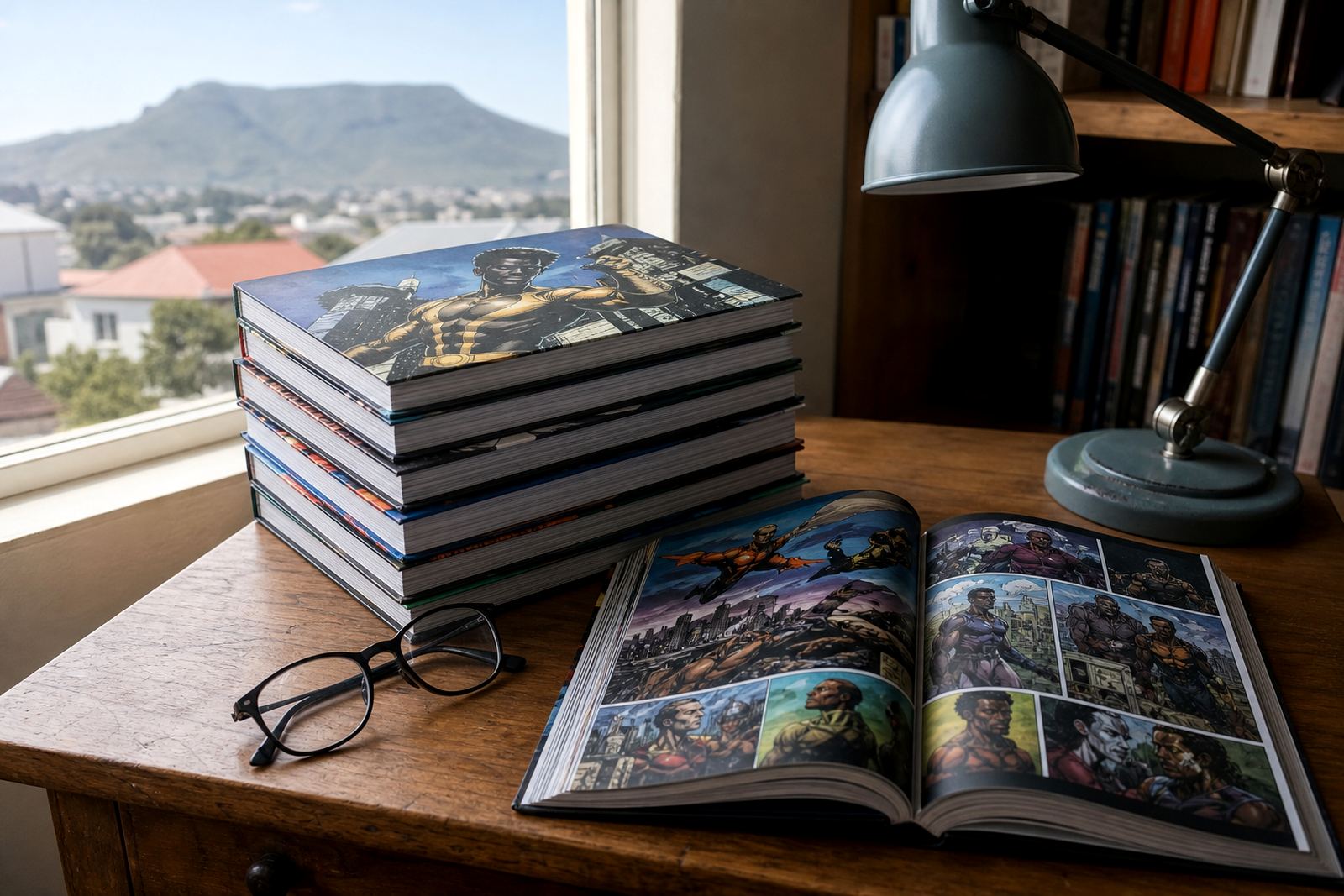
Not every shelf has to look like a shop counter. A family room display can be softer and more personal, while a study shelf can be more ordered and archive style. For example, a Cape Town collector in Observatory might use one narrow wall shelf for a local hero theme, then keep a lower cabinet for boxed collectables and duplicates. That lets the display stay clean while still showing variety.
Think about the room’s colours, furniture and use. A bold comic wall in a living room may need a quiet background so the covers stand out. In a child’s bedroom, the best approach may be lower shelves with sturdy items that are less likely to tip. In a shared space, make sure nothing blocks walking paths or catches on curtains and cords.
- Choose shelves that fit the room not just the collection
- Use neutral back panels when the artwork is busy
- Keep heavier collectables on lower shelves
- Make access easy if you plan to rotate items often
Refresh The Shelf Without Starting Over
A themed shelf does not have to stay frozen. Small changes keep it interesting without needing a full reset. Rotate one comic, move a figure forward, or switch the order of items by size. That is often enough to make the whole display feel new again. For collectors who follow wishlist sourcing, this also gives you a place to slot in a new piece without disrupting the full layout.
Seasonal updates work well too. You might create a school holiday shelf, a summer colour set, or a birthday display with gift selection in mind. If you attend local markets or collector meet ups, keep one shelf ready for event packages so you can show the type of stock you usually enjoy most. That way the collection stays active, not static.
Even a simple shelf can tell a strong story when it has a clear structure and a few thoughtful changes over the year.
A Cape Town Example That Keeps Things Simple
Picture a collector in Observatory with one wall unit and a small side cabinet. The top shelf holds three graded comics centred around an original local hero team, with two smaller collectables placed lower for balance. The middle shelf uses storage planning to keep extra books in neat comic boxes, while the bottom shelf shows off a signed issue in a protective case and a display stand with a neutral finish. Nothing feels crowded, and every item has a reason to be there.
That kind of setup works because it respects the collection and the room at the same time. It is easy to maintain, easy to explain to visitors, and simple to adjust when a new comic comes in. For collectors across Cape Town, Johannesburg, Durban, Pretoria and Gqeberha, that is usually the real goal: a shelf that looks good, protects the books and still feels personal.
If you want help with grading guidance, pre submission checks, cleaning advice, display planning or collector consultations, start with the enquiry form on our contact page. A themed shelf is easier to build when every piece has its place and every place has a purpose.
Name the title, issue or character you are hunting for, and our comic shop crew will help you track it down.
Contact form