
Building a collection with long-term condition in mind
Dedicated collectors usually know what they want: clean copies, repeatable storage, sensible upgrades and a clear plan for adding to the run over time. That might mean a few key local hero issues, a set of first appearances, or a growing mix of comics and collectables that all sit well together. The aim is not just owning more items, but keeping them in a state that still matters years later.
We work with collectors in Observatory, Cape Town and across South Africa who want their books handled with care from the start. That matters when you are buying for grading later, storing in humid coastal conditions, or trying to keep a collection sorted while new items arrive by courier. A good collecting plan saves money because it reduces handling damage, corner wear and avoidable storage problems.
- Focus on condition first, then fill gaps in the run
- Keep a simple list of priority issues, variants and duplicates
- Separate reading copies from high-condition copies
- Plan storage before the next batch arrives
A good collection is built with care, not luck.
What a serious collector usually needs at home
A practical collector setup does not need to be fancy. In Cape Town, especially near the coast, moisture control is worth thinking about early. In Johannesburg or Pretoria, dust can be the bigger problem, while Durban collectors often deal with humidity most of the year.
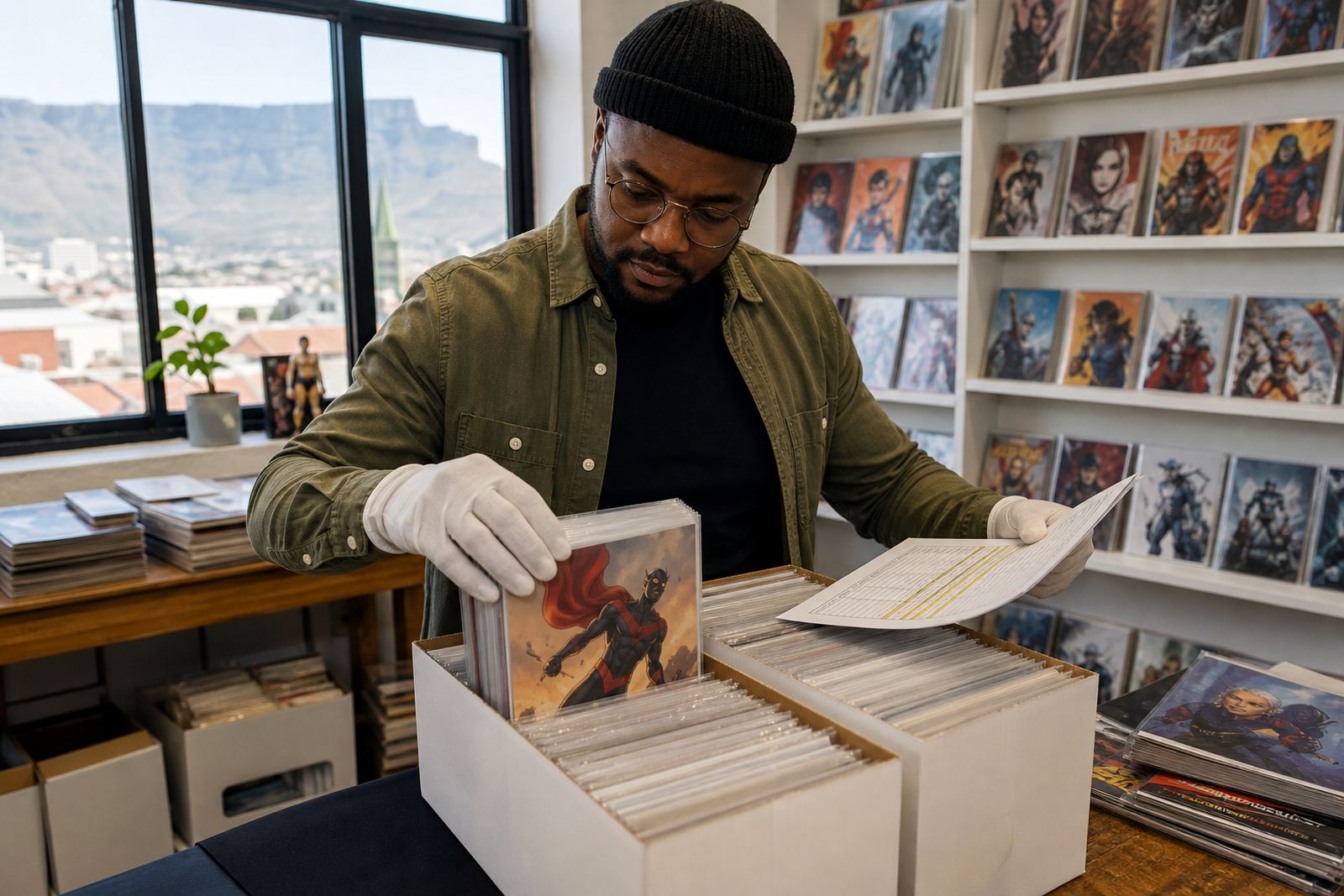
A typical equipment set for a careful collection includes acid-free backing boards, protective sleeves, rigid storage boxes, soft microfibre cloths for light cleaning and labelled dividers for series or character groups. If you display items, use shelving that keeps books away from direct sun and away from kitchen steam or open windows. For high-value pieces, many collectors also keep a lockable cabinet or a small fire-resistant safe for the most important items.
- Sleeves and backing boards sized for standard comic issues
- Archival boxes with lids that close properly
- Label stickers or catalogue cards for quick sorting
- Soft gloves for handling glossy or graded items
Grading checks before you buy, sell or submit
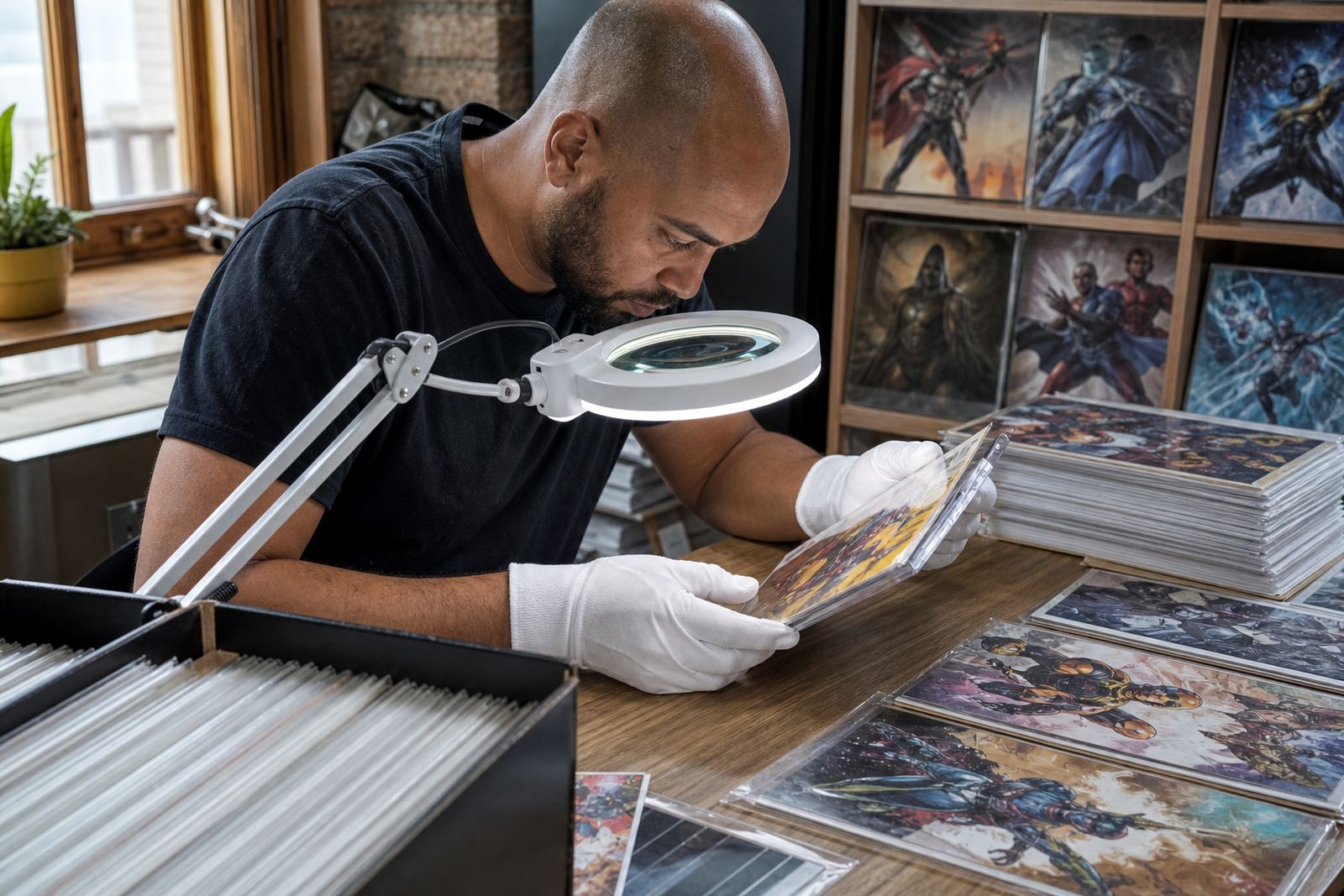
Condition-conscious buyers often want a second set of eyes before they spend more money. Our grading guidance helps you look for spine stress, corner blunting, page tanning, creases, colour rub and tiny tears that are easy to miss in poor light. It is also useful when you are deciding whether a comic should be kept raw, pressed, cleaned lightly or set aside for professional submission.
Pre-submission checks are especially helpful when you are moving through a bigger collection and do not want to submit items that need more preparation first. Small problems can lower the final result quite a bit, so it is better to catch them early than to rush. We keep the advice practical, because not every book should be treated the same way and some issues are better left untouched.
- Check spine lines under a bright, angled light
- Inspect page quality, staple condition and cover gloss
- Compare the book against your own grading notes
- Separate high-grade candidates from reading stock
Storage planning for coastal humidity and dusty city shelves
Good storage is one of the easiest ways to protect value. A collector in Observatory may need different shelving and airflow than someone in Bellville or Durban. If the room gets warm, damp or dusty, comics can buckle, yellow or pick up surface marks faster than expected. That is why storage should be planned before the collection outgrows the first box.
We usually suggest a dry, shaded room with stable shelving, not a place near geysers, windows or the garage door. Keep comics upright where possible, do not overpack boxes and leave a little room so covers do not press hard against each other. For long-term storage, separate issues by title or release year and avoid stacking heavy objects on top. A collector who stores well usually spends less later on restoration or replacement.
- Use one storage method consistently across the collection
- Keep graded or high-value items apart from everyday reading copies
- Label boxes clearly so nothing gets hunted for in a rush
- Check stored items every few months, especially in summer
Display planning without damaging the books
Many collectors want their favourite issues visible, but display can quickly become a problem if the setup is wrong. Sunlight fades covers, heat warps backing and loose framing can let dust build up behind glass. A good display plan balances presentation with protection, especially for signed copies, first appearances and special local hero issues that you want to keep for the long term.
We help with display planning for shelves, wall frames and cabinet layouts. The best approach depends on whether you want to show a few rotating favourites or a fuller collection. If your space is small, start with a short wall run and keep the rest stored properly. If the room is larger, use spacing that allows airflow and makes it easy to remove items without bending the corners. The main goal is simple: enjoy the collection without shortening its life.
- Avoid direct sun and strong indoor lighting near the display
- Leave enough space to lift books out without scraping covers
- Rotate featured items every few weeks if the room gets bright
Common collector mistakes we help prevent
Even experienced collectors make avoidable mistakes when they are chasing a hard-to-find issue or trying to finish a run quickly. One common problem is buying on impulse without checking condition closely enough. Another is storing a valuable comic in the wrong sleeve size, where tight fit or loose movement can cause wear over time. A third is using mixed boxes with no labels, which makes a collection harder to manage and easier to damage.
Some collectors also forget the courier side of the hobby. If a parcel is packed badly, corner damage can happen before the box even leaves the depots. We help with safe shipping prep so items are packed tightly but not crushed, with enough support for transport from Cape Town to Johannesburg, Pretoria, Durban or Gqeberha. Care at this stage can make the difference between a clean copy and a disappointing one.
- Buying before checking if the copy suits your grade target
- Using tape or rough sleeves that can mark the cover
- Mixing valuable items with loose toys or heavy collectables
- Leaving boxes in hot cars, damp garages or sunny windowsills
What it costs
Collectors often want to know where the money goes before they commit to a new shelf of purchases. The answer depends on how selective you are and whether you are buying reading copies, condition copies or higher-end collectables. A modest monthly budget can still build a meaningful local collection if it is focused. Bigger budgets mainly help with better condition, more choice and faster gap-filling.
For many South African collectors, it makes sense to divide spending into three parts: the item itself, storage or protection, and occasional grading or shipping costs. That keeps the collection steady rather than erratic. If you are saving for a high-value issue, it is often smarter to buy fewer pieces and protect them properly than to fill space with material you will later replace.
- Entry-level collecting: about R300 to R800 a month for selected issues and basic storage
- Steady growth: about R1,000 to R3,000 a month for better-condition copies and occasional courier costs
- Focused premium collecting: R3,500 and up for condition targets, grading prep and special items
We can also help you set a collection order that makes sense for your budget, whether you are starting in Stellenbosch, adding to an established shelf in Johannesburg or keeping a Cape Town run in order. The right plan keeps the collection tidy, well protected and ready for the next find.
Name the title, issue or character you are hunting for, and our comic shop crew will help you track it down.
Contact form