
Start with the room you already have
A good home library does not need a full spare room. Many collectors in Cape Town, Pretoria or Durban work with a bedroom wall, a study nook or a corner of the lounge. The first step is to measure the space properly and think about how the room is used through the week. A shelf against a sunlit window, for example, may look fine in the morning but can fade covers over time, especially in bright coastal light.
We usually suggest beginning with the books and comics you reach for most often, then planning the rest around them. If you collect current reading copies, long boxes, graded slabs and collectables together, the layout should separate those items clearly so you can find what you need without moving everything around.
- Measure wall height, shelf depth and walkway clearance before buying furniture.
- Keep at least one section for reading copies you rotate often.
- Leave space for future additions, because collections grow quicker than expected.
A well planned shelf saves money, space and a lot of handling.
Choose shelving that suits comic sizes
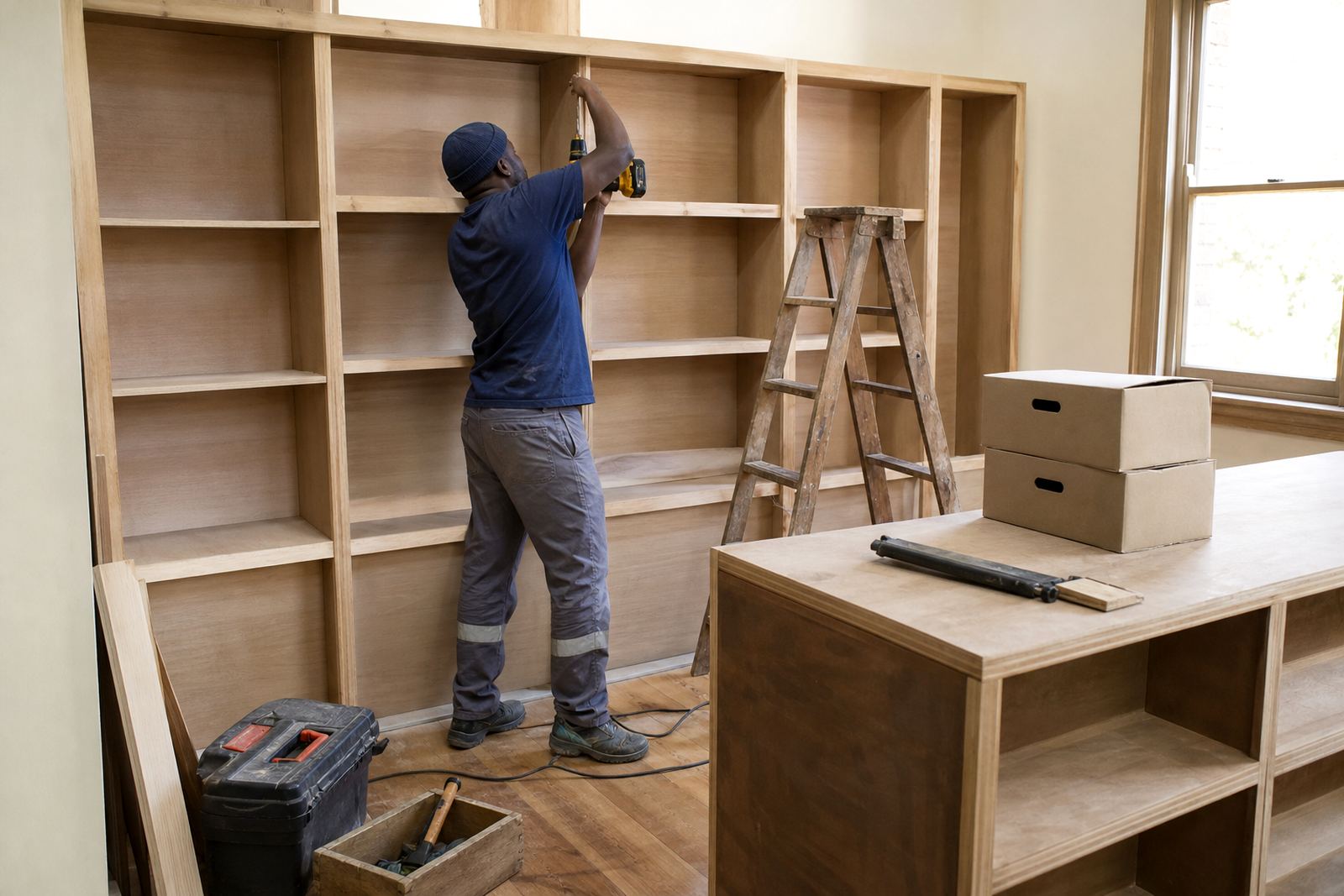
Comics are not all the same size, so generic shelving often becomes awkward. Standard issue books, oversized editions and graded cases each need different support. A practical home setup uses a mix of adjustable shelves and closed storage, with the heaviest items on the lower levels. That keeps the centre of gravity low and reduces the chance of bending or toppling in a busy home.
If you live near the coast, humidity matters too. In places like Gqeberha or Durban, cardboard and paper can swell if airflow is poor. Closed cabinets with a small gap for ventilation work well, but do not pack items tightly against the back panel. A little breathing room is better than a shelf full of warped covers and stuck sleeves.
- Adjustable shelves help with mixed heights and oversized collectables.
- Use solid backing for heavier boxes, not thin panels that bow.
- Choose finishes that wipe clean easily, especially if children or pets are nearby.
Storage planning for reading copies and long-term keepsakes
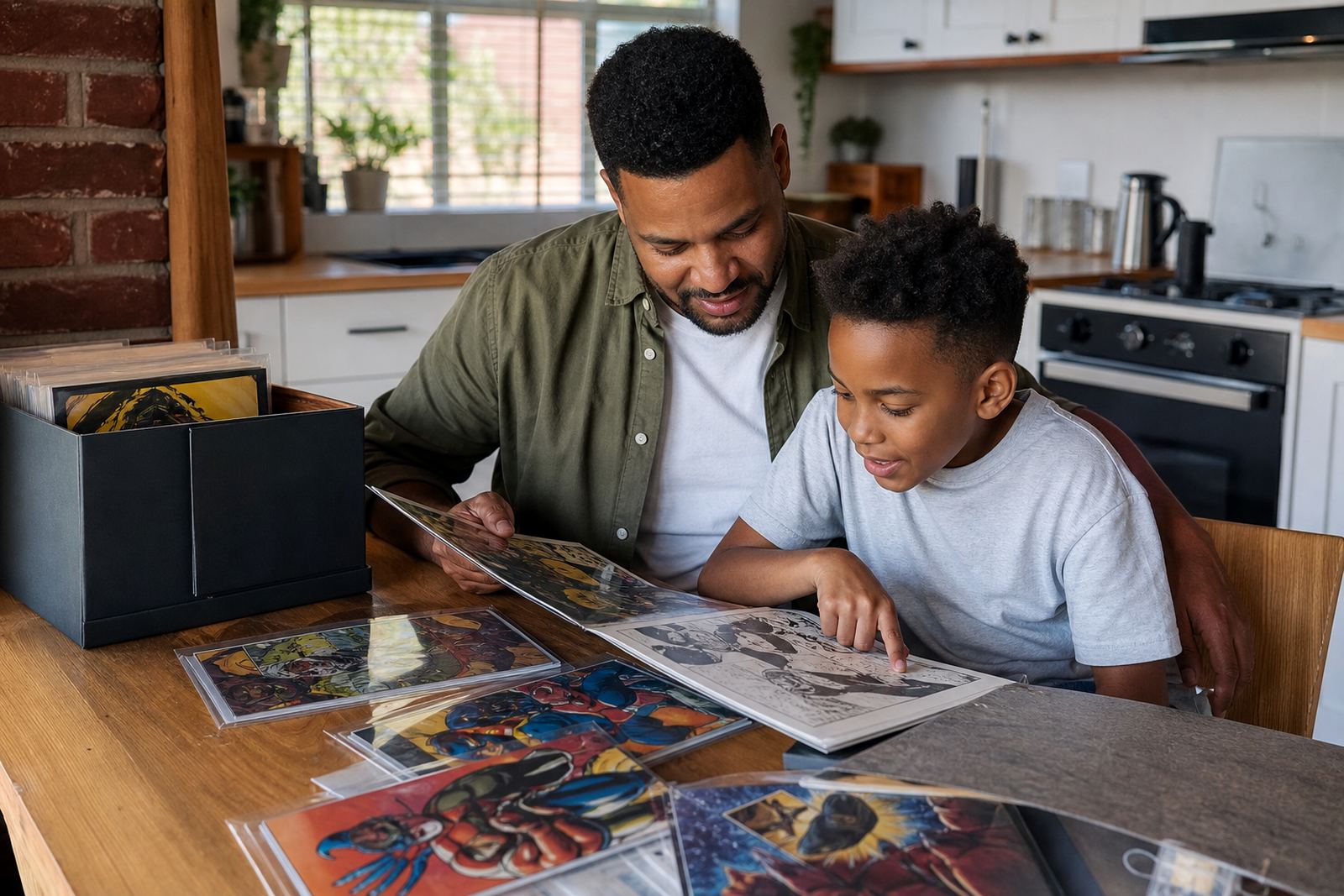
Most home collectors need two systems at once: easy access for reading and careful protection for items they want to keep in top condition. That means using sleeves, boards, comic bags and storage boxes in a way that matches the item itself. A good rule is to keep regular reading copies separate from higher-value or sentimental pieces, so you are not handling everything every time you want a quick read.
Our team often advises on sorting by condition, title, story arc or display priority. If a comic has a soft corner, a small spine roll or surface marks, it may still belong in a reading set rather than a premium storage slot. The goal is not perfection, it is practical organisation that makes sense for your home and your habits.
- Use archival-style sleeves and boards for better protection against dust and handling.
- Keep storage boxes off the floor to avoid damp and cleaning spray.
- Label sections clearly so visiting family or friends do not mix categories together.
Display planning without clutter
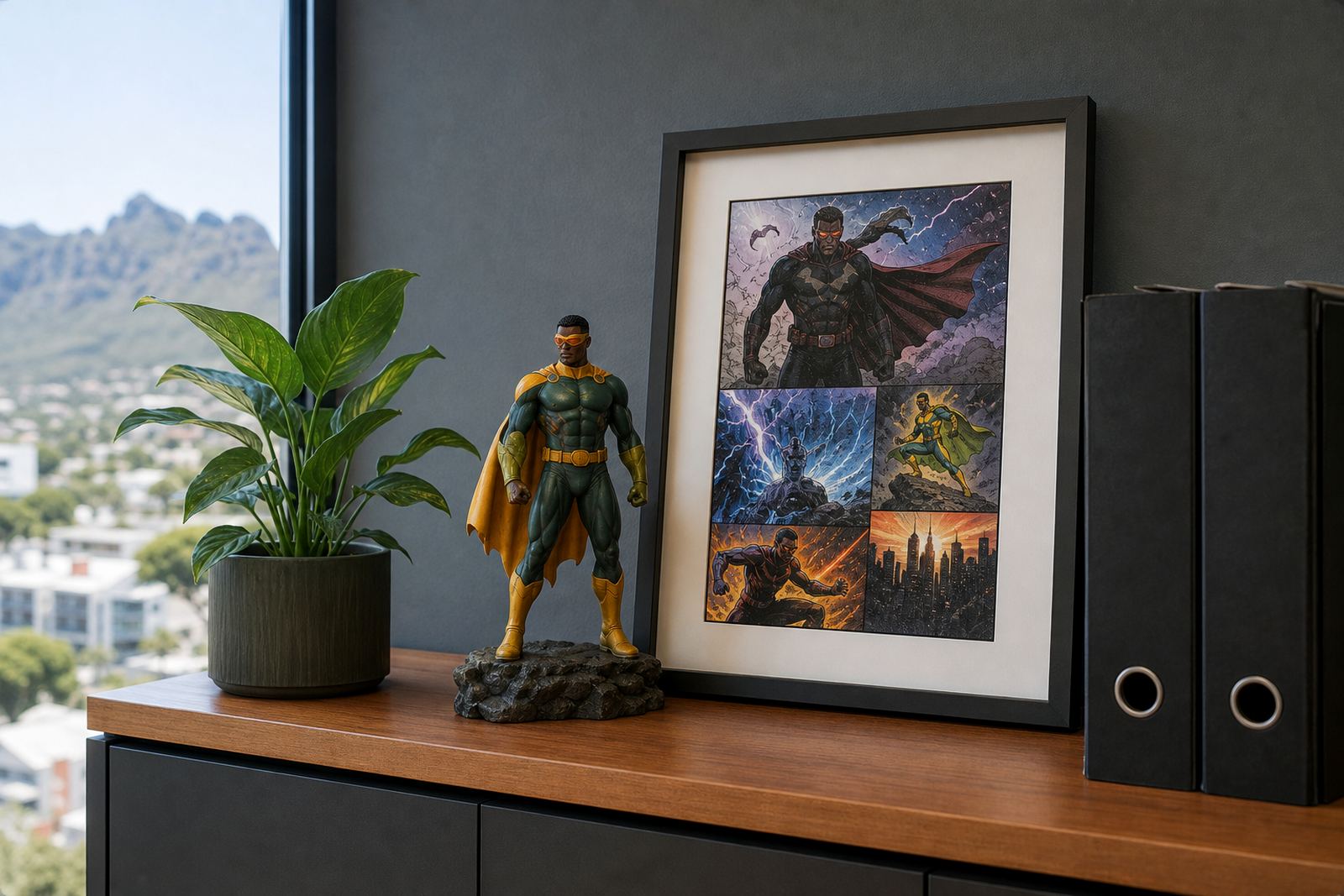
Display should show off the collection without turning the room into a jumble. A few framed covers, one or two figures, and a neat row of favourite issues often looks better than trying to show everything at once. Open shelves are useful, but they need discipline. Too many items on one shelf can make dusting harder and make the room feel cramped.
Think about sight lines from the door, the couch and your reading chair. The strongest pieces should sit where they can be seen without blocking traffic. If you enjoy themed shelves, group items by hero type, art style or colour family. That gives the room order and makes it easier to rearrange later. It is also safer for collectables that should not be knocked over by daily movement.
- Use low-glare lighting to reduce fading and make covers easier to read.
- Avoid placing framed items directly above heaters or in direct sun.
- Leave a small gap between display pieces so each item can be seen properly.
Common mistakes that cost space and money
One of the biggest mistakes is buying storage before measuring the collection. Another is choosing furniture that looks stylish but cannot handle the weight of boxes and hardbacks. We also see people mix newly cleaned books with dusty collectables, which defeats the purpose of all that care. If you are building a home library, start with function first then add display pieces after the basics are sorted.
Another issue is overpacking shelves. When books are squeezed too tightly, corners crease and covers catch on each other. When boxes are stacked too high, the lower ones crush. It is better to leave a little empty space than to force every centimetre into service. That small gap helps with airflow too, which matters in humid areas and on rainy weeks in Cape Town.
- Do not place heavy boxes on weak shelves meant for light decor.
- Do not store comics in direct sunlight, even for short periods.
- Do not mix food, drinks and collectibles in the same reading area.
What it costs
Budgets vary depending on the number of books, the condition of the collection and whether you need display pieces as well as storage. A simple starter setup for a small apartment or spare room might begin with basic shelving, sleeves and boxes in the lower hundreds to low thousands of Rand. A more complete setup with adjustable shelves, better storage materials and dedicated display space can move into the mid thousands, especially if you want everything tidy from the start.
If you are planning over time, it can help to split the spend into stages. First sort and protect the comics you already own. Then add shelving. After that, consider display and wish-list sourcing for missing issues or special collectables. That way you are not buying too much at once, and you can adjust the room as your collection grows. For many collectors, a steady approach works better than a big one-off spend.
- Stage 1: bags, boards, boxes and basic sorting tools.
- Stage 2: shelving, labels and better storage for premium items.
- Stage 3: display pieces, framing and room layout improvements.
Name the title, issue or character you are hunting for, and our comic shop crew will help you track it down.
Contact form