
Start With the Room, Not the Shelf
Before you place a single comic or figure, look at the room as a whole. In a smaller flat in Observatory or a spare room in Bellville, the goal is not to fill every corner. It is to choose one or two strong display zones where the eye can settle. Good displays leave breathing room around each item so the collection feels chosen, not packed in.
Check the light first. South African sunlight can fade covers and discolour packaging, especially near west-facing windows. If the room gets harsh afternoon sun, keep comics away from direct light and use curtaining or UV-filtering film where needed. In coastal areas like Cape Town and Gqeberha, moisture can also affect paper, backing boards, boxes and figure packaging, so avoid placing displays right against damp walls or windows that sweat in winter.
- Pick one main display wall or cabinet per room.
- Keep comic storage out of direct sun and away from heaters.
- Leave space for airflow behind frames, shelves and cases.
A good display gives the collection room to breathe.
Build a Layout That Gives Comics the Lead
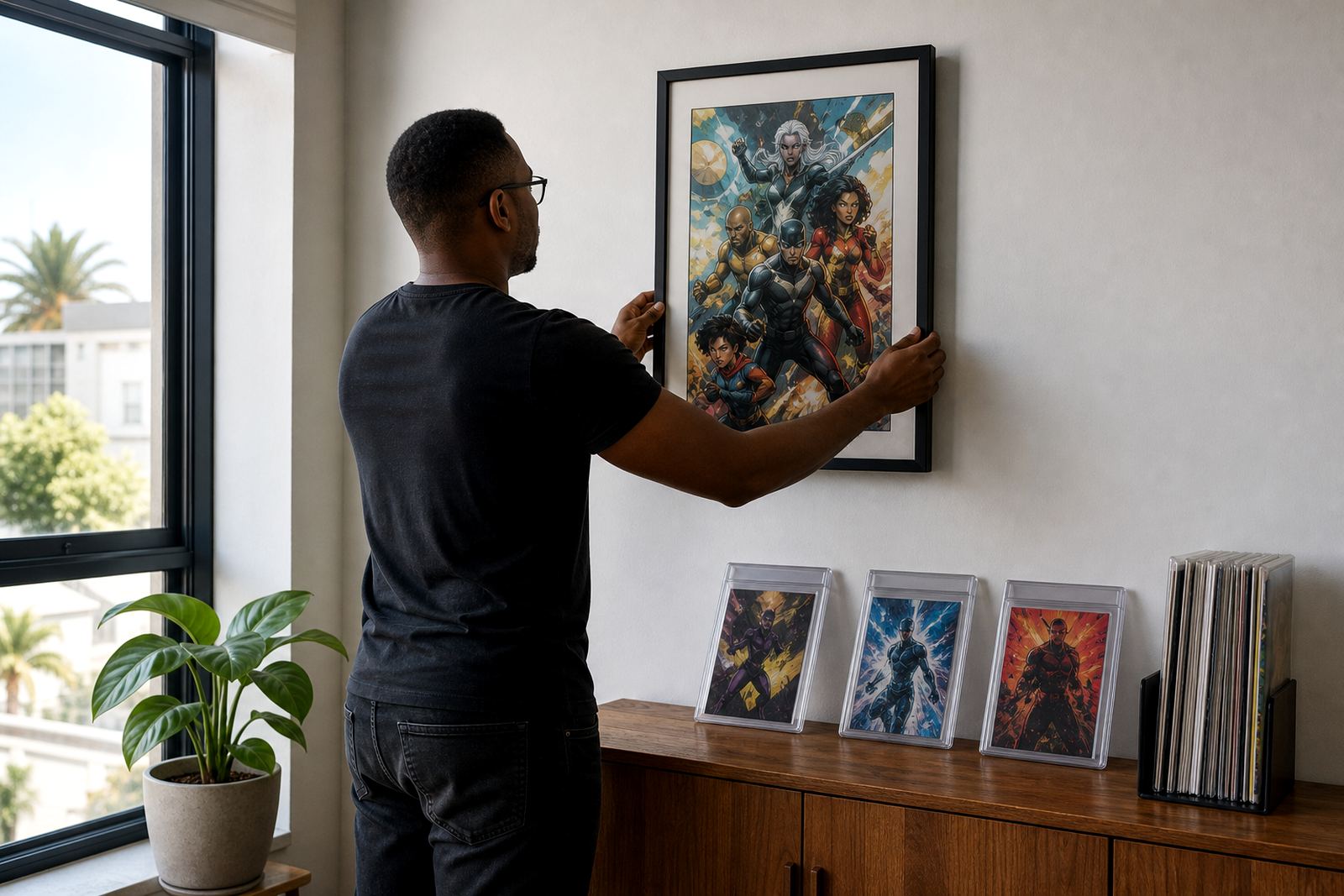
Comics usually work best when they form the visual anchor and figures support them. A simple way to do this is to use graded books, key issues or favourite covers at eye level, then place figures above, below, or beside them to add depth. If everything is the same size and height, the display can feel flat. Staggering the levels gives the room more life.
Try grouping by colour, series, character type or theme. For example, place a clean row of comics in a frame or shelf rail, then set one figure in front of a small stack of display copies. Another option is to pair one comic with one figure on a riser, then repeat the pattern across the shelf. Keep the spacing even and don’t crowd the front edge, because a display that is too tight is harder to dust and easier to knock over.
- Use risers, book stands or acrylic blocks for height changes.
- Keep the tallest figure at the back and smaller pieces in front.
- Use one visual theme per shelf for a cleaner result.
- Leave enough space to remove comics without bending corners.
Protect Graded Books, Bagged Issues and Open Figures
Display items still need protection. Graded comics should stay in their cases and stand where they cannot tip forward. Bagged and boarded books need a snug fit in a shelf or drawer so the edges do not curl. If you display raw comics, use clean sleeves and support them properly so they do not sag over time. The same approach applies to figures with loose parts, accessories or light paint detailing.
For graded books, use a level shelf and avoid stacking them too high. A case can chip if it slips or rests on an uneven edge. For figures, make sure feet sit flat and use museum putty or similar non-permanent support only where needed. That matters in busy homes, especially if children, pets or regular visitors move through the room. A good display should look neat and still survive the odd bump.
- Store spare comics flat, upright and out of damp areas.
- Keep graded cases dust-free with a soft cloth.
- Use figure bases where possible for extra stability.
- Do not place anything heavy on top of bagged comics.
Choose Storage That Works in South African Homes
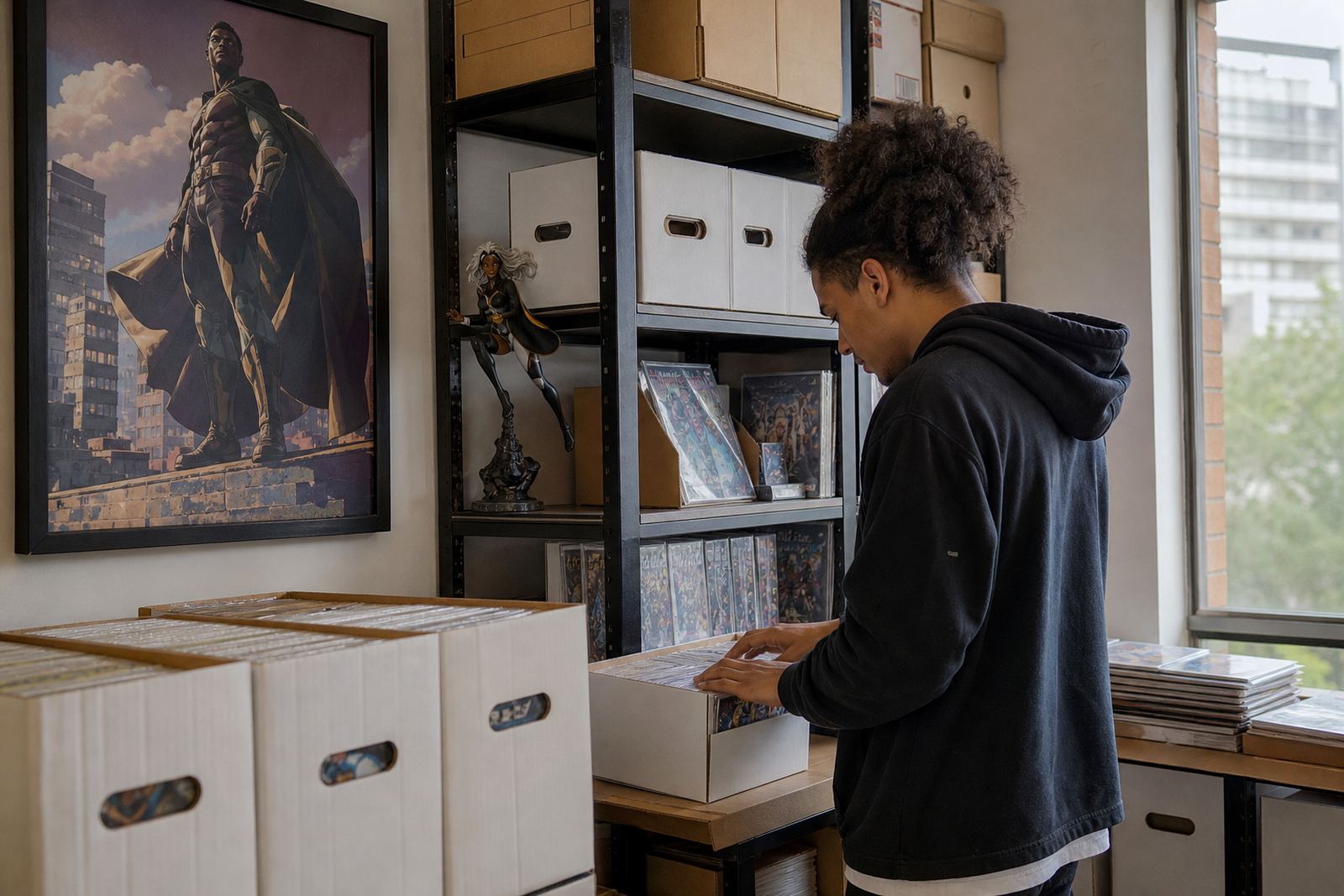
Not every comic needs to be on show. Some of the best collections mix display with proper storage, especially if you are building a long-term set. For homes in humid coastal areas, sealed boxes with acid-free materials are useful for back issues, variants and duplicates. In hotter inland towns, the main issue is heat and dust, so closed storage helps more than open piles on a shelf.
A practical collector often uses a few display copies and keeps the rest sorted by title, issue range or character group. That makes it easier to rotate items without redoing the whole room. If you buy across South Africa, couriered stock should be checked as soon as it arrives. Look for corner bends, crushed boxes, water spotting or loose tape before it goes into storage. Good habits at the start save a lot of repair work later.
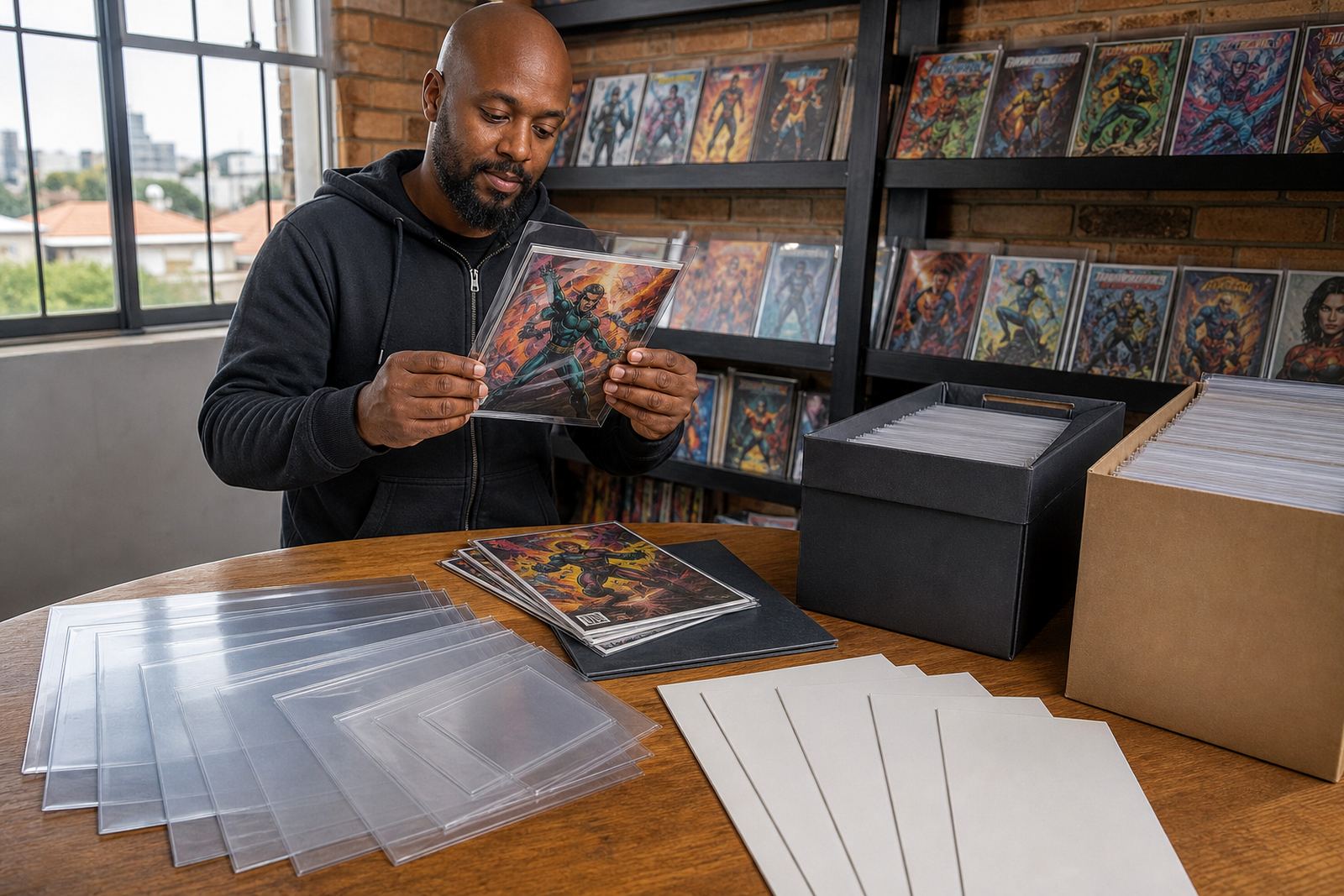
- Use acid-free boards and sleeves for raw comics.
- Choose sturdy boxes that fit the book size properly.
- Keep labels clear so you can find items quickly.
- Inspect courier deliveries before filing them away.
Use Figures to Add Scale, Motion and Personality
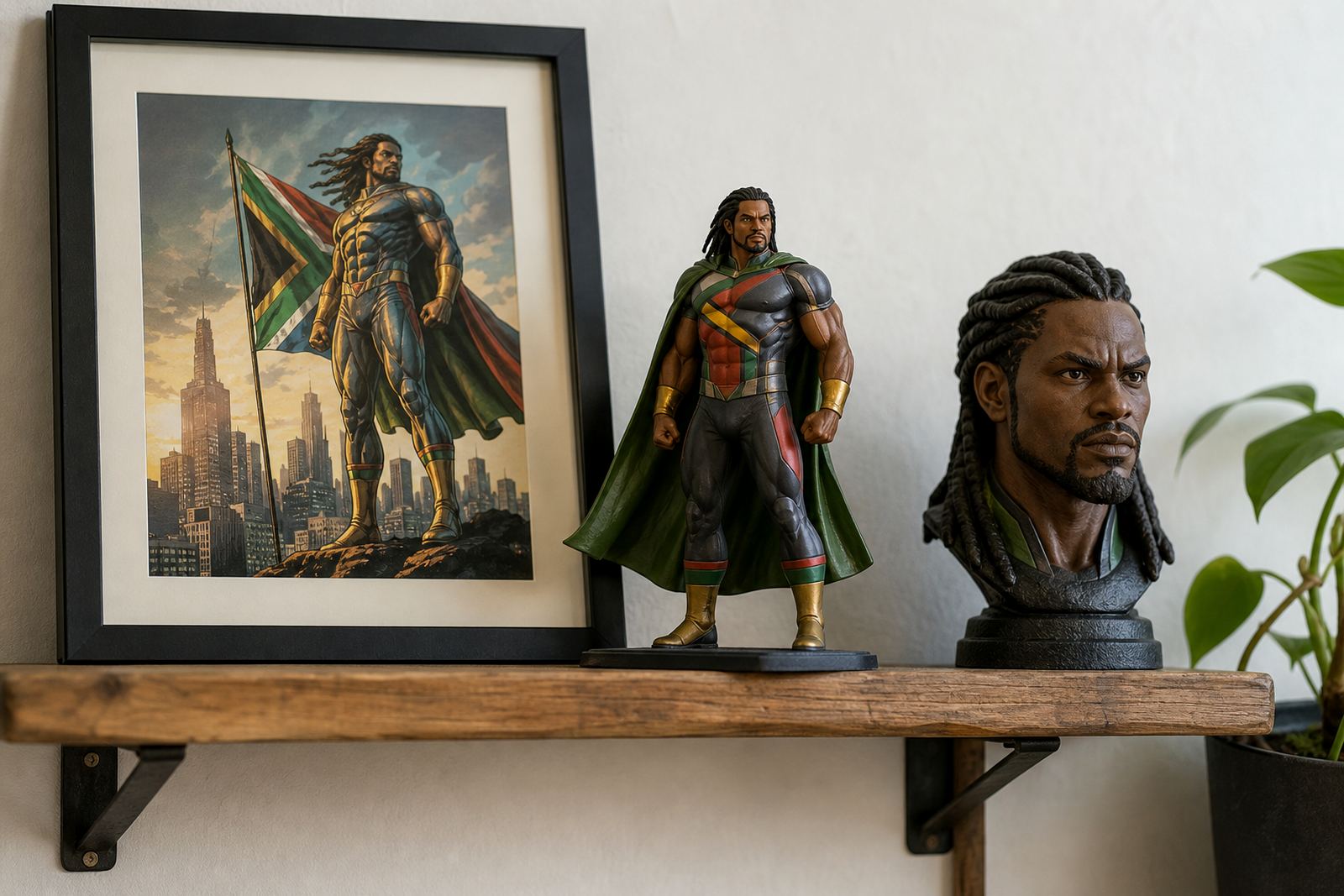
Figures bring movement to a comic display. A standing hero can frame a stack of comics, while a seated figure can make a reading nook feel more personal. The best results come from restraint. One well-placed figure can do more than five small pieces crammed together. Keep the pose and scale in mind so the display still feels balanced from across the room.
When combining figures with comics, think about story cues rather than exact matches. A figure reaching forward can sit beside a comic with a strong action cover. A calm standing pose works well near a framed comic or graded slab. If you enjoy collectables beyond figures, such as pins, cards or small props, use them as accents only. The comic should still be the main point of interest. Otherwise the shelf starts looking busy and the eye has nowhere to rest.
If you move items around often, take a quick photo of the setup before changing anything. That makes it easier to recreate a display you liked. It also helps when you are planning gift ideas, event tables or a collector corner in a new room.
A Simple Checklist for a Clean Collector Display
Once the display is set, do a short monthly check. Dust settles fast in city homes and even faster near open windows or roads. A quick wipe, a look at shelf stability and a check for humidity problems keeps the whole setup in better shape. If you are planning to expand the collection, leave one shelf or one cabinet section open so the room can grow without starting from scratch.
This is also the point where many collectors decide whether they want a tighter grading focus, a looser reading shelf or a mixed approach. There is no single right answer. The best arrangement is the one that keeps your books safe and makes you want to pick them up again. That matters just as much as the display itself, maybe more.
- Dust shelves, cases and figure bases once a month.
- Check for leaning comics or unstable figures.
- Keep one open space for new purchases.
- Review lighting and humidity after seasonal changes.
- Rotate display items if covers or packaging look tired.
Get Help With Collector Setup and Safe Shipping
If you are not sure how to combine comics and figures in a room, start with a small section and build from there. A few well-planned pieces often work better than a full wall of mixed items. For collectors in Cape Town, Johannesburg, Durban, Pretoria and Gqeberha, courier delivery can make it easier to source specific items without filling the room with impulse buys. That is especially useful when you are planning a themed shelf, a gift set or a subscription pull list.
SA Heros Comics works with collectors who want practical support with grading guidance, pre-submission checks, cleaning advice, storage planning, display planning, gift selection help, wishlist sourcing, subscription curation, collection organisation, safe shipping prep, event packages and collector consultations. If you want help with a display that suits your room and your collection, use the enquiry form on the contact page and tell us what you are trying to build. A good setup starts with a clear plan, not a crowded shelf.
Name the title, issue or character you are hunting for, and our comic shop crew will help you track it down.
Contact form