
Choose covers that can handle display time
Not every comic cover is ready to go straight on the wall. Start with copies that are already clean, flat and free from heavy spine stress, water marks or grubby handling at the edges. If you are choosing between a few issues, pick the one with the best corners and the least visible wear. That gives you a better display finish and less pressure to overwork the paper later.
For collectors in Cape Town, Johannesburg or Durban, it also helps to think about where the cover will live. A bright lounge, a hallway, or a study with controlled light is usually safer than a window area, kitchen wall or a damp outside-facing room. In coastal homes, humidity can creep in quick so a cover that is already tired will not hold up as long.
- Check for foxing, bends and edge tears before framing.
- Avoid covers with sticky residue, old tape or loose inserts.
- Set aside your best reading copy and use a display copy instead.
- If the comic is valuable, get grading advice before mounting it.
Display the art, protect the paper.
Use a frame that does not press on the art
The safest display setup is one that supports the comic without squashing it. Choose a frame with enough internal depth so the cover sits comfortably and does not rub against the glass or the backing board. A tight fit may look neat at first, but it can cause corner dents and pressure marks over time.
For most collectors, an acid-free mount board and a clean backing board are worth the effort. They help reduce staining and keep the paper from picking up damage from ordinary household materials. If you are displaying a cover in a flat frame, make sure the inner edge is smooth and the comic is not forced to curl. A slight gap is better than a hard squeeze.
- Use acid-free materials where possible.
- Keep the cover flat, not bent around clips or staples.
- Choose clear glazing that filters some UV if the room gets strong sun.
- Test the fit before sealing the frame fully.
Handle the comic properly before it goes behind glass
Even a short handling session can leave marks if the comic is passed around without care. Wash and dry your hands first, or use clean cotton gloves if the paper is especially delicate. Hold the comic by the outer edges and keep fingers away from the printed face as much as possible. Oils from skin can show up later as dull patches, and that is hard to reverse.
If the issue has loose dust, use a very soft brush and light movements only. Do not use household cleaners, damp cloths or anything rough on the surface. A little dirt removed the wrong way can do more harm than the dirt itself. When the cover is ready, place it on a clean surface, slide it gently into position and avoid forcing the corners.
- Work on a clean table with enough space.
- Keep food and drinks away from the setup.
- Do not flatten creases with pressure or heat.
- Never use tape directly on the cover.
Plan for light, heat and coastal moisture
South African homes vary a lot, and that matters when you are framing comics. Direct sun through a window can fade inks and age paper faster than people expect. Even if the room looks fine in the morning, afternoon light can be harsh. Try to hang framed covers on an interior wall or in a spot that gets gentle indirect light only.
Heat and humidity are the other issues to watch. In places like Durban, Gqeberha and parts of Cape Town near the coast, moisture can build up inside frames if the room has poor airflow. That can lead to waviness, mould spots or a musty smell. In winter, closed-up rooms in Johannesburg can also trap dust and dry air, so a stable indoor spot is still important.
- Avoid windows, kitchens and bathrooms.
- Keep framed comics away from heaters and aircon vents.
- Use silica gel only where it can be safely contained inside the frame or storage box.
- Check frames every few months for moisture or dust build-up.
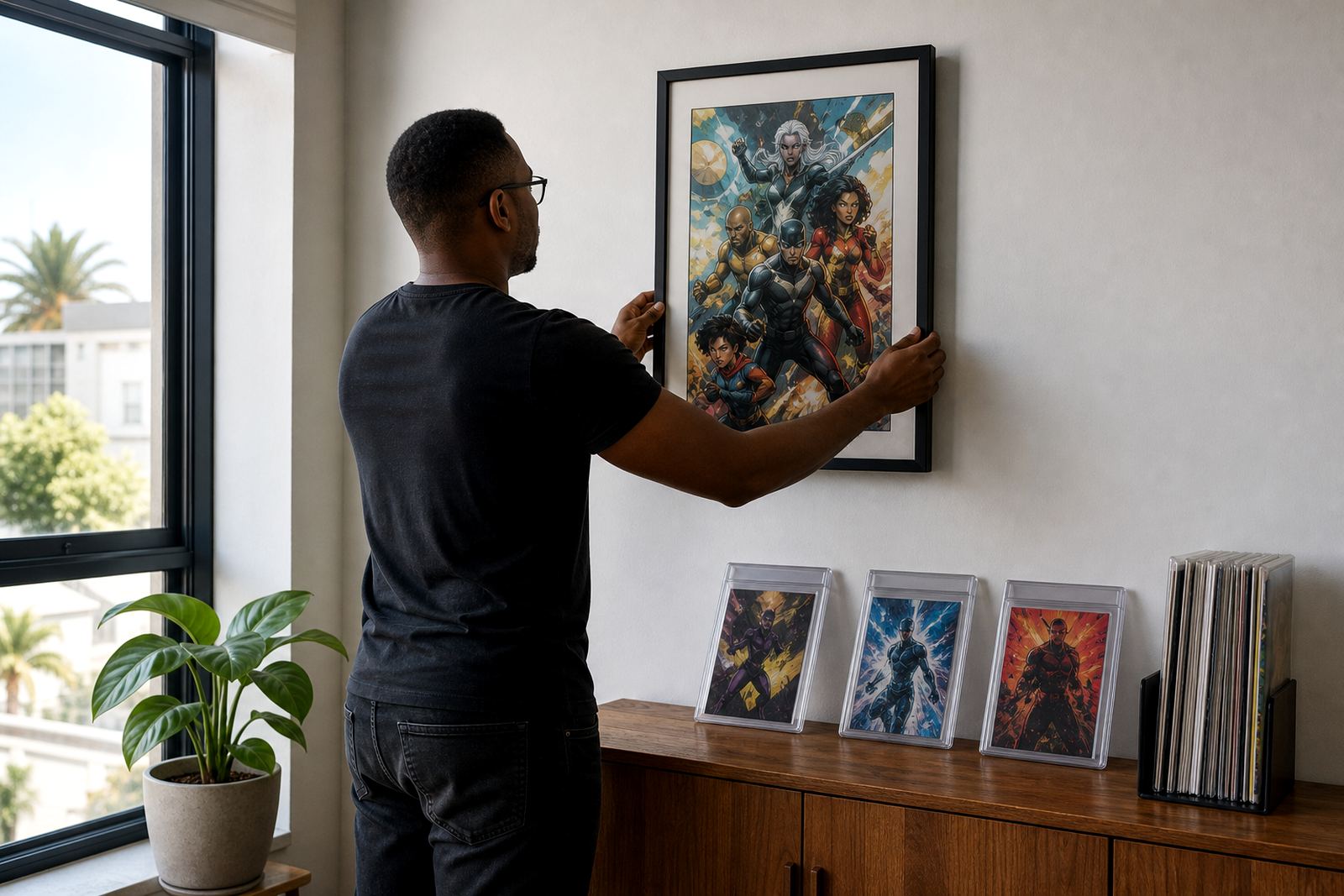
Hang the frame securely and level
A comic cover is light compared with many artworks, but it still needs proper support. Use wall fittings that suit the wall type, whether it is plasterboard, brick or concrete. A secure hook or anchor is better than a small nail that can work loose over time. If you are hanging several covers together, measure the spacing first so the group looks balanced and the frames do not bump one another.
Use a spirit level if you have one. A slight tilt is easy to miss on the day and very obvious later. Make sure the frame is not hanging where doors slam nearby or where people brush past it. In a family home or a flat, that kind of repeated movement can wear down the corners and loosen the mount. Once it is up, give the frame a gentle check after a few days to confirm it is still steady.
- Match the fitting to the wall material.
- Leave a small gap between multiple frames.
- Recheck the hanging point after the first week.
Keep a display copy and a stored copy
Collectors often get the best results by separating display use from long-term storage. A display copy can stay framed for enjoying the cover art, while a second copy stays bagged, boarded and stored flat. That way you are not exposing your only copy to light and dust every day. For higher-value issues, this is a sensible approach and often cheaper than trying to rescue a damaged cover later.
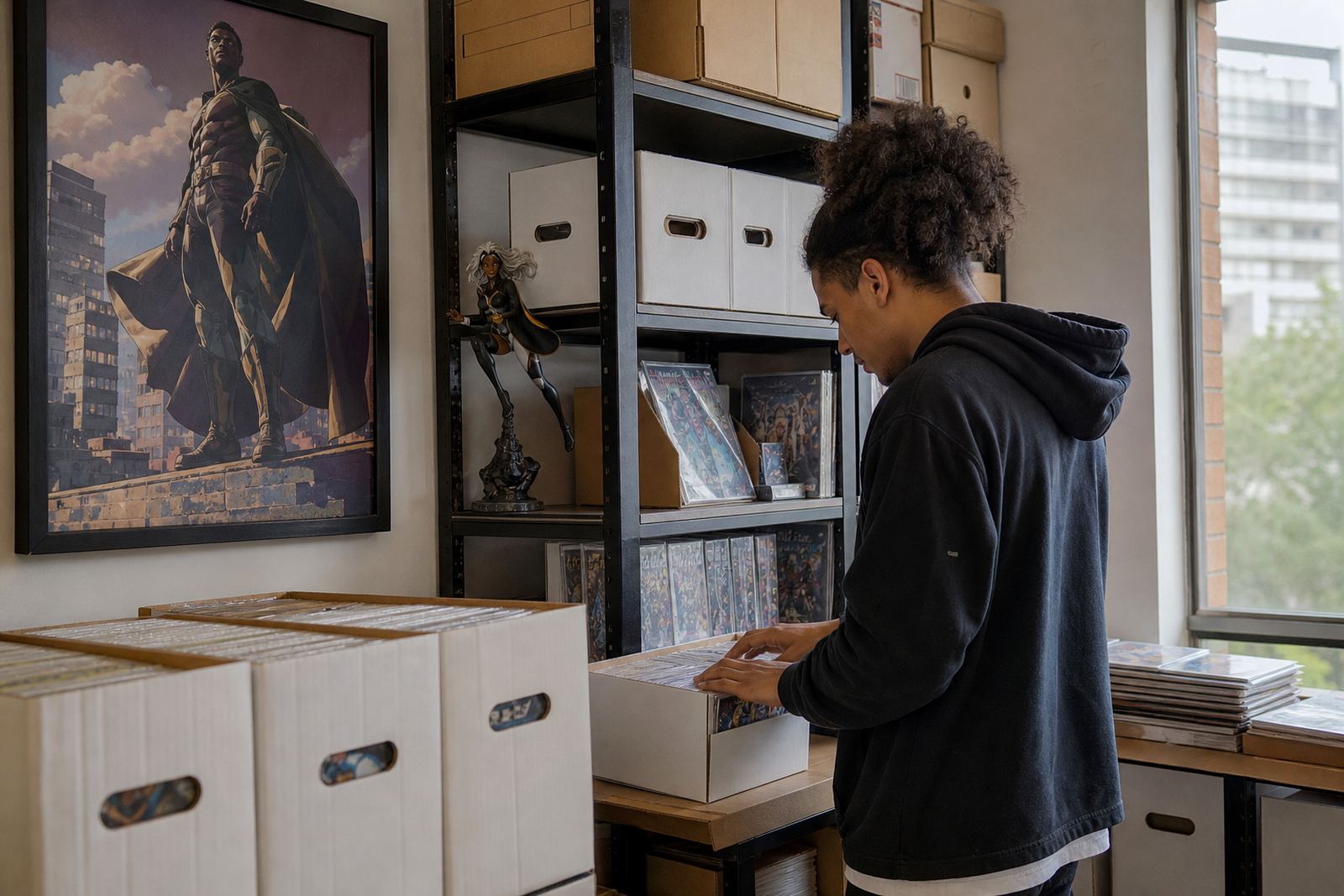
Storage should be dry, clean and organised. Use proper bags, boards and sturdy boxes, then label them clearly so you can find issues without rummaging. If you are growing a collection, ask for help with storage planning and collection organisation before things get out of hand. A neat system makes it easier to rotate covers for display, prepare gifts or keep track of wishlist items without stressing the paper.
- Set one copy aside for framing and one for storage if needed.
- Store flat, never jammed upright under pressure.
- Keep boxes off the floor in case of damp or flooding.
- Rotate displayed covers from time to time to reduce light exposure.
Quick checklist before you frame a cover
Before sealing the frame, give the comic one last check. This is the point where small mistakes are easiest to avoid. Look at the corners, edges and surface under good light. Confirm that the mount is clean and the frame is free from dust and loose fibres. If anything looks off, sort it out first rather than fixing it after the glass is closed.
If you are buying for a gift, a themed room or a collector wall, framing is part display and part preservation. A neat setup can make a great first impression without sacrificing condition. For help with grading guidance, pre-submission checks, safe shipping prep or collector consultations, write to SA Heros through the contact page form and we will take it from there.
- Cover clean and dry
- Mount materials acid-free where possible
- Frame depth suitable for the comic
- Hanging point secure and level
- Location away from direct sun and moisture
- Stored spare copy packed safely
Name the title, issue or character you are hunting for, and our comic shop crew will help you track it down.
Contact form