
Start With the Shelf Space You Actually Have
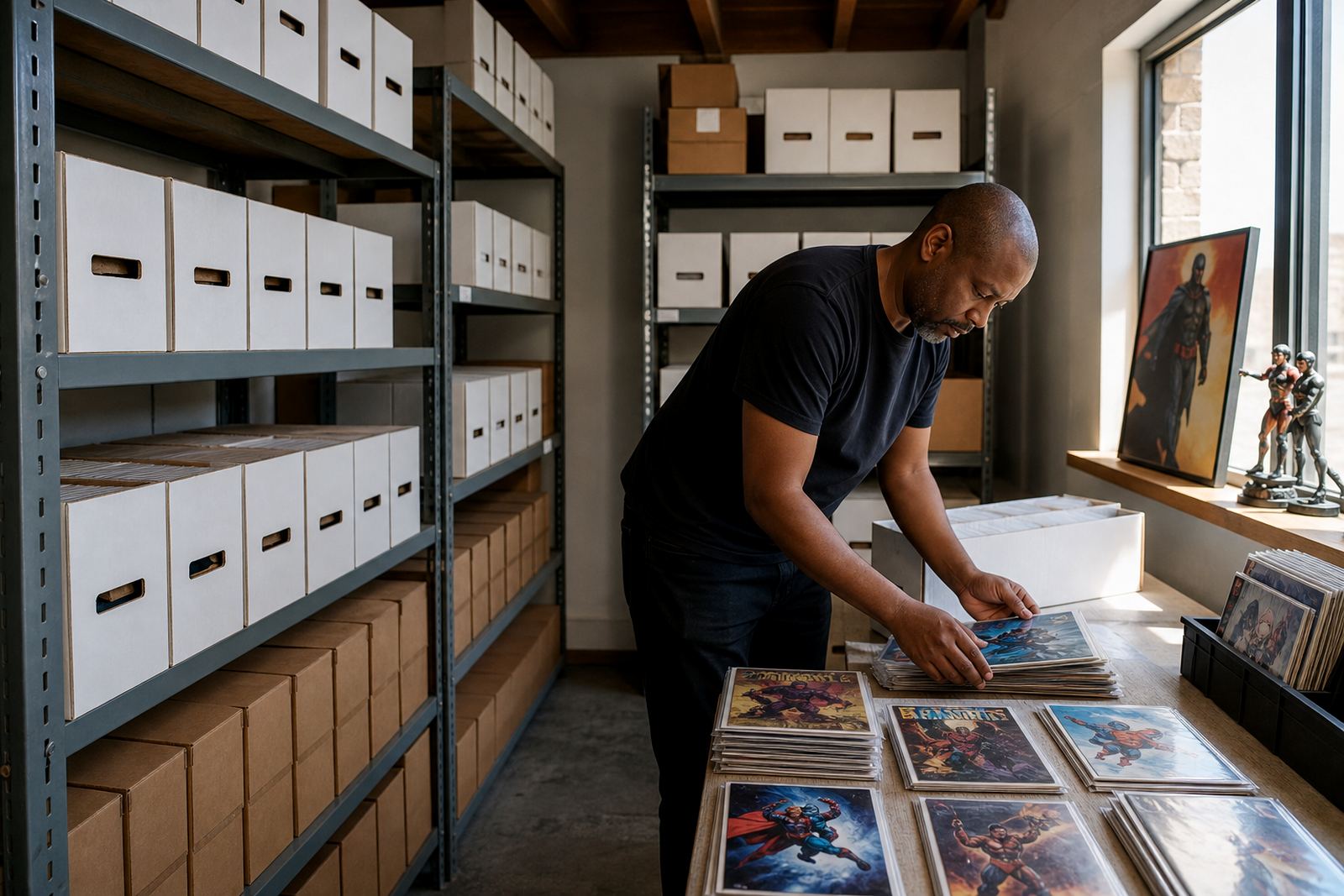
Before you move a single comic, measure the shelves and count the boxes, magazine files or display stands you already own. In a flat in Observatory or a family home in Pretoria, the first step is to match the collection to the space, not the other way round.
Leave room for growth. Most collectors underestimate how fast a shelf fills when they add protectors, hard cases, art prints and figures. If you live near the coast, keep a little space between items so air can move and damp does not settle in one spot. That matters in Cape Town, Durban and Gqeberha where humidity can creep up and curled covers become a headache.
- Measure shelf height, depth and width in metres or centimetres.
- Check where sunlight falls during the day.
- Keep shelves away from windows, heaters and kitchens.
- Allow space for future purchases and storage boxes.
A shelf that makes sense is a collection you will actually enjoy.
Sort by Reading Order When You Want Easy Access
If you like to read through a series from the first issue to the latest, use reading order. This keeps story arcs together and makes it simple to hand a stack to a friend or child without mixing up the sequence. It also helps if you are guiding a new collector who wants to start with the earliest chapters first.
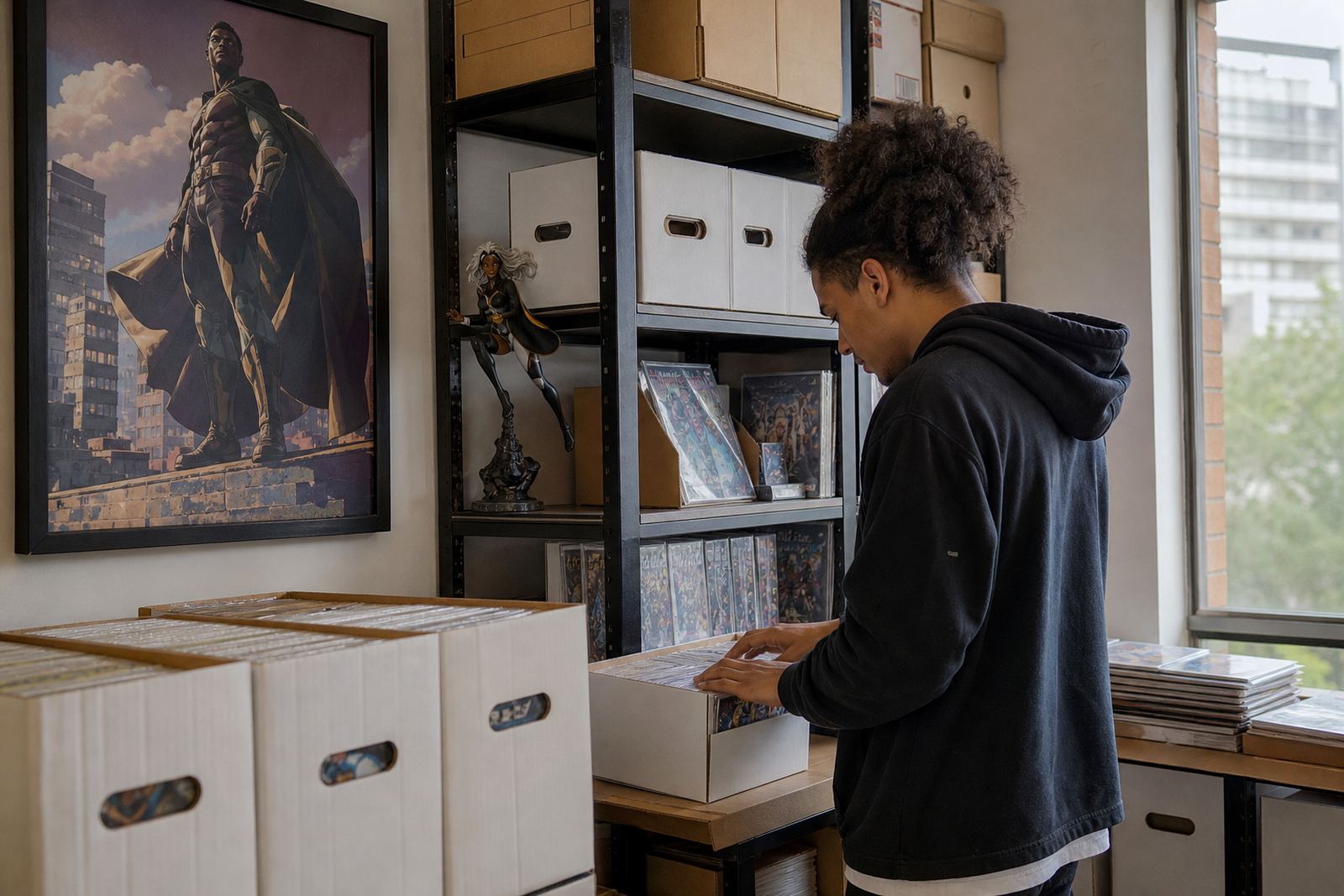
Numbered runs work best when they stay in order from left to right, or from top shelf to bottom shelf if the collection is very large. Use dividers or sticky tabs with short labels such as first wave, later issues, event tie in, or special edition. Keep duplicates and spares in a separate box so the main shelf stays tidy.
- Group issues by series title first.
- Then arrange by number or story sequence.
- Keep special editions or reprints at the end of the run.
- Use a note card for missing issues you still need to source.
Use Themes to Build a Shelf That Tells a Story
Theme based shelving works well for collectors who want the display to feel more personal. You can group comics by hero type, setting, tone, or the kind of team they belong to. That can be especially useful with local superhero comics because the characters often reflect different parts of South African life, from city action to township street scenes and coastal adventure.
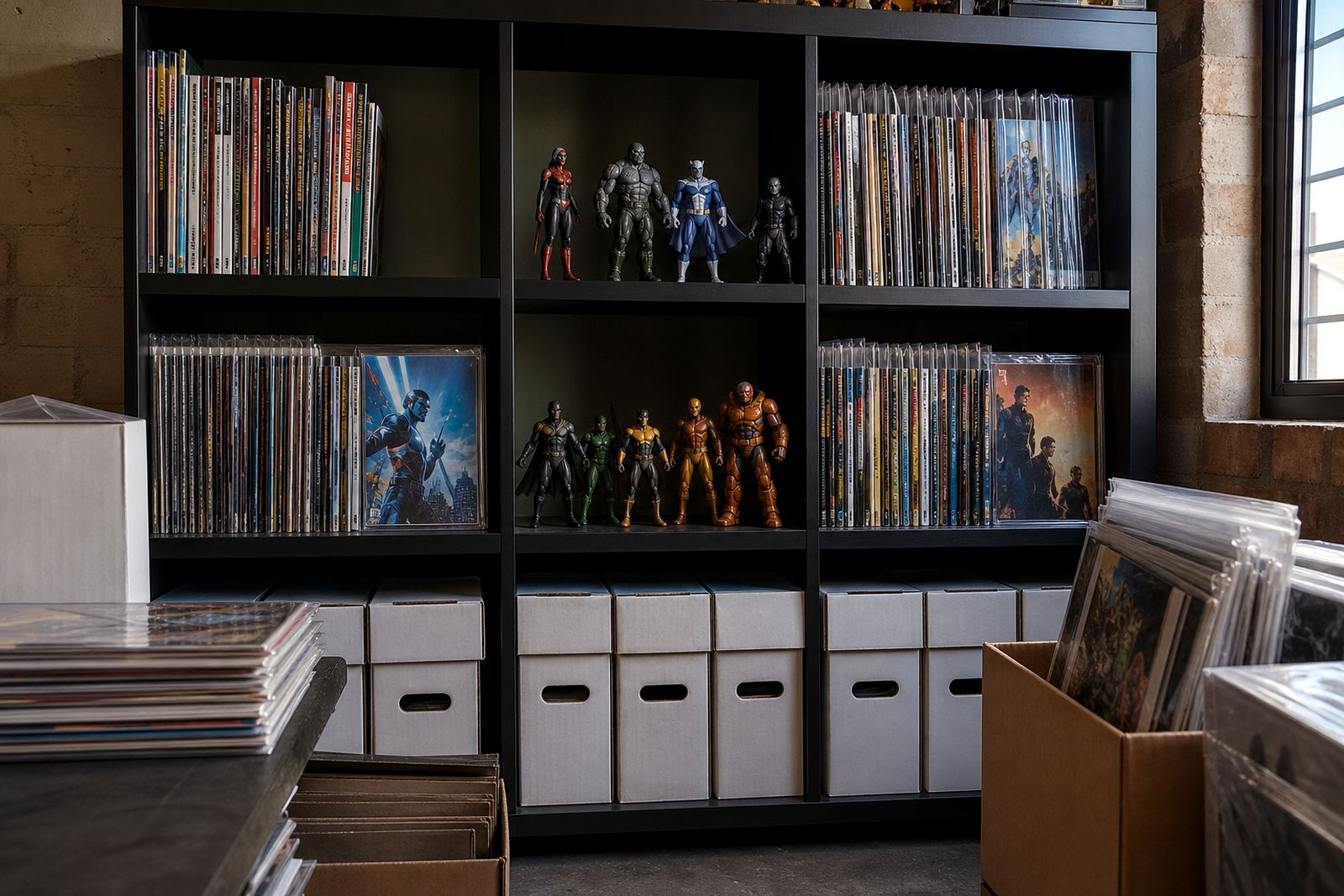
Try themes like street level heroes, science and invention, community protectors, or school age characters. You can also create a shelf for collectables linked to one mood, such as masks, mini figures, sketch cards or posters. If the shelves are for display in a living room, themed groupings usually look cleaner than a pure number run and they are easier to explain to visitors too.
Keep a small written key inside the box or on the inside of a shelf side panel.
Put Collector Priority at the Front
Some items deserve pride of place. That could be a first appearance, a signed copy, a clean high grade issue, or a comic with strong sentimental value. Arrange these pieces where they are easy to see and where they will not get knocked over when someone reaches for a lower shelf.
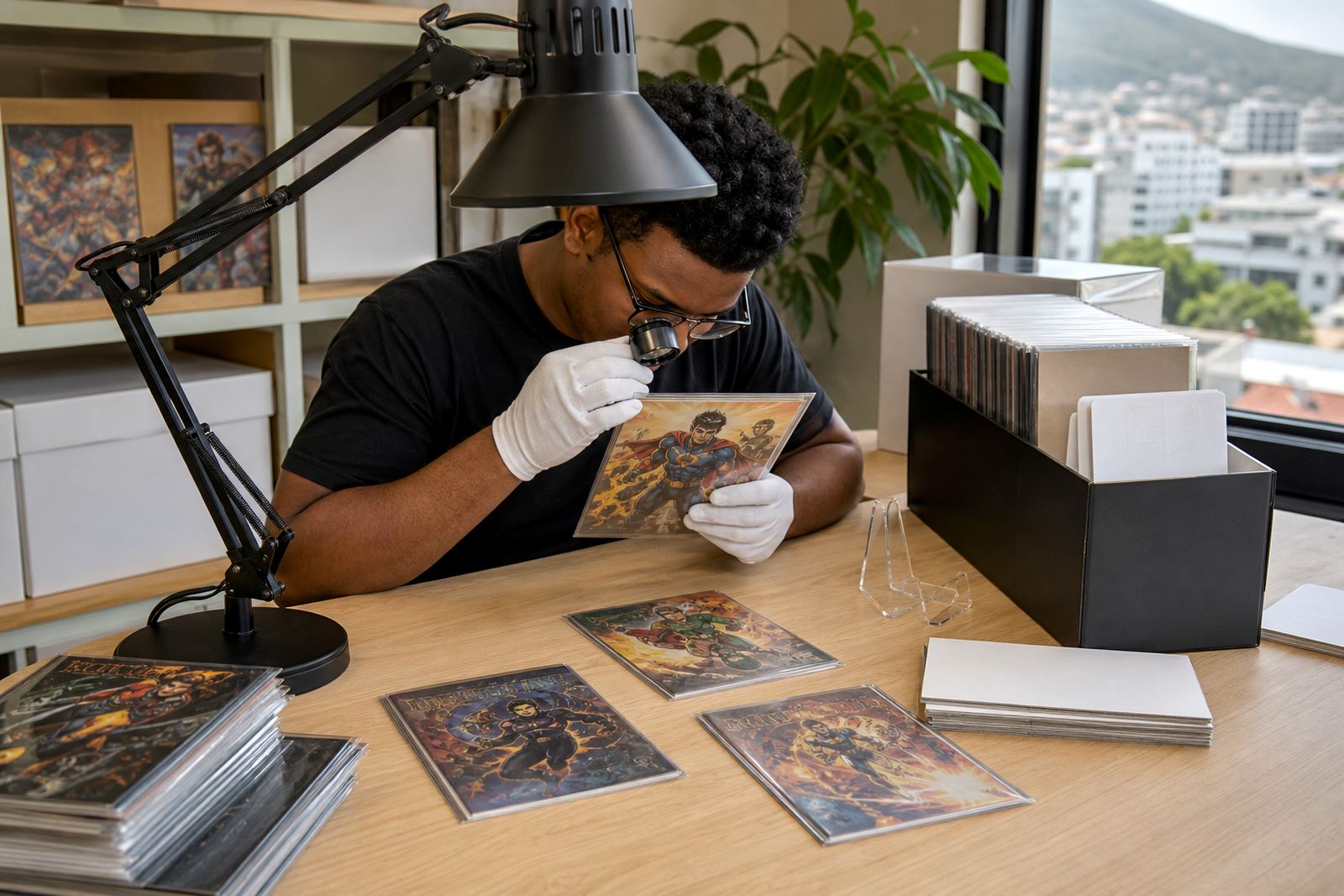
A collector priority shelf is not only about value. It is also about the items you want to protect most carefully. Use archival sleeves, backing boards and a sturdy box for anything that you want to keep in top condition. If you are unsure about condition, ask for grading guidance and pre submission checks before you make storage choices that may affect the comic later.
- Place key items at eye level, not on the floor.
- Keep signed or fragile items in fitted sleeves.
- Store duplicates and lesser priority copies lower down.
- Separate items waiting for grading from items already catalogued.
Protect Covers From Heat, Damp and Everyday Wear
Good organisation only lasts if the storage is decent. South African weather can be tough on paper. Heat, damp, dust and strong sunlight all shorten the life of a comic if the storage is poor. In coastal homes, use closed boxes or sealed tubs where possible, and in inland areas keep the room cool and dry rather than packed tight against a warm wall.
Do not stack too many comics on one shelf without support. Heavy piles bend corners and press colour transfer into covers. For long term storage, keep comics upright and snug but not crammed. If you use boxes, label the front and top clearly so you do not need to pull every lid off when you are looking for one issue. That saves time and reduces handling damage.
For display planning, choose a few favourites to show and rotate them now and then. That way the whole collection gets protected while still being visible. A collector in Johannesburg may prefer open shelves in a dry room, while someone in Durban may lean toward more enclosed storage because of humidity and summer moisture. Both approaches can work if they are planned well.
Keep a Simple System for Buying, Trading and Courier Orders
When new comics arrive through courier delivery, do not put them straight onto the main shelf without checking them first. Open the parcel carefully, inspect the corners, and separate the items that need cleaning advice or a closer look. This habit saves time and stops one damaged item from affecting the rest of the stack.
A simple intake system works best: new arrivals, read once, to grade, to store, and to display. If you are building a wish list or curating subscriptions, note what you already own before you place another order. That helps avoid duplicates and keeps the shelves balanced across Cape Town, Johannesburg, Durban, Pretoria and Gqeberha deliveries.
- Check parcels as soon as they arrive.
- Record the title, issue and condition.
- Set aside items that need safe shipping prep later.
- Update your shelf map after every new addition.
Make the Shelf Work for You Every Week
The best organisation system is the one you can keep up with. Set aside ten minutes each week to tidy one section, wipe dust, and return items to their correct place. If you collect with a partner or family, agree on the rules early so nobody reshuffles the shelf by accident.
Use the same labels, the same order and the same boxes each time. That consistency matters when a collection grows beyond one shelf and starts filling a second room or storage unit. If you want help with collection organisation, gift selection help, display planning or event packages, keep the process simple and practical so the collection stays easy to enjoy, not a chore.
Small habits make the biggest difference. A neat shelf protects the books, makes reading easier and gives you a clear picture of what you already have. And when you are ready to add more, it is much simpler to choose the right item if the shelves already make sense.
Name the title, issue or character you are hunting for, and our comic shop crew will help you track it down.
Contact form