
Start With the Signature Itself
Before you file a signed comic or print away, look closely at the signature. Check whether it sits on the cover, inside page, border or art print area, and note if it was done in ink, marker or paint pen. Some inks can smudge if they are handled too soon, especially in humid coastal weather around Cape Town or Durban.
If the item came to you after an event or through a courier, leave it flat and untouched for a short period so the ink can settle. Keep food, drinks and cleaning sprays well away. A small mark now can become a permanent flaw later, and once a signature is damaged it cannot be replaced.
- Confirm where the signature is placed
- Check for smudging, fading or pressure marks
- Keep the item flat until fully dry
- Avoid touching the signed area directly
Protect the signature first, then the paper.
Choose Storage That Keeps Paper Flat and Dry
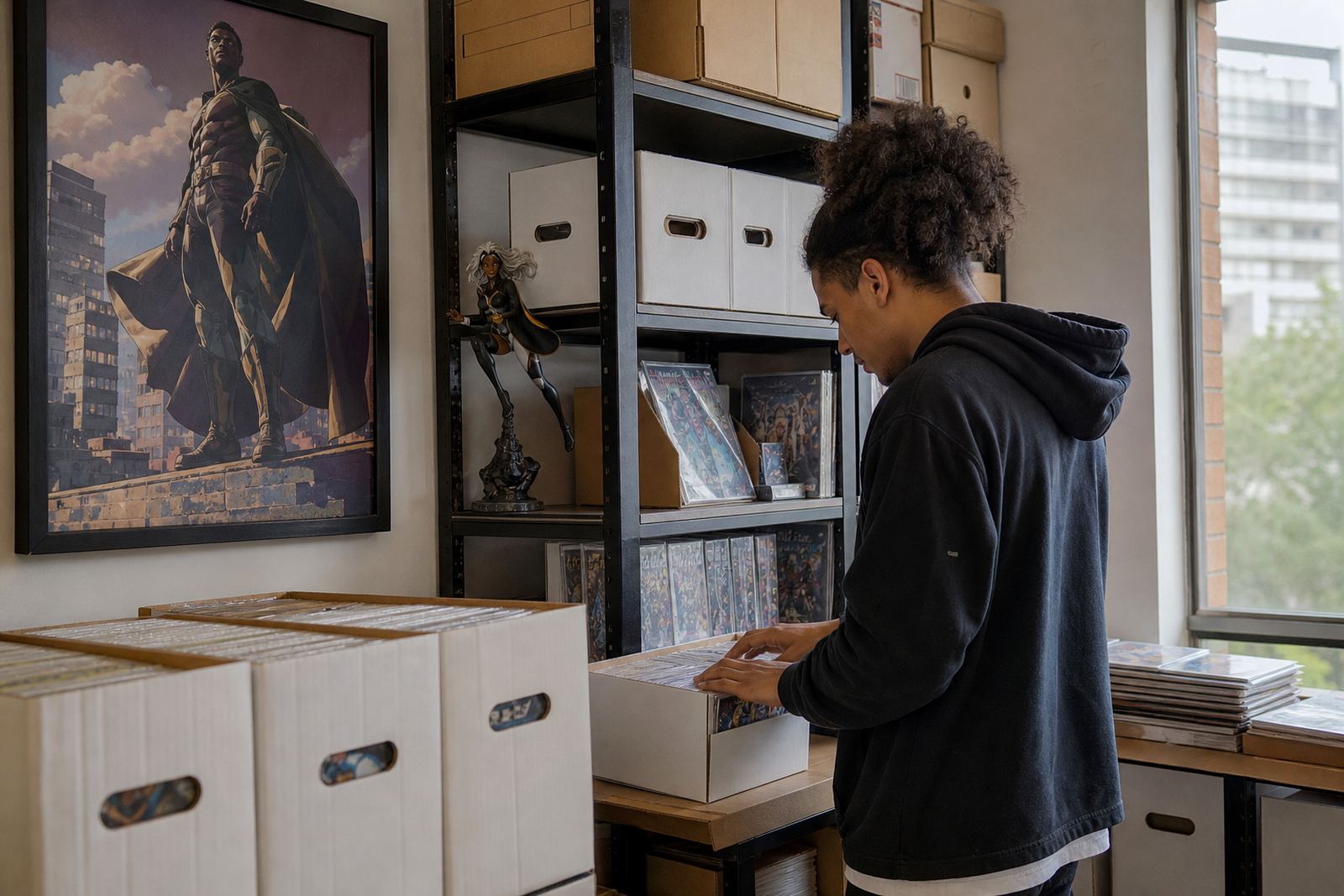
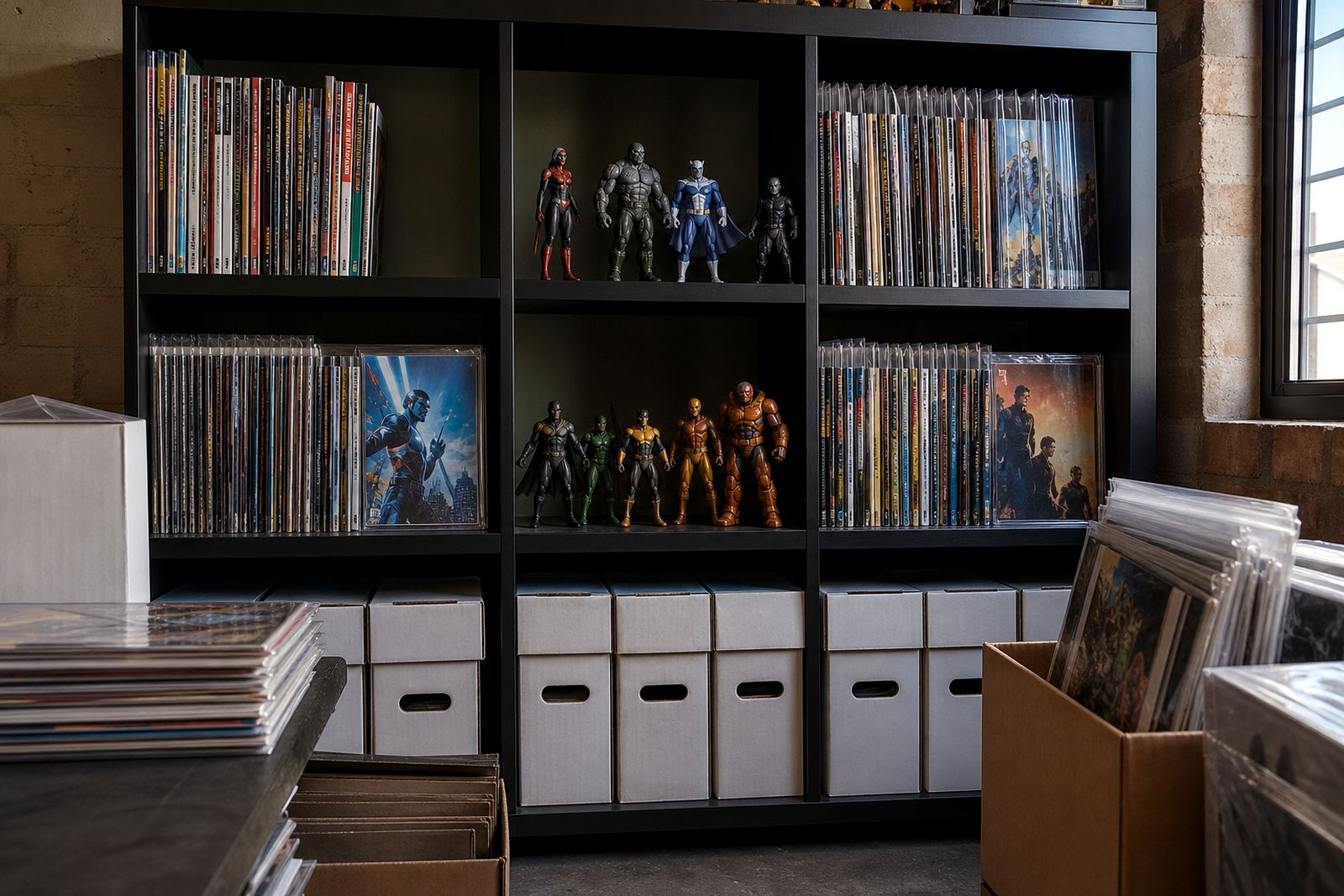
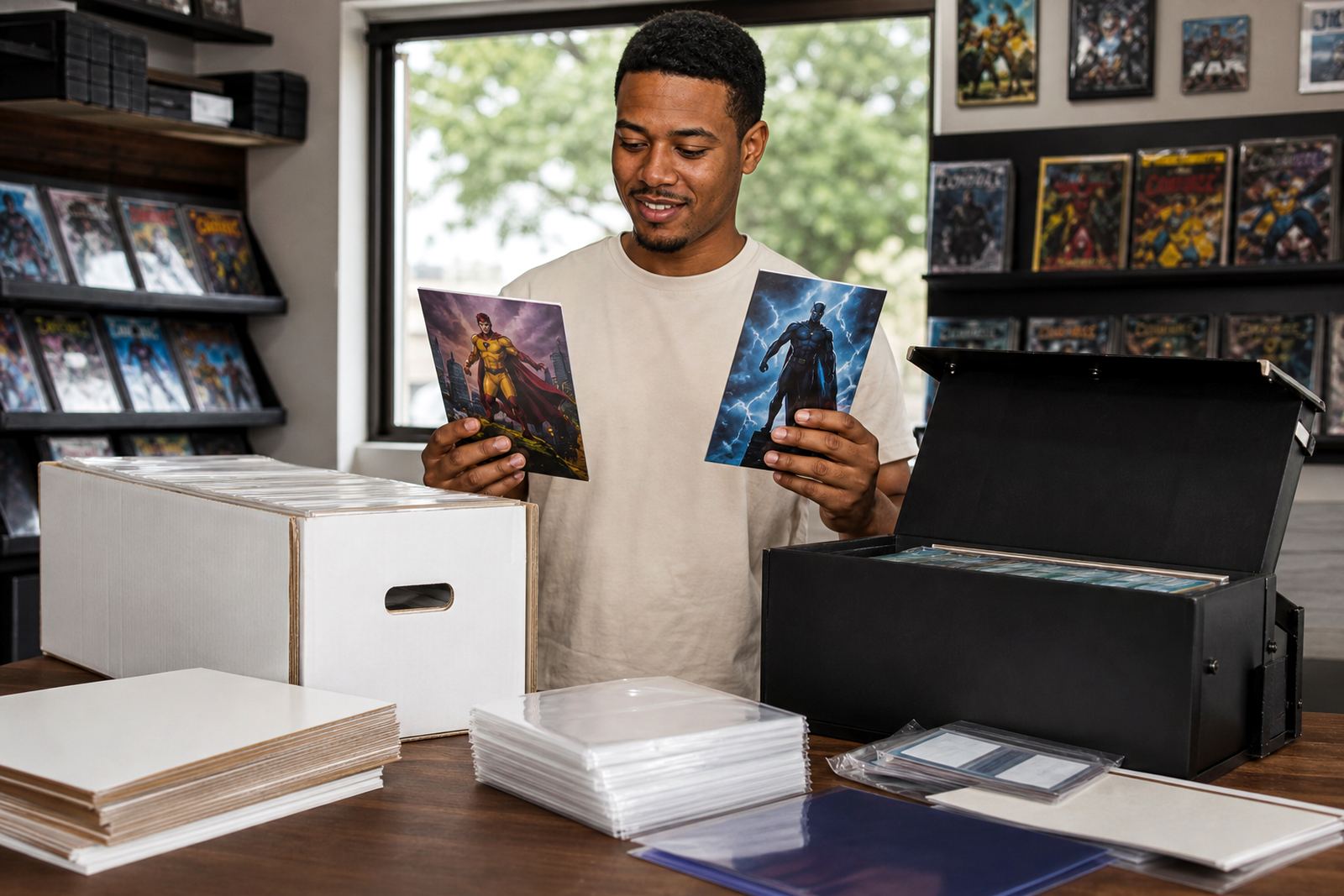
The safest storage for signed comics is usually an archival bag with an acid-free backing board, kept upright in a box or short stack that does not bend the spine. For signed art prints, use a larger protective sleeve with a rigid backing board so the sheet stays flat.
Do not fold signed pages, press them under heavy books or store them in direct sun. Sunlight can fade ink and paper fast, especially in a room with strong afternoon light. If you are storing multiple items, separate them so signatures do not rub against each other.
- Use acid-free sleeves and boards
- Keep items upright in a cool dry room
- Separate signed pieces from rough-edged books or posters
- Avoid plastic that traps moisture against the paper
Display Signed Comics Without Risking Fading
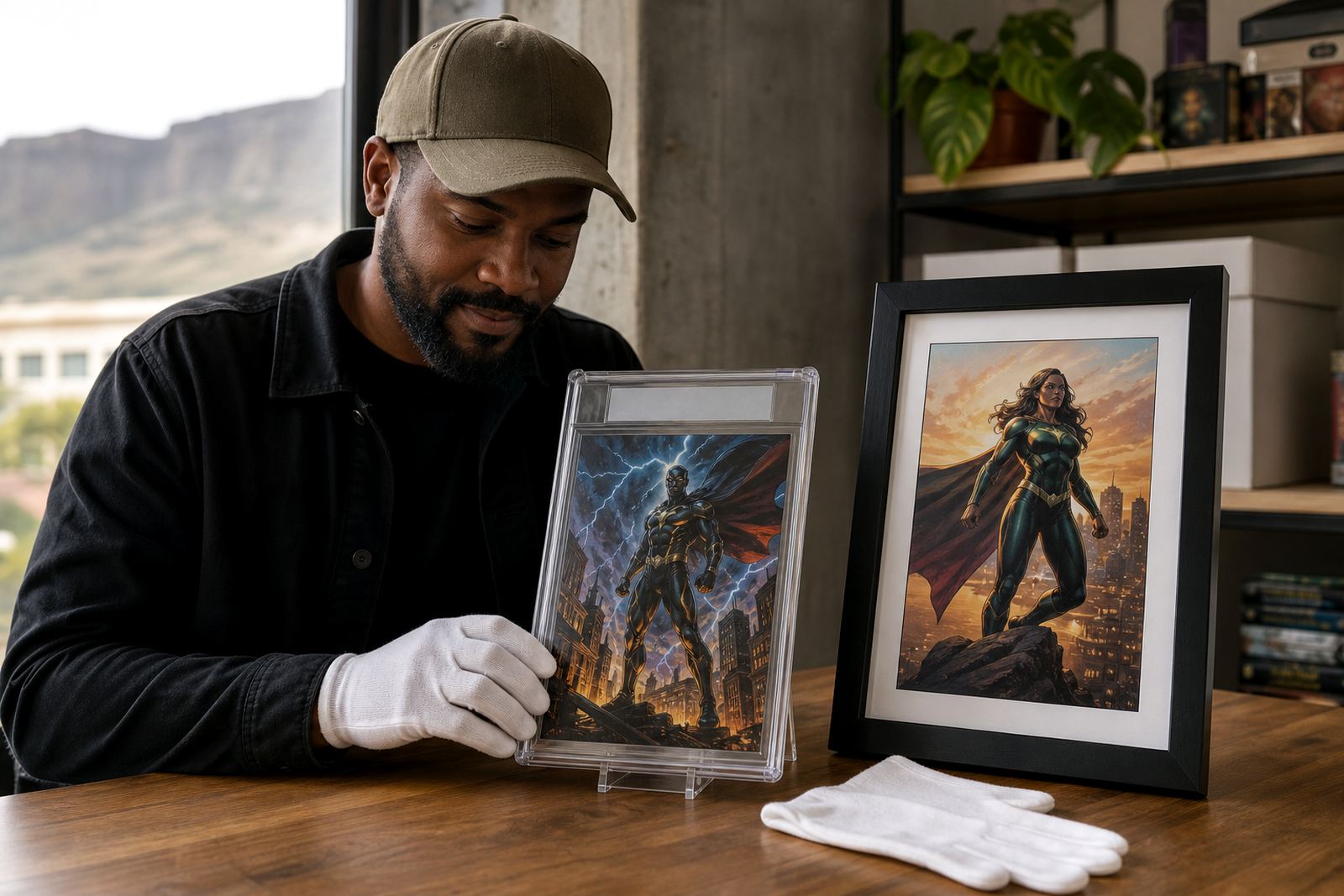
Display is where many collectors make mistakes. A signed comic or print should never sit in direct sun, under a hot spotlight, or next to a window that gets strong light during the day. UV exposure can fade both the artwork and the signature. If you want to frame an item, choose materials that reduce light damage and keep the piece off the glass with a proper mount or spacer.
For homes in Johannesburg, Pretoria or Gqeberha where rooms can get dusty, closed framing also helps reduce cleaning damage. When dust builds up, do not wipe the surface with a cloth. That often scratches the protector and can disturb the signature area if the item is not sealed properly.
- Hang framed items away from direct sunlight
- Use a frame with a spacer so the ink does not touch glass
- Keep displays away from kitchens, bathrooms and damp walls
- Dust the frame, not the comic or print itself
Handle Signed Items the Right Way
Handle signed items with clean, dry hands or cotton gloves if the surface is very sensitive. Gloves help with glossy covers and prints, but they must be clean or they can cause more harm than good. Hold comics by the edges and avoid flexing the spine. For art prints, support the full sheet with both hands so the paper does not crease.
If you need to check a signature for grading guidance or for your own records, use a bright room and turn the item slowly. Never lift it by one corner and never place it on a dirty table. A kitchen counter is not a good choice, even for a quick look.
- Wash and dry hands before handling
- Support the full item, not just one edge
- Work over a clean, flat surface
- Return the item to its sleeve immediately after viewing
Shipping Signed Pieces Across South Africa
When sending signed comics or prints by courier from Observatory to other parts of South Africa, pack them so they cannot move inside the parcel. Use a rigid outer mailer or box, corner protection and a moisture barrier. In wet weather or on coastal routes, a sealed inner sleeve adds another layer of protection. Mark the parcel clearly for careful handling, but still pack it as if the label will be ignored.
For higher value pieces, keep photos before packing and note the condition of the signature, the cover and the corners. That record is useful if the parcel is delayed, crushed or exposed to rain. For local deliveries to Cape Town, Stellenbosch or Bellville, the same rules apply. Short trips can still cause damage if the item is loose inside the box.
- Use a rigid mailer or sturdy box
- Keep the signed item flat and cushioned
- Add moisture protection for humid or rainy conditions
- Photograph the item before sending
Simple Checklist for Long-Term Care
If you are building a signed collection, make a routine and stick to it. Check the condition of each piece every few months, especially after a hot spell or heavy rain. Look for faded ink, corner bends, foxing, warping and loose framing materials. If the item is part of a growing set, keep a basic inventory so you know what is stored, what is displayed and what still needs better protection.
Collectors often focus on the autograph first and the storage later, but both matter. A clean signature on damaged paper still loses appeal, and a well-kept comic with a poor display plan can age quickly. For help with grading guidance, storage planning or safe shipping prep, write to SA Heros through the contact page form and speak with our team in Observatory.
- Inspect every signed item on a set schedule
- Keep a simple inventory with location notes
- Upgrade sleeves, boards or frames when they show wear
- Separate display pieces from deep storage pieces
Name the title, issue or character you are hunting for, and our comic shop crew will help you track it down.
Contact form