
Why backing boards matter for every collector
A backing board sits behind a comic inside a protective sleeve and gives the book a firm support. That support helps reduce bending when a comic is moved, sorted or stored upright on a shelf. For collectors in Observatory, Bellville or Stellenbosch, it is a simple step that makes a noticeable difference over time.
Backing boards are especially useful when you have thin paper stock, variant covers or older comics that have already picked up a little wave from humidity. In Cape Town coastal air can creep into storage spaces, so a board helps the comic keep a flatter shape. It also makes a comic easier to inspect without folding the cover back too far.
Think of the board as part of the comic’s daily protection. It does not replace a sleeve or a proper storage box, but it does support the whole package. Used correctly it can help keep corners tidy and reduce handling marks.
A good board keeps a comic flat, easy to handle and ready for the shelf.
Choosing the right board for your comic
The best backing board is the one that matches the size and condition of the comic. A standard comic board suits most modern issues, while oversized or thicker items may need a larger fit. If the board is too small it will leave edges unsupported, and if it is too large it can make the sleeve awkward to close.
Look for a board that feels firm but not brittle. A collector handling books for grading or resale usually wants a board that lies flat and does not add pressure points. For long term storage, acid free and lignin free boards are the safer choice because they are designed to be gentler on paper over time.
- Check the comic size before you buy sleeves and boards together.
- Choose a board that slides in without forcing the cover.
- Use fresh boards for comics that you want to keep in top shape.
- Replace any board that is bent, stained or soft at the edges.
How to insert a comic without creasing it
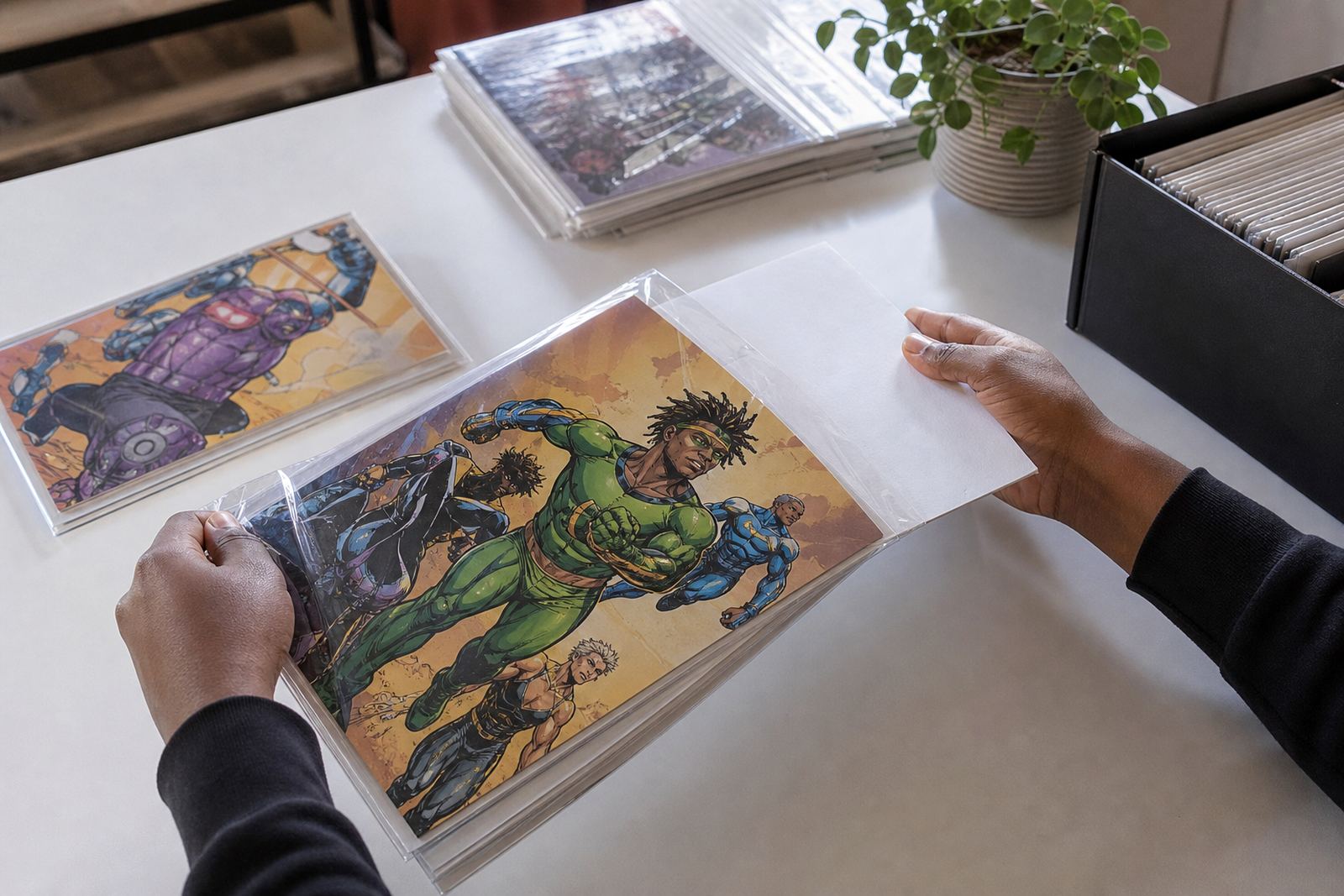
When placing a comic into a sleeve with a backing board, slow down and keep both hands on the book. Open the sleeve fully, slide the board in first, then guide the comic behind it using gentle pressure. Never push from one corner only because that is where creases tend to start. A small bit of care here saves a lot of trouble later.
If the comic has a spine roll or a slight wave, support the whole cover while inserting it. Some collectors like to hold the board at a slight angle so the comic settles naturally. If there is dust or paper debris on the surface, remove it before sleeving so it does not get trapped inside.
- Wash and dry your hands first.
- Work on a clean table with enough light.
- Do not bend the comic to fit the sleeve.
- Make sure the top edge is even before sealing.
Using backing boards for grading preparation
If you are preparing comics for grading or a pre-submission check, backing boards help keep the issue stable during handling and packing. A comic that sits flat is easier to inspect for spine ticks, corner wear and surface marks. It also makes it simpler to spot defects before the book leaves your home or collection cabinet.
For grading prep, keep each comic in a clean sleeve with a fresh board. Do not reuse a board that has picked up moisture, tape marks or surface dents. If you are planning safe shipping from Johannesburg, Durban or Pretoria, place the sleeved comic between rigid supports so the board does not bend during transit. That extra step can make a real difference once the courier parcel starts moving between depots.
Our team often advises collectors to use a board not only for storage but also for handling before a submission. It gives the comic a more controlled feel and helps reduce accidental finger pressure on the cover.
Storage habits that keep comics flat in South African homes
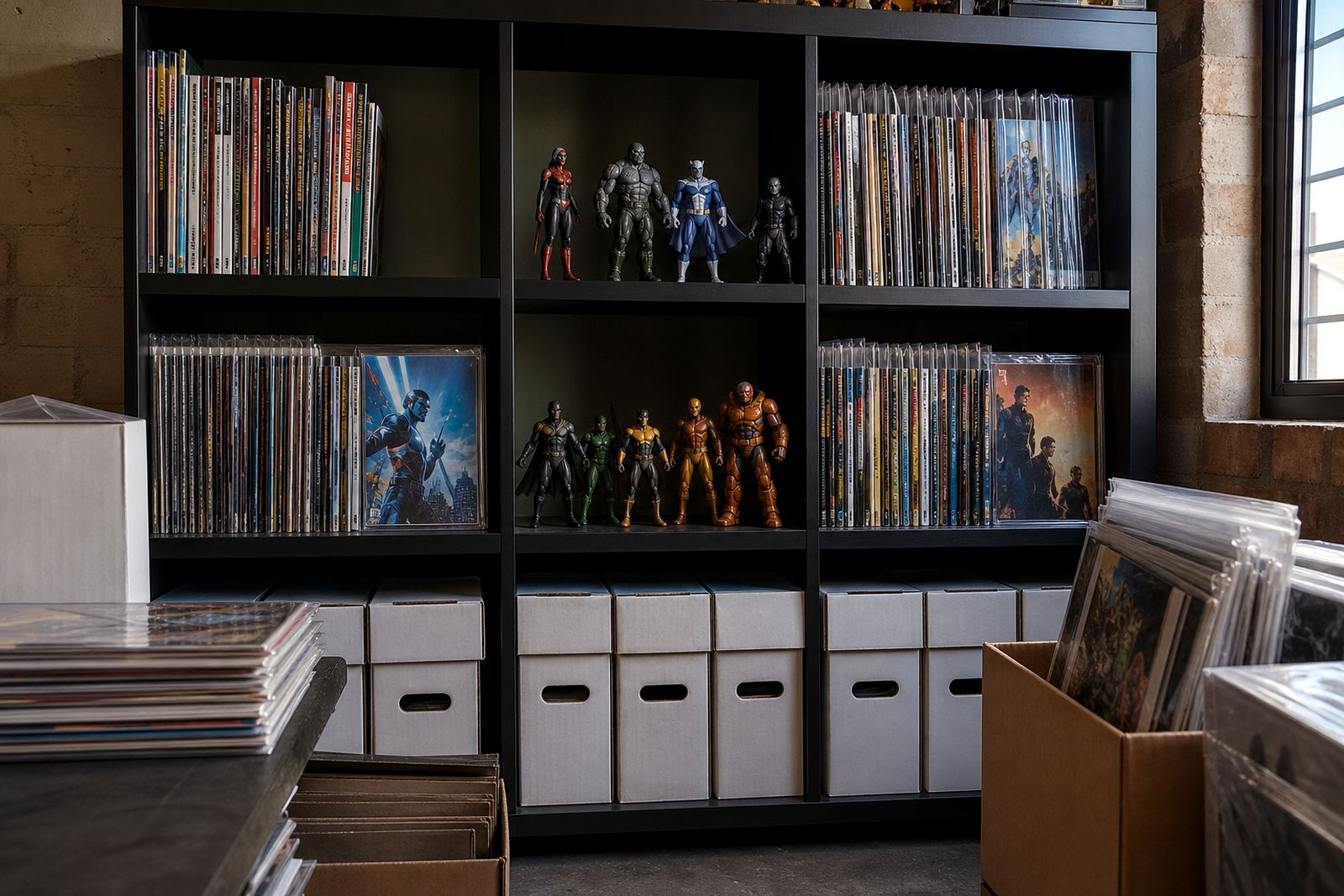
Backing boards work best when they are paired with the right storage habits. Keep comics upright in a box or cabinet, away from direct sun, damp walls and hot windowsills.
For coastal areas like Gqeberha and Cape Town, moisture control matters. Use a dry storage spot with steady air flow and avoid sealing comics in places that trap humidity. In inland areas dust can be a bigger issue, so a closed box with snug dividers can help keep covers cleaner.
- Store comics upright, not flat in a heavy stack.
- Keep away from heaters, geysers and sunny windows.
- Use boxes or shelves that support the full height of the comic.
- Check stored books every few months for bends or moisture.
When to replace boards and how to build a simple routine
Backing boards do wear out. If one starts to curve, shows brown spots or feels soft, replace it. A worn board no longer gives reliable support and can make a comic sit unevenly inside the sleeve. For collectors who buy, sell or trade often, checking board condition should be part of the regular routine.
A simple routine works well: inspect the comic, replace the sleeve if it is scratched, swap the board if needed, then return the book to clean storage. When you organise a collection by series, condition or character, keep a small stack of spare boards so you do not leave a comic unsupported while waiting for supplies. It is a basic habit but it saves time later.
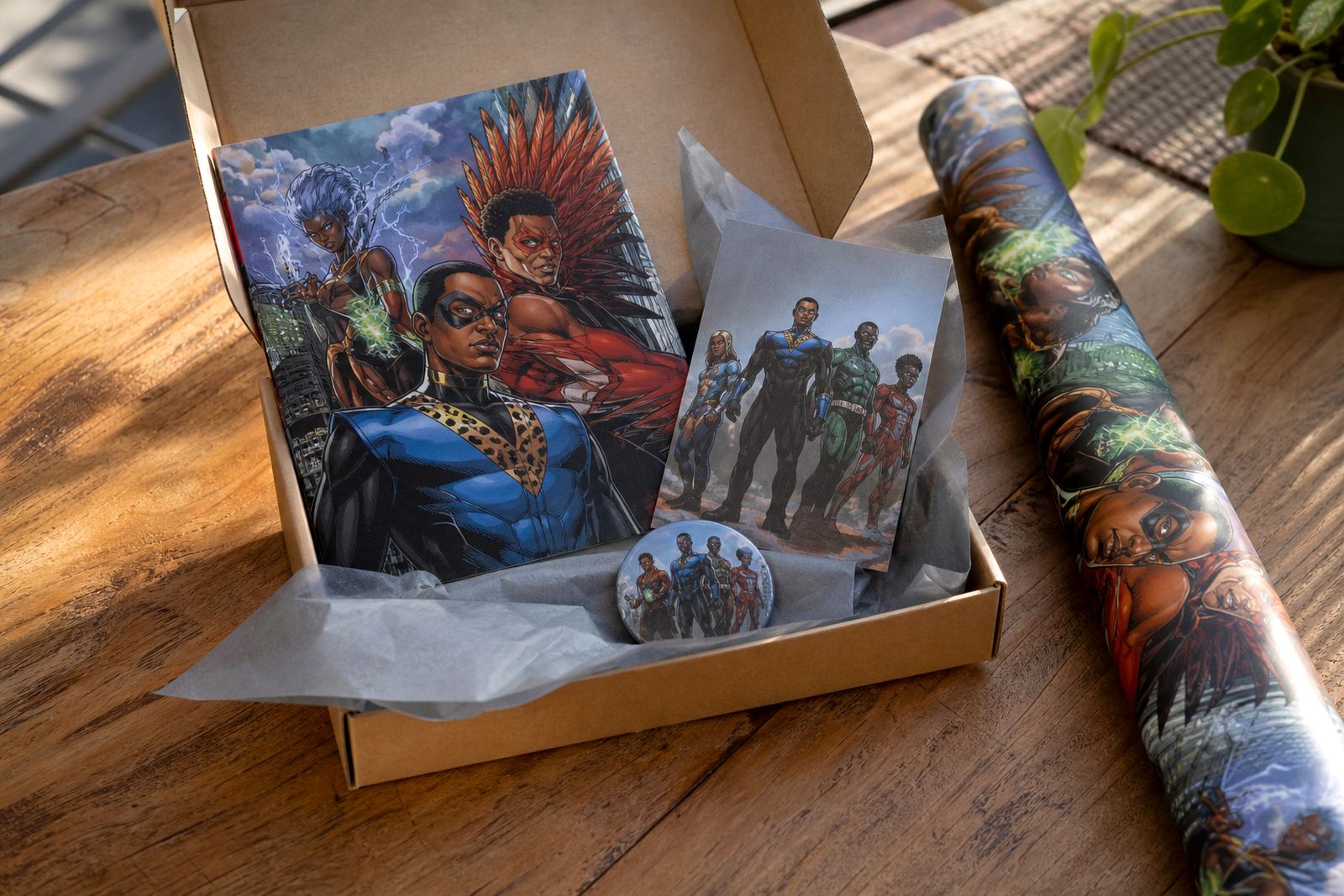
Many collectors also use boards when creating a wishlist or preparing gift selections, because a well stored comic presents better and is easier to share with another reader. Even a small collection looks tidier when each book sits flat and stays easy to pull out.
Name the title, issue or character you are hunting for, and our comic shop crew will help you track it down.
Contact form