
Choose a spot that keeps books close and safe
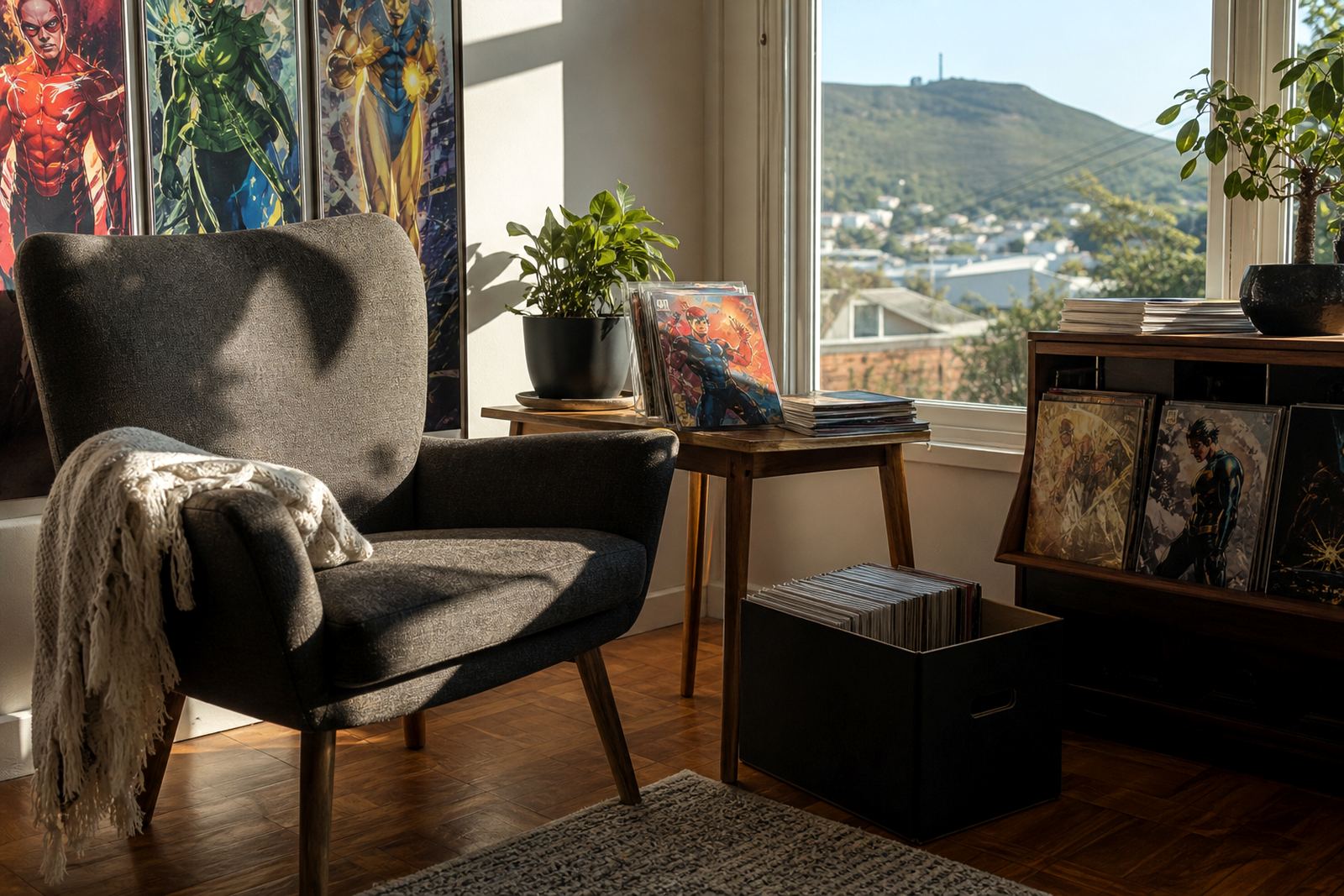
The best reading corner is usually the one you can reach often without moving half the house. A quiet area near a lounge wall, bedroom window, enclosed stoep or study nook works well, as long as the space is dry and not exposed to direct sun for long hours. In Cape Town, that matters because bright afternoon light can fade covers, while near the coast moisture can creep into bags, boards and boxes. If you are in Observatory, a small corner by a side wall or shelf unit can be enough for a solid setup.
Keep the area away from kitchens, open windows that catch sea air and any place where water splashes during cleaning. If you are arranging a collection in a flat or townhouse, think about foot traffic too. A space that is comfortable for reading but not in the main walkway will keep pages safer and make the corner feel calmer, not cluttered.
A good reading corner is not just for comfort, it helps your collection stay organised and protected too.
Build the seating around long reads, not just looks
A reading chair should support your back and let you hold a comic without strain. A simple upright armchair, bench with cushion, or even a compact two-seater can work if there is enough room for a side table. Good lighting is important, but avoid a lamp that shines straight into your eyes or throws heat onto the books.
- Keep a small table for the current issue, a drink and your reading glasses.
- Use a soft throw or cushion so the corner feels inviting year-round.
- Choose light you can adjust, because some panels are easier to read under warmer light.
- Leave enough legroom so you do not bend comics awkwardly while reading.
A practical corner does not need to look fancy. It just needs to be comfortable enough that you return to it often, which is what makes it useful over time. That small habit helps the collection stay organised too.
Store graded and ungraded comics in separate routines
If you collect both reading copies and slabbed or graded items, separate the way you handle them. Reading copies can sit in short stacks or open-faced magazine holders, while graded items should stay in their protective cases and be placed upright on stable shelving. That simple split saves time when you want to read, sort or show a visitor a favourite issue. It also reduces the risk of rubbing corners, bent spines and finger marks.
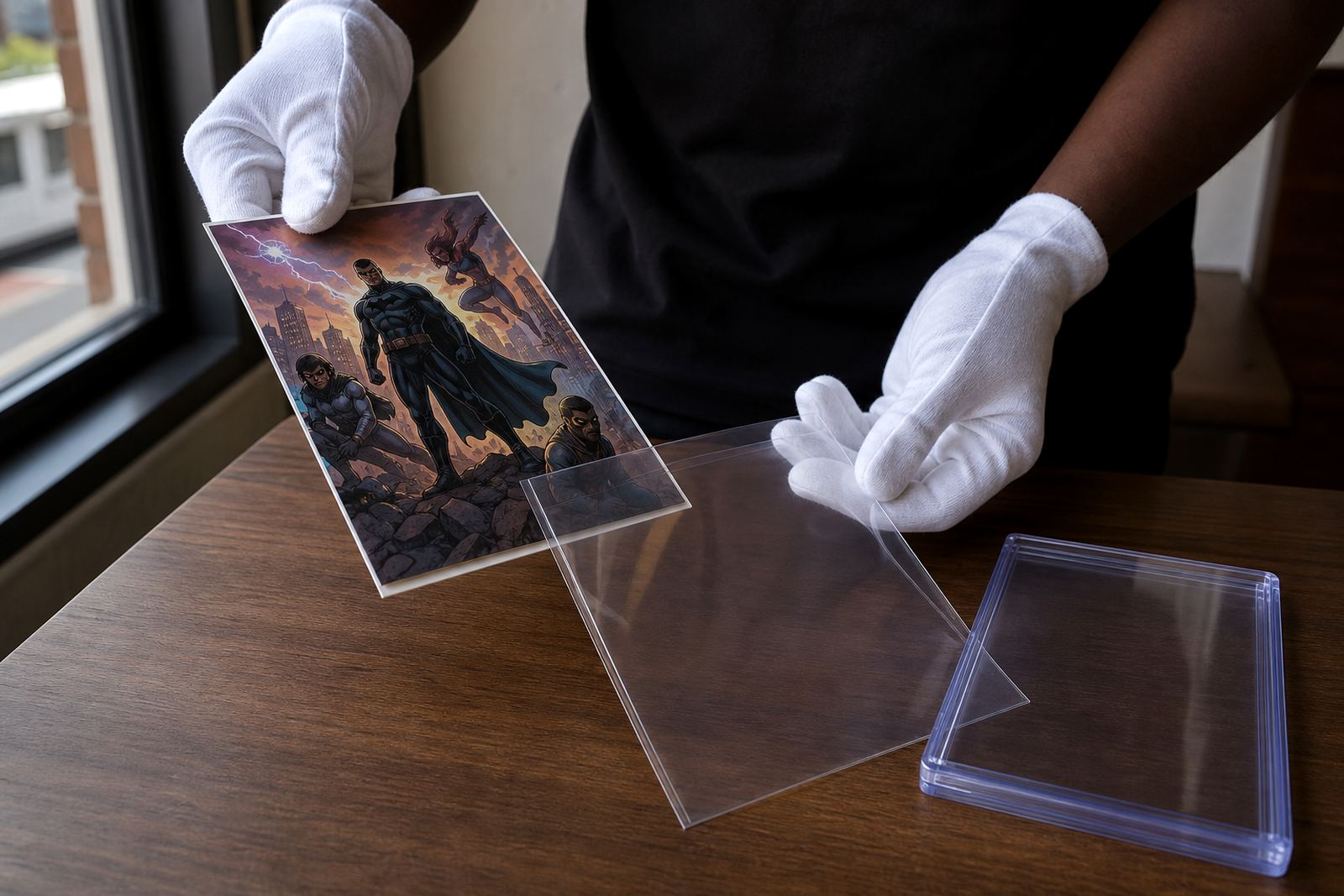
For ungraded comics, use bags and boards that fit properly, then keep them upright in boxes or on shelves that do not bow under weight. For graded pieces, avoid tight packing. Leave space so you can lift one item out without knocking the next. If a corner is in a room with coastal humidity, use a dehumidifier or moisture absorber where needed and check your collection regularly for any waviness or musty smell. A quick monthly check can catch small issues before they become a bigger job.
- Keep graded items away from direct sunlight and heat sources.
- Do not stack heavy objects on top of comic storage boxes.
- Use clean, dry hands when handling inner pages or cases.
- Label short boxes so you can find runs or characters faster.
Use display pieces without turning the room into a clutter trap
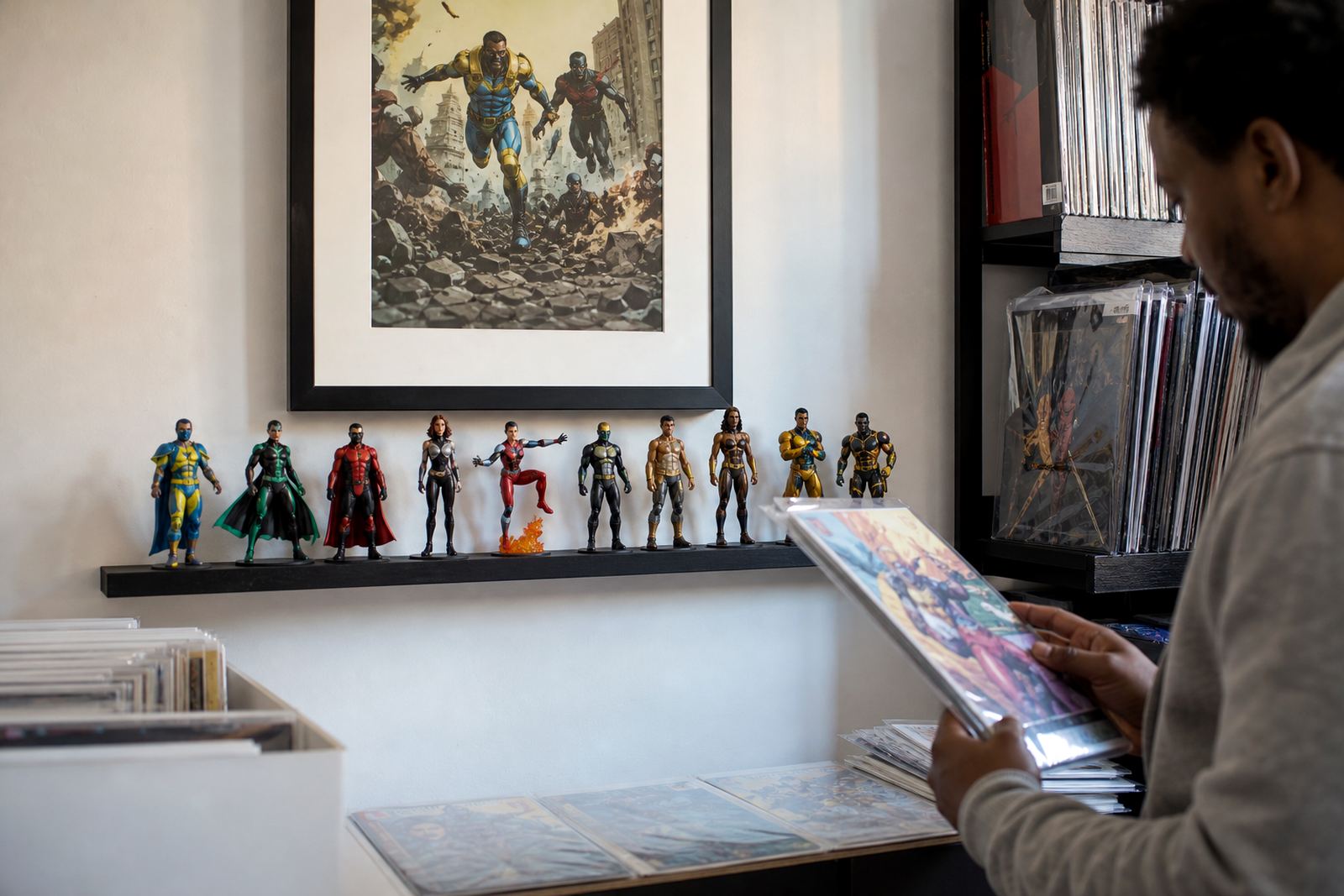
Display shelves are useful, but only when they are planned with restraint. A reading corner should show a few standout covers, a favourite figure or a framed print, not every item you own. When too much is out on display, dust builds up faster and the room starts to feel busy. A cleaner layout also makes it easier to notice if a cover is curling or a case has shifted. Small, well-spaced items usually age better than crowded ones.
Think in layers. The top shelf can hold display pieces, the middle can hold current reading stock, and the lower shelves can store boxes or portfolios. If you are in a family home in Bellville or Stellenbosch, this kind of layout helps the corner stay neat even when children or guests walk through. It also makes it easier to add or remove items when you are reorganising after a new purchase or a trade.
- Display by colour or theme if that helps you keep track of sets.
- Use stable stands so books do not lean and crease at the spine.
- Leave open space for air flow around any enclosed shelves.
- Dust shelves lightly and often rather than waiting for build up.
Make the corner work through Cape Town summers and wet winters
Local conditions shape how long a collection stays clean and sound. On humid days, especially in coastal areas such as Gqeberha or parts of Cape Town, paper can absorb moisture if the room is poorly ventilated. On hot dry days, direct light through a window can be just as damaging. Good curtains, a fan where needed and a steady room temperature help more than people sometimes expect. If your corner is close to a sliding door, check that rain and sea air are not finding their way in during bad weather.
It sounds basic, but it prevents rushed handling, folded pages and dropped items. A tidy corner is easier to maintain when the basics are close at hand, not stored in another room.
Set up a simple system for reading, sorting and wishlist planning
Once the corner is in place, give it a small routine. Keep one tray or basket for items that need cleaning advice, one pile for reading next, and one box for comics that need better storage or a future display slot. That way the space supports the hobby instead of becoming a dumping ground. It also helps when you are looking for gift ideas, collecting a specific type of issue or planning a collection refresh with a tighter focus.
Some collectors also like to keep a notebook or list nearby for missing issues, trade wants and series they want to track down later. A quiet corner makes that kind of planning easier because you can review your collection without rushing. If you are buying locally and using courier delivery across South Africa, a checklist also helps with safe shipping prep when items arrive and need to be filed correctly.
A Cape Town example that keeps the hobby easy to enjoy
A practical example from Observatory is a small corner set beside a shelf and a single chair, with daylight kept soft by a curtain and a rechargeable lamp ready for evenings. The reading copy lives in easy reach, the best covers sit higher up, and the graded pieces stay in a separate upright section. It is simple, but it works. The room stays comfortable for a quick read after work, and the collection is not left lying around in piles.
That is usually the goal with a reading corner. It should make it easier to enjoy the comics you love while keeping the rest of the collection in good shape. If your space is planned well, the habit of reading and the habit of caring for the books support each other rather than competing for space. It saves time, protects the collection and makes the whole room feel more settled.
Name the title, issue or character you are hunting for, and our comic shop crew will help you track it down.
Contact form