
Why smaller figures work so well in compact homes
In flats, student rooms and smaller family homes, a compact figure can do more than a larger piece ever could. It gives a clear focal point without asking for a full cabinet, and it lets you build a collection slowly instead of trying to fill every surface at once. That matters when your space also needs to handle books, devices, chargers and the usual everyday clutter.
The best part is that small figures are easier to place in spots people often ignore. A narrow shelf in Observatory, a windowsill in Bellville, or the corner of a TV unit in Durban can all carry a display if the scale is right. You do not need a big room to show good taste, only a bit of planning and consistency.
For collectors, compact figures are also easier to rotate. You can change a display season by season, or by mood, without packing half the house into storage. That keeps the collection fresh and helps each piece get noticed instead of disappearing into a crowded room.
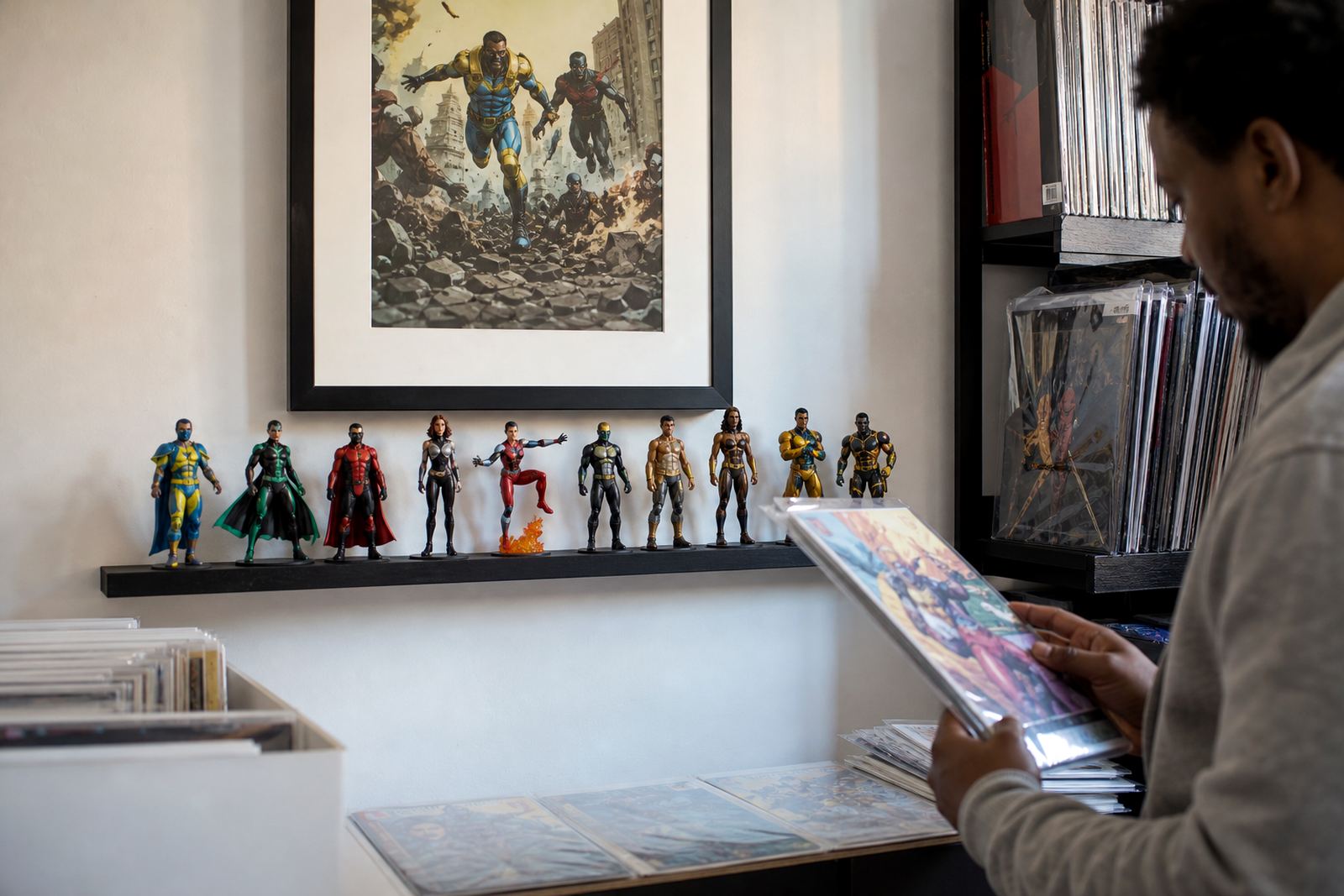
Small collectables work best when the room still feels like a room.
Choosing pieces that suit the room instead of fighting it
When space is tight, the figure should fit the room’s shape as much as its theme. A tall, thin display area suits standing characters, while a low shelf often works better with seated figures, small teams or pairings. If the room already feels busy, go for one strong figure rather than several mixed pieces. If the room is plain, a small cluster can add colour and interest without looking cluttered.
Think about what sits around the figure too. A painted figure on a white shelf reads differently from the same piece placed next to wood grain, plants or a lamp. The background matters, and in a small room every object is part of the display. Try to keep the palette simple so the eye lands on the collectable first.
- Pick a figure that matches the shelf depth, not just the shelf length.
- Leave breathing room on at least one side so the piece does not feel boxed in.
- Use similar heights together for a neat look, or vary height on purpose for a more active display.
- Keep fragile pieces away from doorways, open windows and high-traffic spots.
Display ideas that keep things neat and easy to live with
Good display planning is about access as much as appearance. If a piece is hard to reach, it will collect dust and get knocked more often. In a Cape Town apartment with limited shelf space, a simple row of figures on one steady surface can work better than a crowded stack of stands and boxes. The same goes for homes near the coast where moisture and salty air can affect packaging and finishes over time.
Glass cabinets are useful, but they are not the only option. Wall-mounted shelves, sturdy bookcases and covered storage boxes with a few hero pieces on top can all do the job well. A small lamp placed nearby can make details easier to see without heating the room.
- Use felt pads or soft liners under stands to protect painted surfaces.
- Keep displays away from direct sun to help reduce fading.
- Leave enough space to clean behind and under each piece.
- Group collectables by series, colour or character type for a cleaner finish.
Storage and grading habits that protect value
If you collect with future value in mind, condition matters. Even a compact figure can lose appeal if the box is crushed, the surface is scratched or the joints are stressed. Good storage starts before the item goes onto display. Keep original packaging where possible, and avoid stacking heavy boxes on top of lighter ones. In humid areas, especially coastal homes, a dry box with clean inner wrapping helps prevent warping and moisture marks.
Grading guidance is useful when you are unsure whether a piece should be opened, displayed or kept sealed. A careful check can help you spot corner wear, print rubbing, loose inserts and handling marks before they become a bigger problem. If a figure is meant for display, cleaning advice matters too. A soft brush, a dry cloth and gentle handling go a long way. Avoid harsh sprays or quick fixes that can stain the finish.
For collectors in Johannesburg or Pretoria, dust can build fast, and in some homes the temperature swings can be sharp from day to night. In those cases, storage planning is not extra fuss, it is part of keeping the collection in good order. A simple system of labelled boxes, sleeves and note cards can save time later when you want to check condition or reshuffle the shelf.
Building a small display with a clear local story
One of the nicest things about local superhero collectables is that they can reflect South African identity without needing a huge space. A few original characters, each with a strong pose or colour scheme, can tell a story on a narrow shelf in a Mowbray student room or a family lounge in Gqeberha. The display becomes personal, not just decorative.
A local example: imagine a small apartment in Observatory with one wall shelf above a reading chair. Instead of filling it with random pieces, the owner chooses three figures that share a theme, one bold standing hero, one smaller side character and one collectable with a vehicle or accessory. The shelf stays clean, the room still feels open, and the display becomes a talking point when friends visit.
That is the real strength of compact collectables. They let you show taste, memory and interest without crowding out the rest of the room. You can start small and still build something meaningful over time.
Gift selection, wishlist sourcing and collector support
Small figures also make practical gifts because they suit most homes and do not demand a major rearrangement. If you are buying for someone else, gift selection help can save you from choosing something too large, too delicate or too similar to what they already own. Wishlist sourcing is useful too, especially when a collector is looking for a particular pose, finish or series style and wants help tracking it down.
For buyers who are new to collectables, collector consultations can help with the basics: what to open, what to keep sealed, how to store a box and how to arrange a first display without overdoing it. Subscription curation can also work well for people who want a steady flow of fresh pieces without having to search every week. It keeps the collection moving at a pace that suits the room and the budget.
- Choose a gift that suits the recipient’s available shelf space.
- Ask whether they prefer sealed items, display pieces or both.
- Use safe shipping prep for boxed items so they arrive ready to store or show.
- Consider event packages for community tables, collector meets or small promotional setups.
Courier delivery across South Africa, packed for the journey
Compact figures are easier to send, but they still need proper packing. Safe shipping prep should include support around the piece, protection for corners and enough outer packaging to handle courier movement. That matters whether the parcel is going to Bellville, Stellenbosch, Durban or across to Pretoria. A well packed item is less likely to arrive with scuffs or box damage, and that saves trouble for both buyer and collector.
Courier delivery across South Africa also makes small collectables practical for people outside Cape Town. A collector in Johannesburg can build a shelf one piece at a time, while someone in Gqeberha can ask for a specific item without having to chase it in person. For many homes, that convenience is what turns a casual interest into a proper collection.
Ask before the parcel leaves if you are not certain how a figure should be stored, displayed or packed for transport. Small collectables may not take much room, but they still deserve care from the moment they are chosen to the moment they go on the shelf.
Name the title, issue or character you are hunting for, and our comic shop crew will help you track it down.
Contact form