
Start with the goal: display, protect, or both
Before you hang a single comic or open a box, decide what the display is meant to do. Some collectors want a few favourites on view every day, while others want a rotating display that keeps the rest of the collection tucked away. The safest approach is usually a mix of both. Keep a small number on display and store the rest in proper sleeves, boards and boxes.
If you live in Cape Town, Johannesburg, Durban, Pretoria or Gqeberha the environment matters too. Coastal humidity, dry inland air and summer heat all affect paper. A comic on display near a sunny window or above a heater can start to fade or curl faster than expected. It is better to plan for the room first, then choose the display method.
- Choose a small rotation of favourites instead of leaving everything out.
- Keep display comics away from direct sun and damp walls.
- Match the display method to the value and condition of each issue.
A good display should show the cover, not test the comic.
Use the right sleeve, backing and support
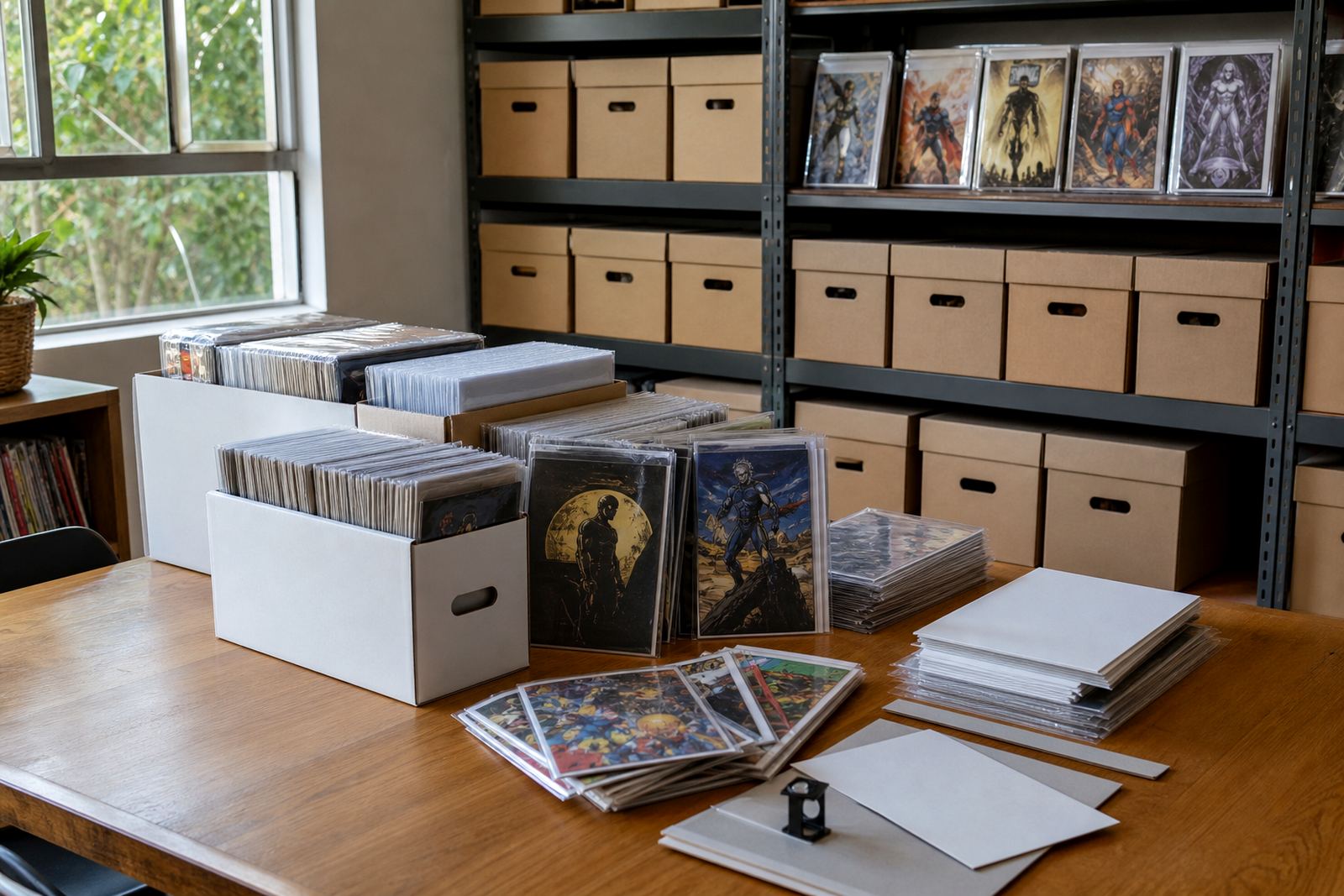
A comic should never sit loose on a shelf or be pinned directly to a wall. For everyday protection, use an acid-free sleeve with a backing board that fits properly. The comic should lie flat without bending at the edges. If the sleeve is too tight it can crease the corners. If it is too loose, the comic can slide around and pick up damage when moved.
For older issues, collector copies, or anything you may later send for grading, extra care is wise. Handle them with clean hands, ideally over a clean table, and avoid touching the page edges more than needed. Thabiso, our grading coordinator, often advises collectors to check the spine, corners, surface gloss and interior pages before deciding whether an issue should stay on display or move into long term storage. That early check can save a lot of regret later.
- Use acid-free sleeves and boards sized for the comic format.
- Replace worn boards that have bowed or picked up dust.
- Keep a second copy of key issues in better storage if possible.
Lighting that shows the art without frying the paper
Good lighting makes a display look sharp but strong light is one of the main causes of fading. Natural light is the biggest problem, especially in bright rooms with large windows. Even indirect sun can shift colours over time. LED lighting is usually a safer choice because it gives steady light and produces less heat than older bulbs. Still, the lamp should not sit too close to the comic.
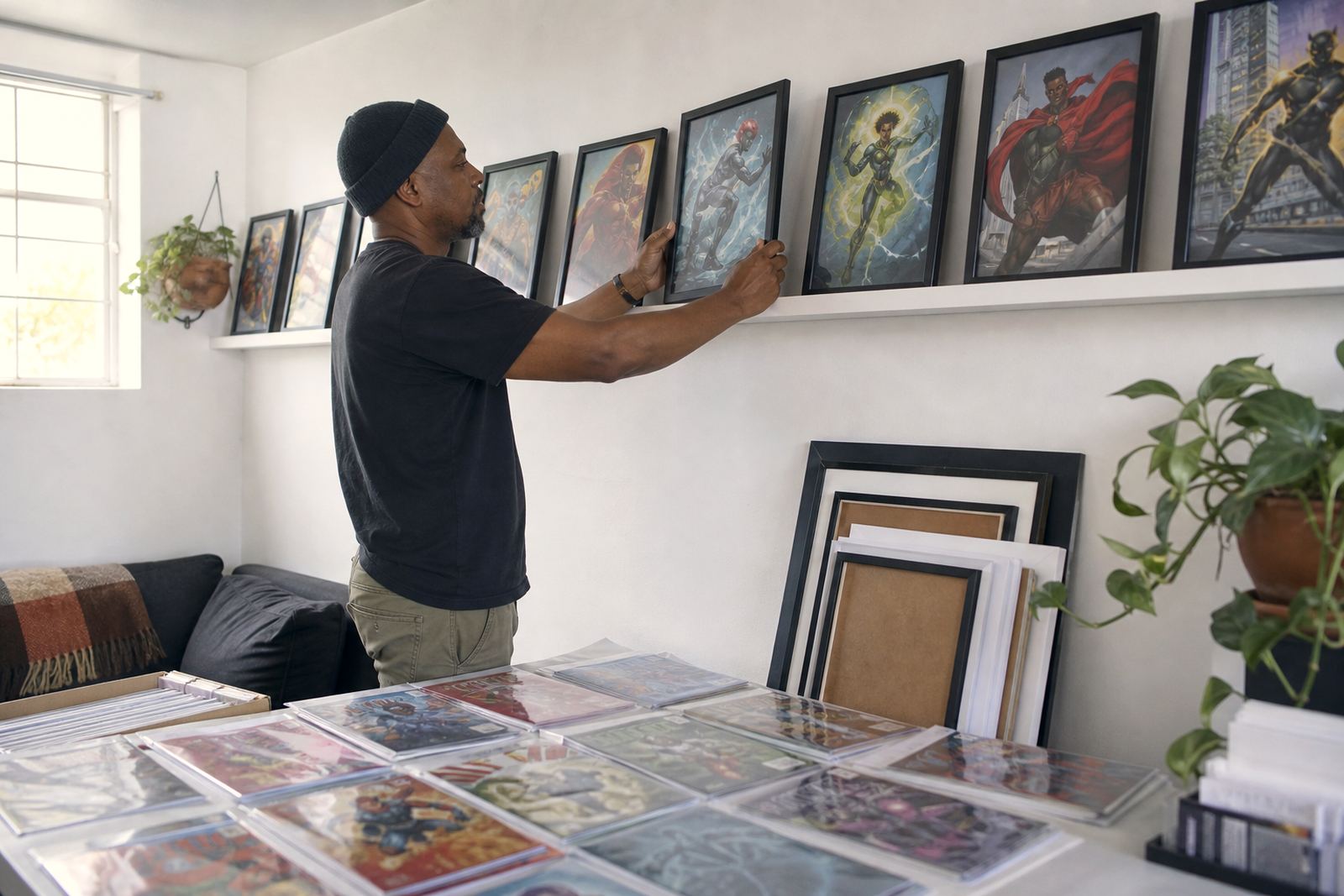
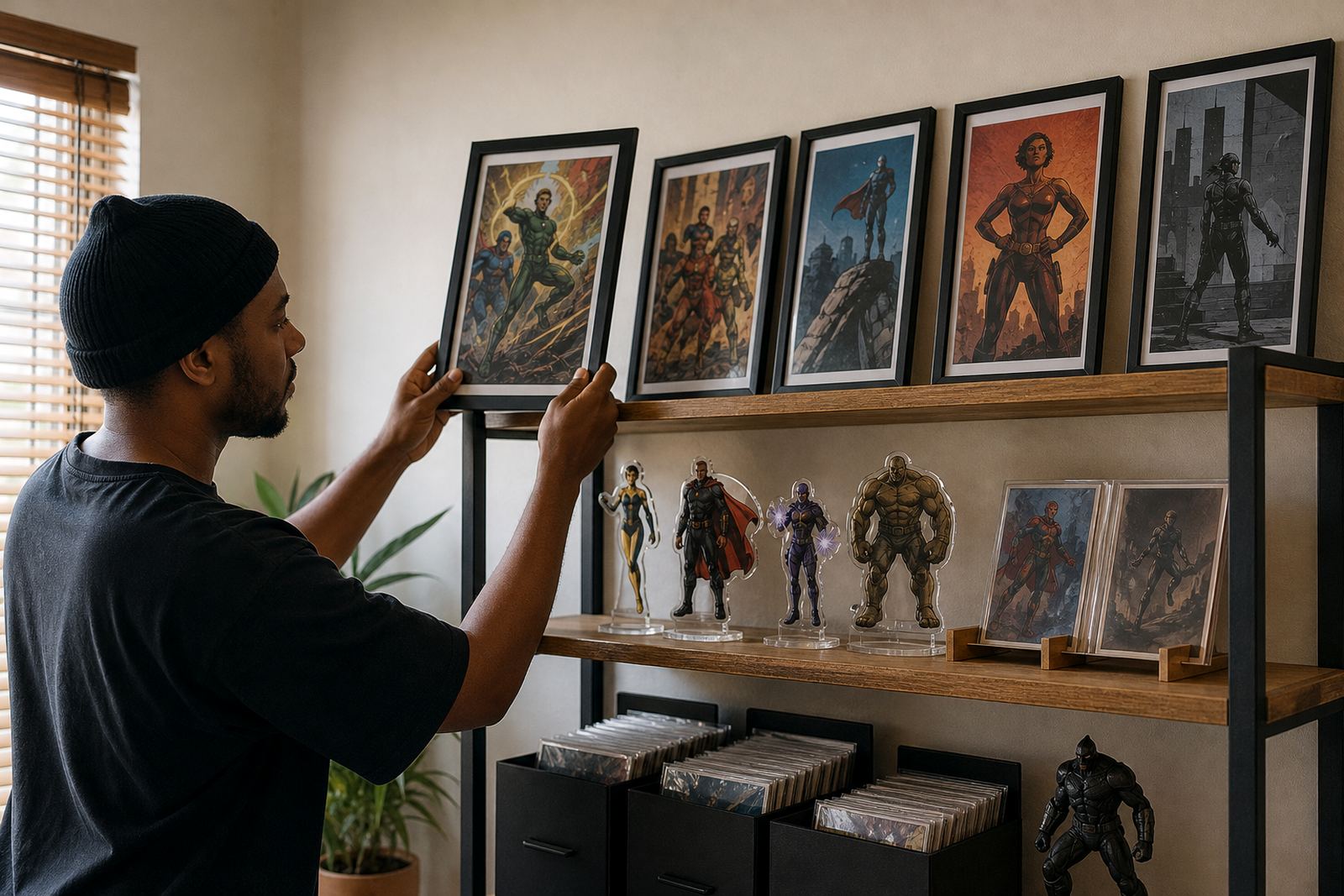
If you are putting together a wall frame or a shelf display, think about the viewing angle. A slight tilt can reduce reflections on the sleeve while still showing the cover art clearly. Avoid placing lights where they shine straight onto the same spot all day. In a Durban home with humid air, or a Stellenbosch room with warm afternoon sun, those small choices make a real difference.
- Keep comics out of direct sunlight and away from heat sources.
- Use low heat LED lighting where possible.
- Check for glare before fixing a frame or shelf in place.
Frames, stands and wall mounts that do not stress the comic
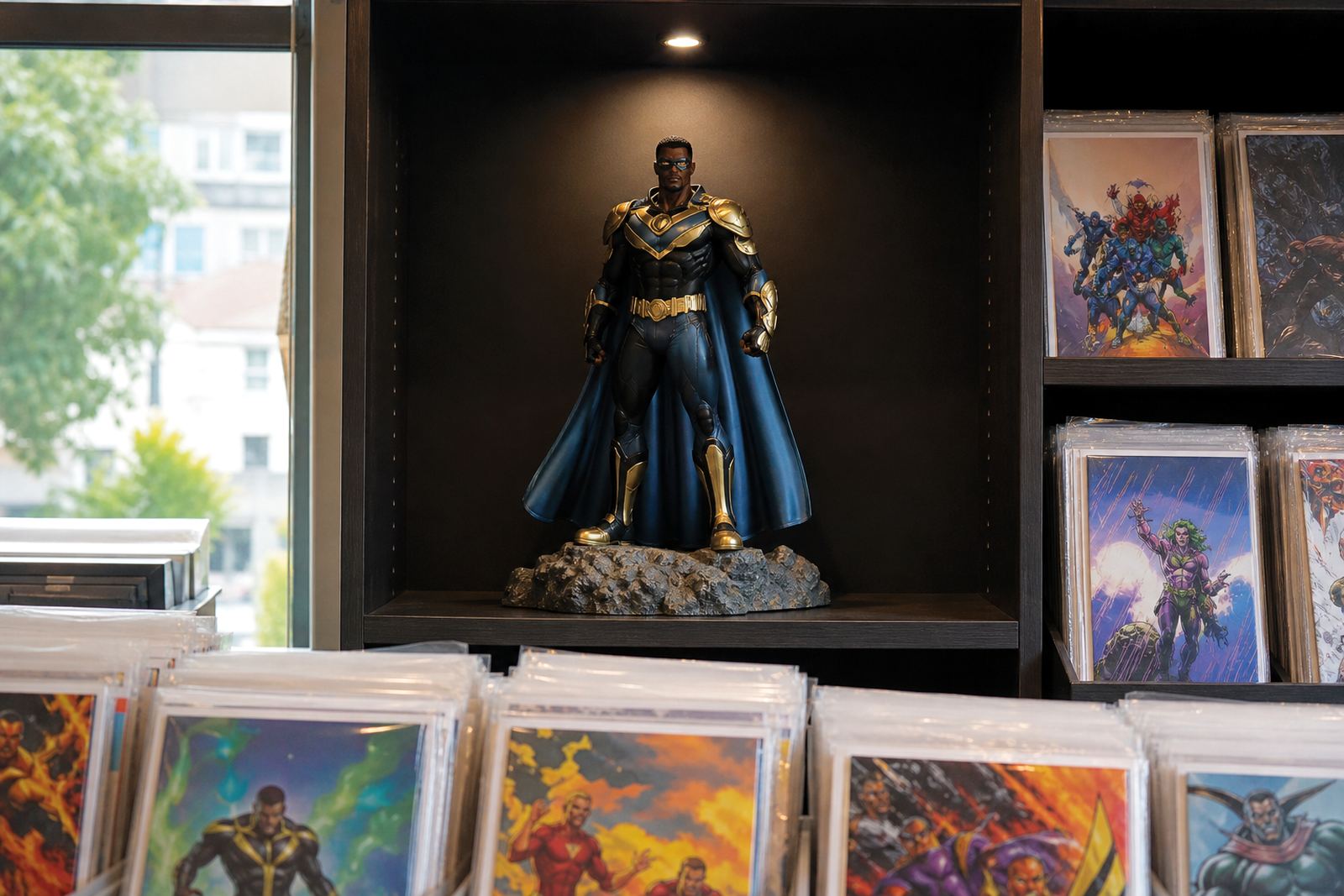
Not every comic needs to be framed, and framing should only be done if the materials are safe for paper collectibles. If you do frame, make sure the comic can breathe in a proper protective enclosure and is not pressed hard against glass. A frame should support the comic evenly, not pull on one corner or leave the spine hanging awkwardly. For a display stand, look for one that holds the issue upright without forcing it open at the middle.
In shops, event tables and home collections, the best displays are simple and stable. A toppling stand can scuff corners in seconds. If the room gets dust from open windows or nearby road traffic, use a case or covered shelf where possible. A clean display also cuts down on handling because people are less likely to pick items up just to wipe them down.
- Choose supports that hold the comic evenly, not at one corner.
- Use cases or covered shelves in dusty rooms.
Rotation keeps favourites visible and lowers wear
The easiest way to enjoy a collection without wearing it out is to rotate what is on show. Keep a few issues on display for a month or two, then swap them with fresh copies from storage. This reduces exposure to light, dust and repeated touching. It also gives you a chance to inspect each comic properly before it goes back into the box.
A good rotation plan works well for collector walls, bookcases and small home offices. Imraan, who handles online orders, often sees customers looking for a way to show off a favourite issue while keeping the rest of a set safe for future grading or resale. A rotation plan is practical because it lets you enjoy the art and story now, while protecting the condition score later.
- Keep a written list or photo log of what is on display.
- Swap issues before any one comic gets too much light exposure.
- Inspect each comic for dust, corner wear and sleeve marks during every swap.
Storage near the display matters just as much
Safe display only works if the stored comics are kept properly too. If the storage box is cramped, damp or stacked under heavy items, the whole collection suffers. Use sturdy boxes that sit off the floor if there is any risk of damp or municipal leaks. In coastal areas, add a little more ventilation and keep an eye out for moisture on walls or in cupboards. In drier areas, watch for static and brittle edges.
For collectors in Observatory, especially in older buildings, small changes help a lot. A shelf that stays cool and dry, a room without constant sun, and a box that is not overfilled can protect comics much better than a flashy setup. Leandri, who leads customer care, often reminds collectors that safe storage and display go together. If one is neglected the other will eventually pay for it.
- Store comics in a dry, cool place away from floors and outside walls.
- Do not overpack boxes or force comics into tight spaces.
- Keep a few silica gel packs nearby where moisture is a problem.
A local example: a small Cape Town display done well
A collector in Observatory may want to show a few original local hero covers in a flat with limited space. The smartest setup is often a narrow shelf in a shaded room, with sleeves and boards for each comic plus a rotation box for the rest. One or two framed pieces can be used if the wall is dry and the light is controlled. The display stays neat, the comics stay readable, and nothing needs to be handled every day.
This kind of setup also suits buyers who collect across South Africa and receive courier deliveries to Cape Town, Johannesburg, Durban, Pretoria or Gqeberha. Once the parcel arrives, the issues can be checked, cleaned lightly if needed and sorted for display or storage. That way the collector gets the pleasure of seeing the art, without turning every viewing into a risk.
Displayed properly, comics become part of the room instead of being exposed to avoidable damage. That is the aim, and it does not require a big budget or special fixtures, just a careful routine and a bit of consistency.
Name the title, issue or character you are hunting for, and our comic shop crew will help you track it down.
Contact form