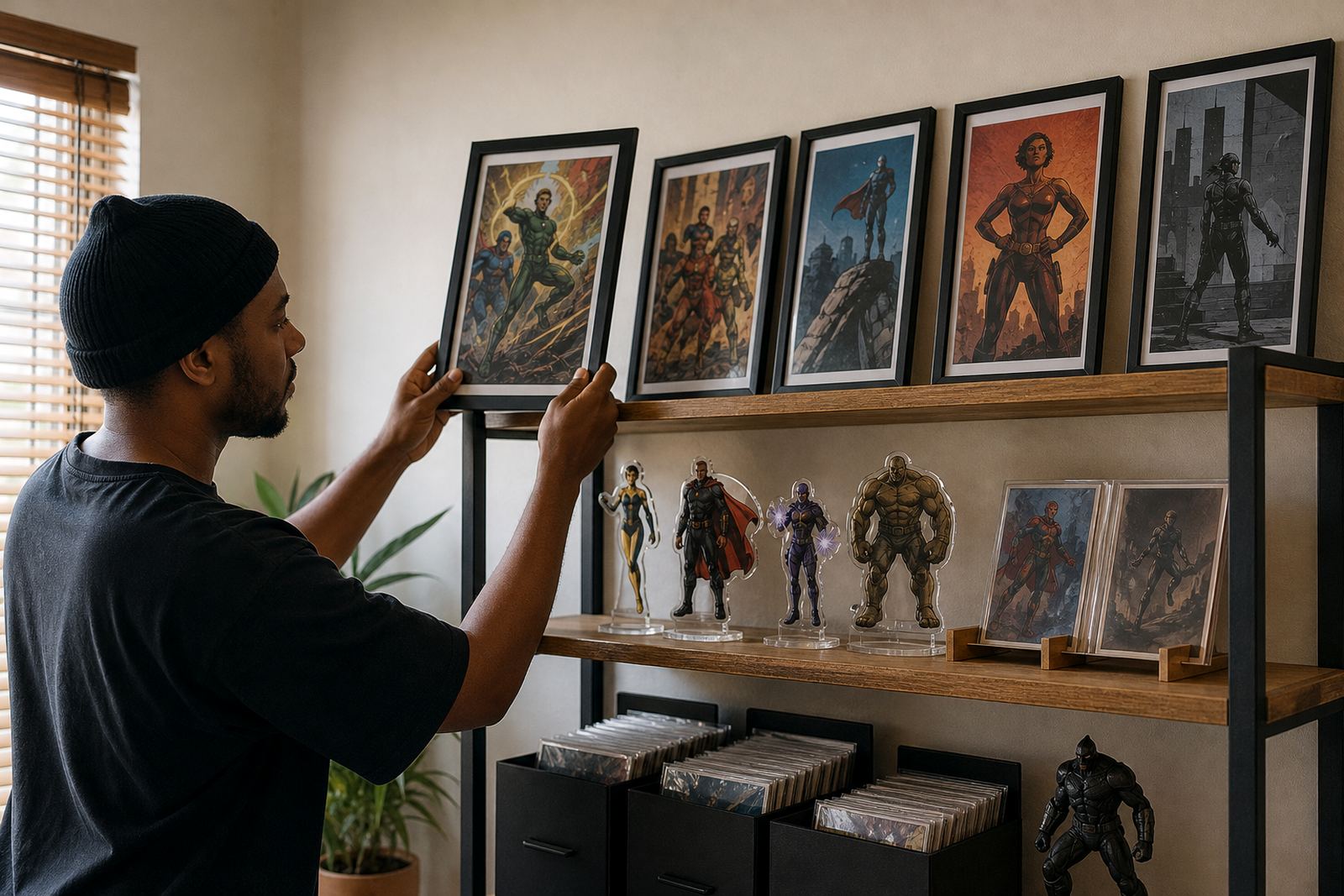

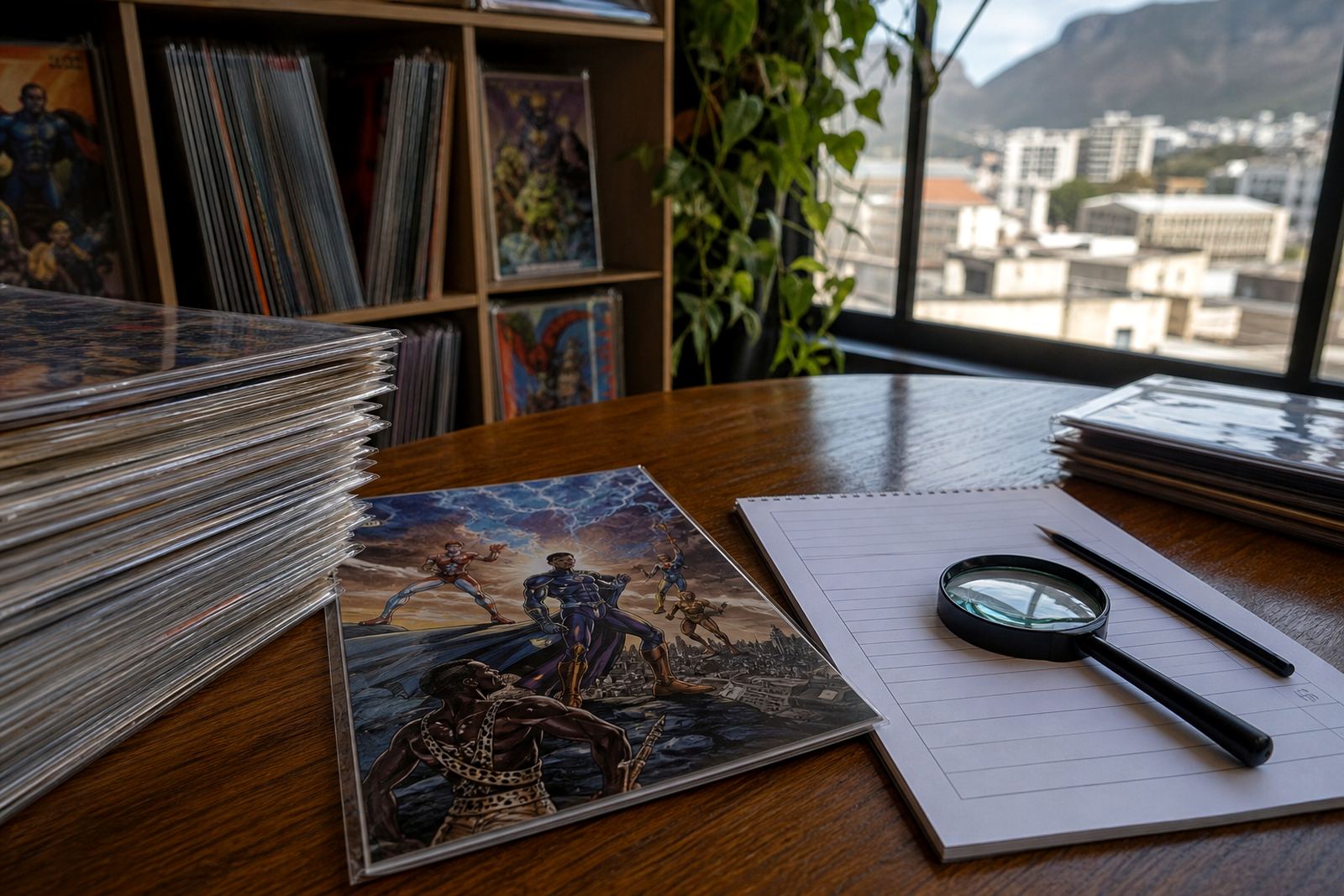
Start with the same checklist every time
When you note comic condition, consistency matters more than fancy terms. Use the same order each time so you do not miss a corner, crease or spine tick. A good habit is to inspect the front cover, back cover, spine, corners, edges and centrefold in the same sequence.
For your own records, keep the description plain and practical. Write down what you can see, not what you hope the copy may grade at one day. That makes it easier to compare one issue with another, especially if you are building a run from local superhero comics and collectables across different releases.
- Check the front cover first under natural light or a bright lamp
- Turn the comic over and look for rubbing, marks or colour loss
- Run a gentle eye along the spine for stress lines or small breaks
- Open the book carefully to look for loose pages or folded corners
Write what you can see, not what you hope it grades.
Describe what you can actually see
A useful condition note does not need to sound technical. If a cover has a small bend at the top right corner, say so. If the spine shows a few minor ticks, record that too. The point is to create a record that you can understand months later, even if the comic is tucked away in a storage box with other issues.
If you use grading guidance later, these notes give you a starting point. They also help when you are asking for pre-submission checks or comparing one copy against another in your own collection. Try to avoid broad labels on their own, because words like good or fair can mean different things to different collectors.
- Note colour break, staining, creasing and surface wear separately
- Record tears, loose staples, spine roll and page discolouration
- Mention any sticker residue, pencil marks or clipped corners
- If the comic is bagged, note whether the bag itself is cloudy or torn
Use light, gloves and a flat surface
Paper collectables react quickly to local weather, from Cape Town moisture to Johannesburg dust and dry air. In Cape Town, coastal humidity can leave comics feeling soft if they are stored badly, while in Johannesburg dry air and dust can settle into open boxes. Before you make notes, place the comic on a clean flat surface and use enough light to see the small stuff. A soft cotton cloth or clean hands are usually fine for brief inspection, provided your hands are dry and clean.
Do not press the book flat to force it open further than it wants to go. That can create a crease you did not have before, which is exactly the sort of thing you are trying to avoid.
- Keep drinks, food and glue away from the table
- Work on one comic at a time so you do not mix up notes
- Use a torch at an angle to show indentations and spine stress
- Move slowly around the edges, especially on older paper stock
Match your note to the comic’s use
A comic that has been read once and stored carefully will show very different signs from a comic that has travelled between markets, events and multiple storage boxes. Your note should reflect that use. If a copy is for reading only, a lighter level of wear may be fine. If you are considering collector storage or eventual grading, then every small defect becomes worth recording.
Local collectors often keep a simple line for each book: purchase condition, storage condition and current visible condition. That helps when you lend a comic to a friend, move it between branches or keep it aside for event packages and wishlist sourcing. It also stops mix ups when several copies of the same issue sit in one box.
- Differentiate between reading wear and handling damage
- Record whether the comic was bagged, boarded or loose
- Note any change after cleaning advice or rebagging
- Separate your personal reading copy from your keeper copy
Store the note with the comic, not in your head
A handwritten card inside a storage box or a digital list on your phone can both work. What matters is that the note stays linked to the comic. Many collectors keep the issue number, series name, date inspected and visible condition together, then add a quick line about where the comic is stored. That is especially useful if you are organising a growing collection in a flat, office or spare room with limited space.
For long-term storage, place comics upright in boxes that fit snugly but not too tight. Too much pressure can leave bends along the edges, and too much empty space can let books lean. If you live near the coast, a basic dehumidifier or moisture absorber can help, though you still need to check the comics now and then. Storage planning is much easier when your condition notes tell you exactly which issues need attention.
- Write the note on the same day you inspect the comic
- Keep the note simple enough to update later
- Use the same terms for every issue in your collection
- Review older notes after moving, flooding or damp weather
A Cape Town example from a local collection
Imagine a collector in Observatory who picks up a local superhero comic at a weekend market and wants to keep it in good shape. The cover looks bright, but there is a small spine tick near the middle, a faint bend on the back cover and one corner that shows light wear. The note does not need to be dramatic. It can simply say: front cover bright, one small spine tick, light back cover bend, top corner worn, pages clean. That is enough for future reference.
A few months later, if the same collector wants safe shipping prep for another copy sent to Durban, the earlier note gives a clear baseline. It tells them what was already there and what changed during handling. That kind of record keeping is practical, and it becomes more useful as a collection grows. It also helps when you ask for collector consultations or storage planning from a team that understands how comics move between homes, offices and courier depots.
- Keep one note per comic, even if several copies look similar
- Update the note after a move, inspection or rebagging
- Photograph the comic if there is a mark you may forget later
- Use the note to guide display planning and future care
Name the title, issue or character you are hunting for, and our comic shop crew will help you track it down.
Contact form