
Start with a clean, flat comic before you pack anything
Good packing begins with the comic itself. If a book has dust, loose grit or moisture on it, that damage can press into the cover during transit. Wash your hands first, work on a clean table and keep food, drinks and sunlight away from the stack. In Cape Town, a windy afternoon can blow fine grit into an open parcel faster than you think, so do the sorting indoors if possible.
Check the comic for bent corners, spine ticks and water marks before you pack. If the book is being sent for grading or a swap, note the condition honestly and photograph it from the front, back and spine. That makes the handover clearer for both sides and helps avoid arguments later. For collectors in Observatory and Bellville, a quick pre-pack check is often the difference between a happy trade and a damaged return.
A comic packed well should arrive flat, dry and ready for the next shelf, not the repair pile.
Use proper comic protection, not loose cardboard and hope
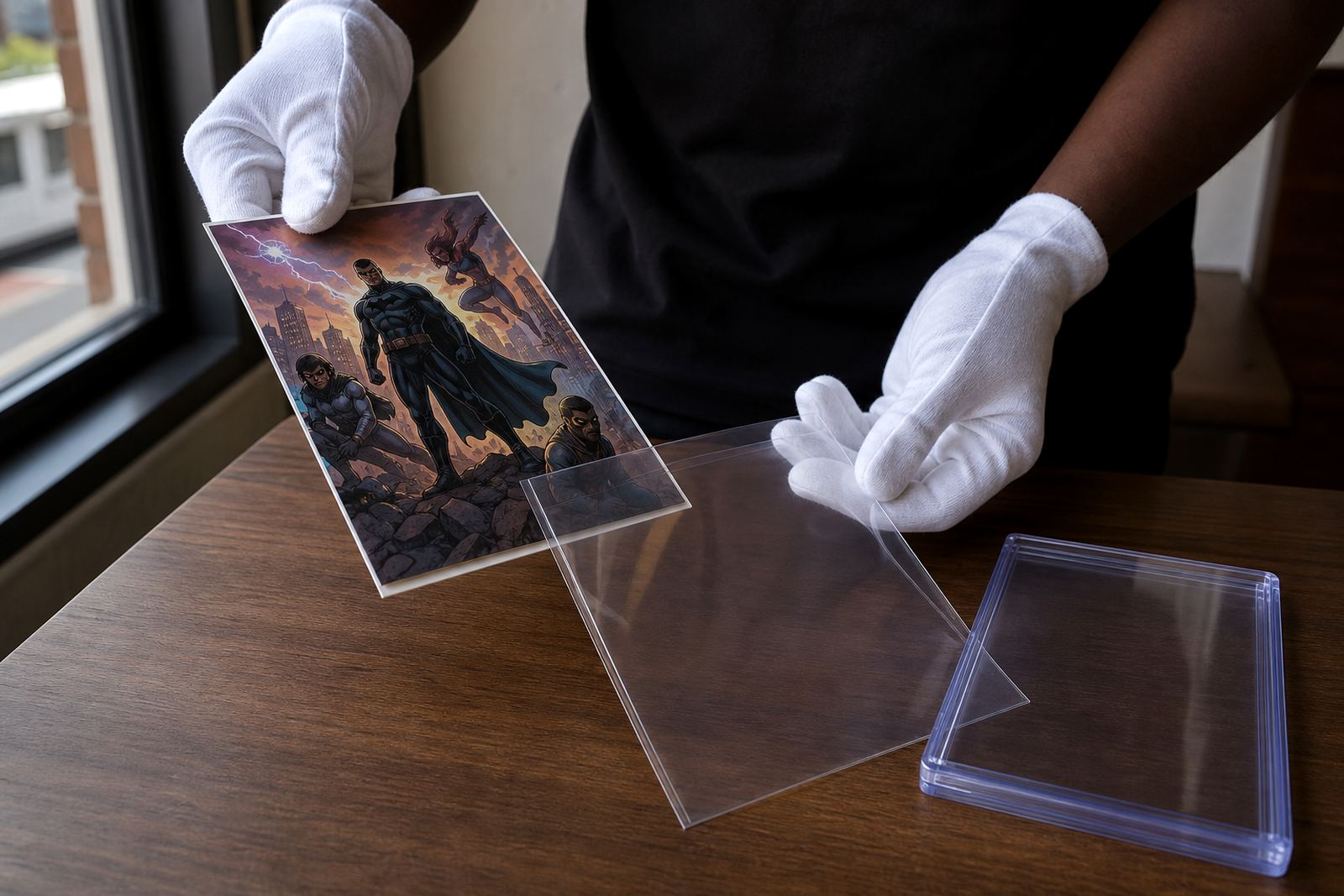
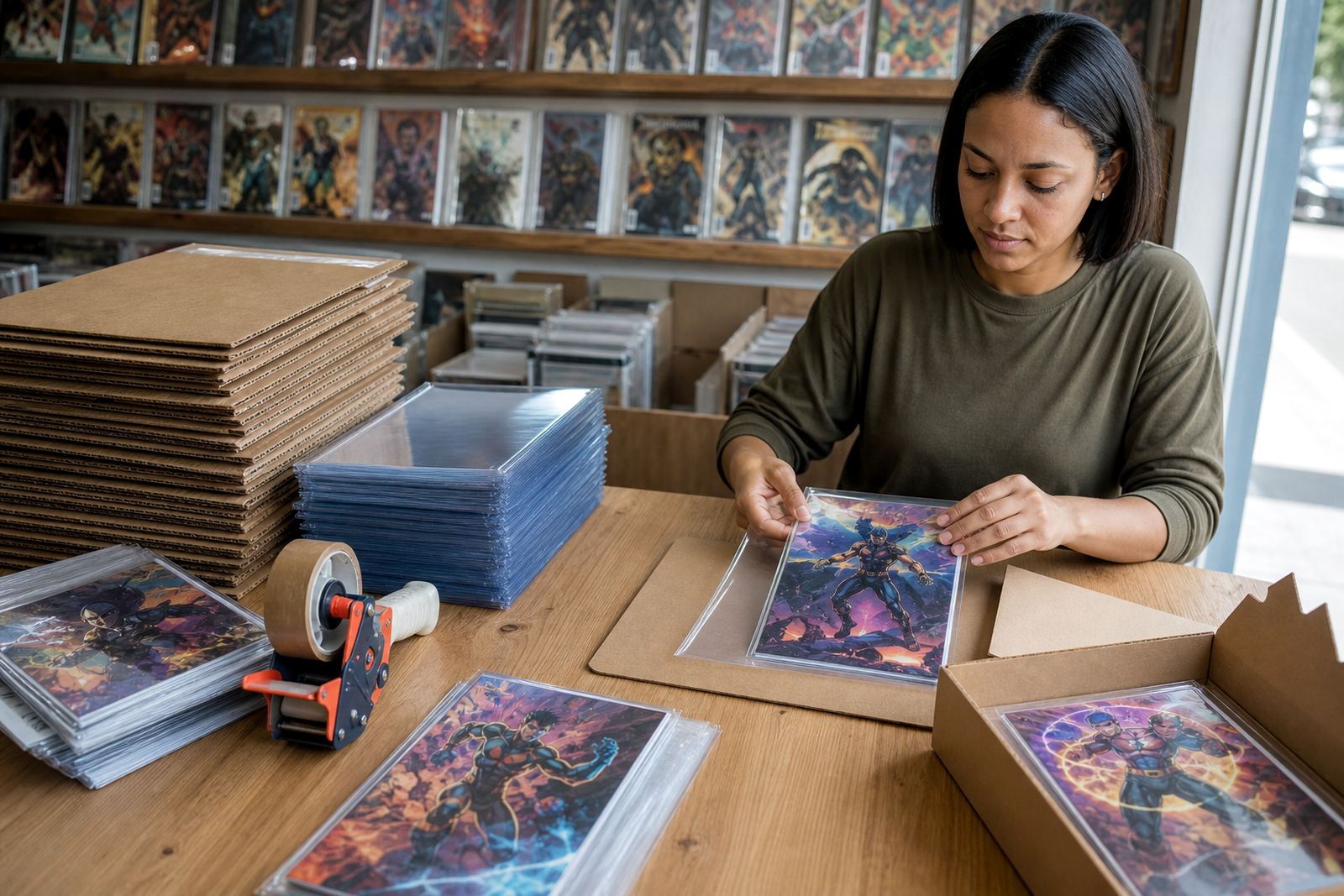
A comic should not move around inside the parcel. The safest basic setup is a comic bag, a backing board and a rigid outer layer that holds the book flat. For higher value items, many collectors add a second board or a rigid mailer so the corners do not crush. If the comic is signed or already graded, the packaging needs to protect that label and slab without creating pressure points.
- Use a clean bag that fits the comic properly, not one that is too large.
- Slide in a backing board so the spine stays straight.
- Wrap the book in a dry layer before it goes into the outer mailer.
- Choose rigid cardboard or a hard sleeve that resists bending in transit.
- Seal the parcel so the comic cannot slide from side to side.
Avoid soft envelopes for anything of real value. They save a few rand upfront but they do not handle pressure well in a courier bag. If the parcel is travelling from Johannesburg to Cape Town or going up to Pretoria, it is going to be handled more than once and you need packaging that can take that knock.
Keep moisture out, especially on the coast
Moisture is one of the biggest threats to comics in South Africa. Coastal humidity in places like Durban and Gqeberha can creep into thin packaging, and once a comic picks up damp it may ripple or spot. Even in Cape Town, foggy mornings and wet weather can cause problems if the parcel sits near a damp floor or in the boot of a car. Never pack a comic straight from a cold store room into a sealed parcel if condensation might form.
If you are storing the comic before collection, keep it upright in a cool dry space and away from windows. For shipping, use a clean plastic sleeve or inner wrap only as a moisture barrier, then place that inside the rigid outer mailer. Do not use plastic that traps wet air inside. The goal is protection, not a sweat box.
Label clearly and build the parcel for the courier route
When a parcel moves across South Africa, it may pass through sorting depots, delivery vans and multiple handovers. That means the outside of the parcel matters just as much as the inside. Mark the package clearly, keep the address neat and make sure the sender and recipient details are correct before it leaves. A return label can help if the parcel is refused or sent to the wrong address.
- Write the delivery details in clear block letters.
- Seal all edges and corners with strong tape.
- Do not overfill the parcel so it bulges open.
- Use a box or mailer that leaves a little room for padding.
- Keep the comic flat, never rolled or folded.
For local handovers in Observatory or Stellenbosch, a smaller parcel is easier to carry and less likely to get crushed in a bag or boot. For courier delivery into busy areas like central Durban or Johannesburg, a compact parcel also makes scanning and sorting easier. It may sound small, but neat packaging often means fewer delays.
Match the packing style to the value of the comic
Not every comic needs the same level of packing, but the value and condition should guide the effort. A reading copy can travel in a sturdy mailer with light padding. A key issue, first appearance style book or graded comic needs a firmer setup with extra corner protection and less empty space inside the parcel. If the comic is going to be re-sold or submitted for grading later, the pack should keep it in the same condition it left in.
Think about the full journey. If the comic is being sent from Cape Town to Gqeberha, it may spend a full day in hot vehicles and depots, so the wrapping must be tight and dry. If it is only moving across town, the risk is lower but the parcel can still be knocked around at reception counters or security gates. For collector swaps, use the same care you would expect from the other side. Good packing shows respect for the item and the deal.
A simple local example that saves a damaged return
Picture a collector in Observatory sending a stack of local superhero comics to a friend in Durban. The books are clean, but one has a sharp corner and another has a fragile spine. The sender bags each comic, adds backing boards, places them between two firm sheets and seals the parcel so nothing can shift. A small note is included with the contents and the books are kept flat until collection. That parcel may spend time in a warm van, then a sorting hub, then another delivery vehicle, so the internal support matters every step of the way.
If the same stack were packed loosely in a thin envelope, the corners would almost certainly take a knock. With better packing, the books arrive ready for reading, display or grading checks. That is the real point of careful post packing: it protects the story, the value and the trust between collectors.
For many South African buyers, the parcel is part of the service. If the package arrives tidy, dry and flat, the whole experience feels more professional and less stressful. And if you are sending books to be checked before grading, a careful pack also gives the recipient a clean starting point for inspection.
Name the title, issue or character you are hunting for, and our comic shop crew will help you track it down.
Contact form