
Start with clean hands and a clear surface
Most wear begins before the comic is even open. Wash and dry your hands first, then use a clean table with enough space for the book, a backing board if needed, and a place to rest the cover without bending it. Avoid food, drinks and dusty surfaces, especially in coastal homes where fine grit and humidity can work into the pages.
If you are sorting a stack from a cupboard in Observatory, or unpacking new arrivals in Cape Town after a courier drop, make the work area calm and uncluttered. A soft cloth under the comic can help stop slip marks while you check condition, but do not use anything that leaves fibres behind.
Handle it once, store it right, and the comic keeps more of its value.
Hold comics by the centre and support the spine
The safest way to read is to support the book with both hands and let the spine take as little strain as possible. Open it slowly, a little at a time, rather than forcing the cover flat. This matters even more with older issues and squarebound items, where repeated pressure can crease the spine and split the staples.
When turning pages, use the page edges instead of pinching the middle. If you want to show a comic to a friend, keep the cover fully supported and never let it hang from one hand. It seems small, but over time those habits prevent corner blunting and spine ticks that collectors notice quickly.
- Do not fold a comic back on itself while reading
- Keep thumbs away from the spine fold
- Lift with two hands when moving a pile
- Separate books before restacking so the corners dont rub
Read in short sessions if the comic is valuable or fragile
For modern reading copies, a long session is usually fine. For older, rare or lightly pressed books, shorter sessions reduce accidental bending and page stress. If you are comparing condition grades or preparing a comic for submission, handling it less often is usually better than repeatedly opening and closing it.
Set the comic down between reads instead of leaving it open facedown on a sofa or bed. Soft furnishings catch corners and can leave waviness on the cover, especially in humid weather. In Pretoria and Durban, where heat and moisture can rise quickly indoors, it helps to finish reading and return the comic to storage right away.
Store comics so they keep their shape
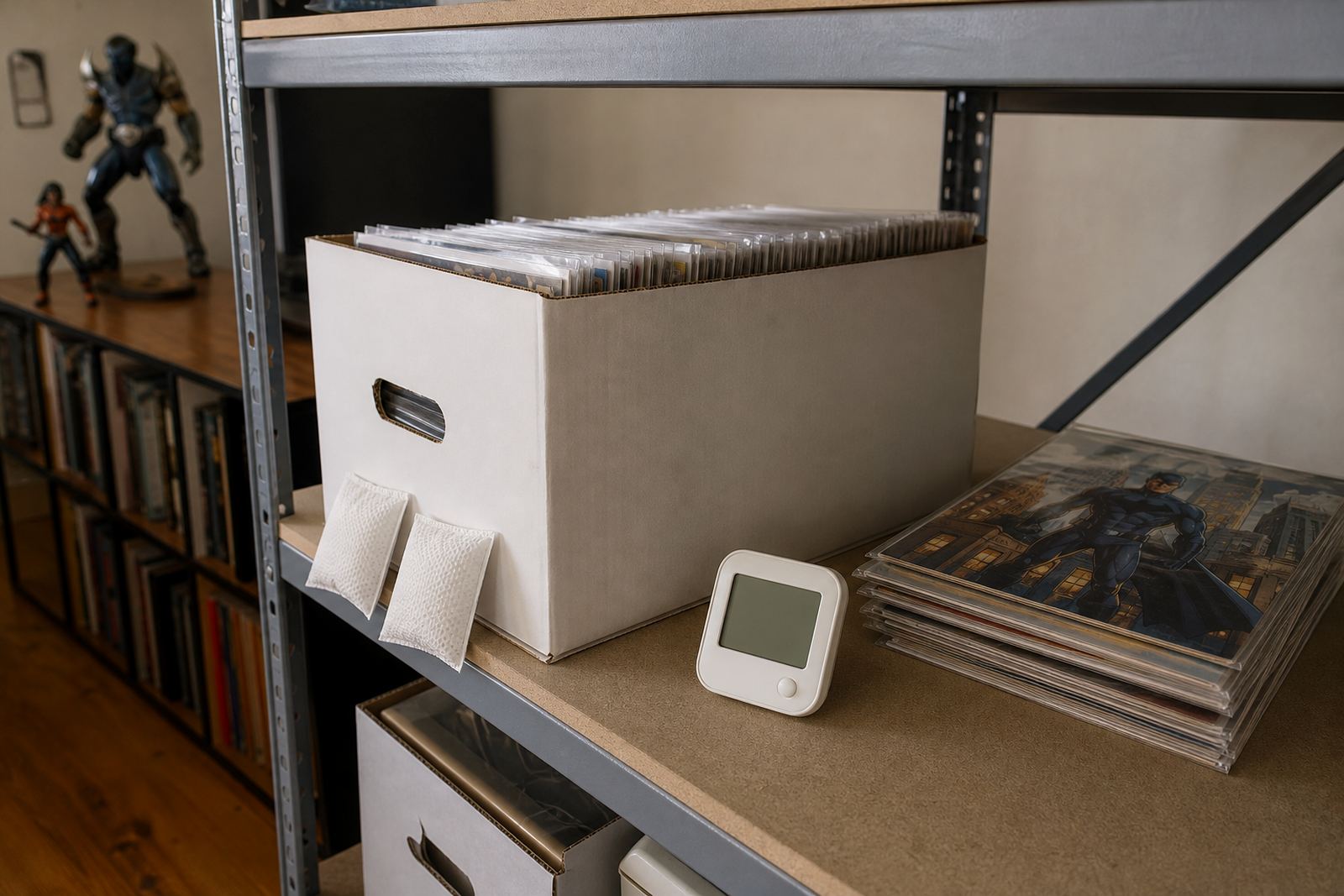
Good storage is not only about keeping dust out. It is about stopping pressure, bending and moisture from doing quiet damage. Use sleeves, boards and boxes sized for comics, then store them upright with enough support so they do not lean too much. Overfilled boxes cause edge curl and cover scuffing, while loose stacks invite spine rolls.
Keep comics away from direct sun, damp walls and garage floors. In a Cape Town flat with sea air, or a home in Gqeberha near the coast, a closed cupboard is often better than an open shelf if the room gets moist. If you use display frames, rotate the comics now and then so one issue is not taking all the light exposure.
- Store upright, not flat under a heavy pile
- Use acid free sleeves and boards where suitable
- Leave a little room so covers are not crimped
- Avoid hot cars, windy stoep areas and damp storage rooms
Handle collectables with the same care
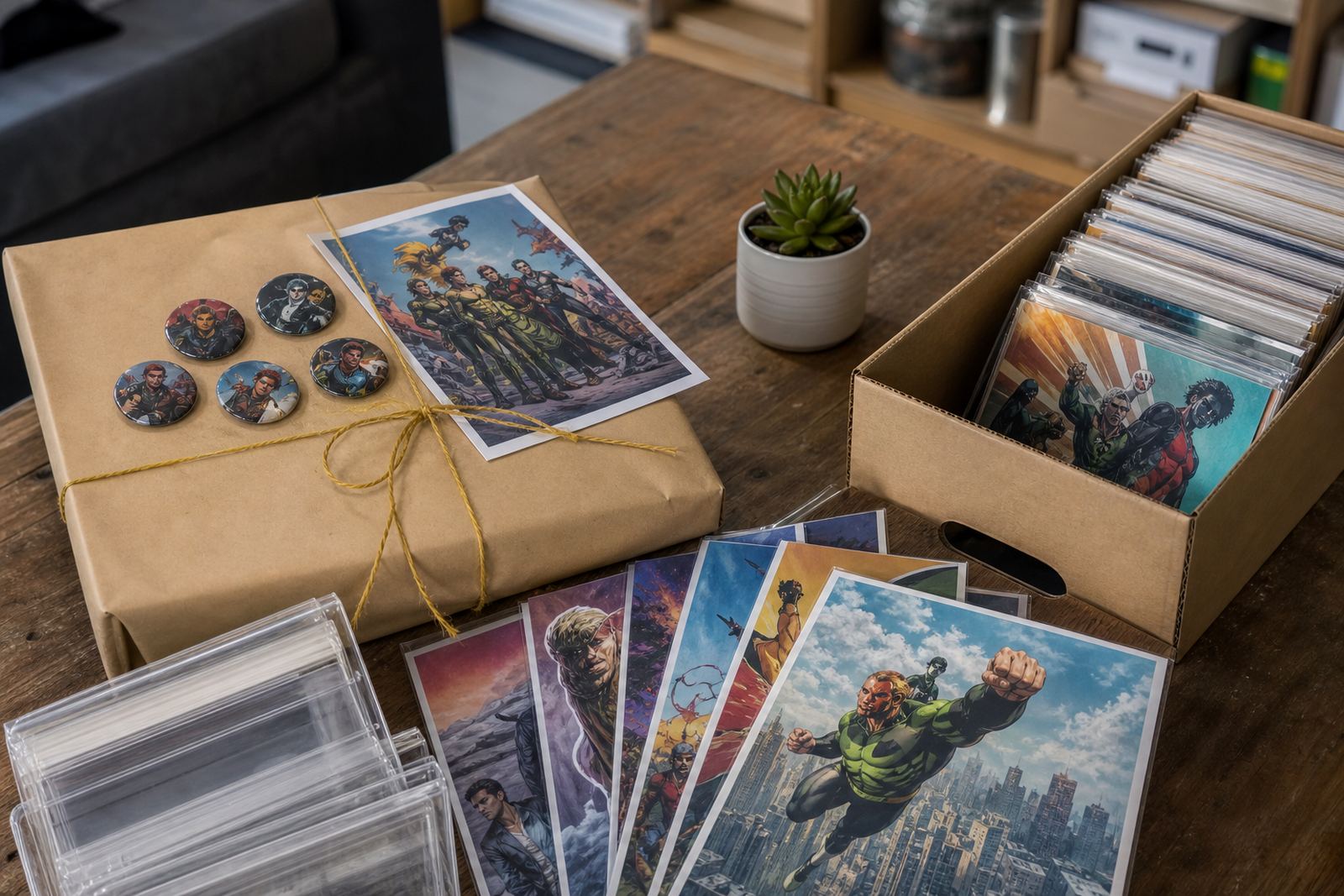
Comics often sit alongside figurines, cards, posters and other collectables, and the same careful habits apply. Hold items by solid edges, not by delicate parts that can snap or bend. If a display piece has a box or insert, keep every part together and protect it from crushing when you move house or shift stock.
For sealed collectables, avoid opening packaging unless you really need to. Once a seal is broken the item can lose value for some collectors, and even a careful opening can leave marks. If you are unsure whether to open, grade or store an item, get collector advice first rather than rushing it.
Prepare items properly before transport or courier delivery
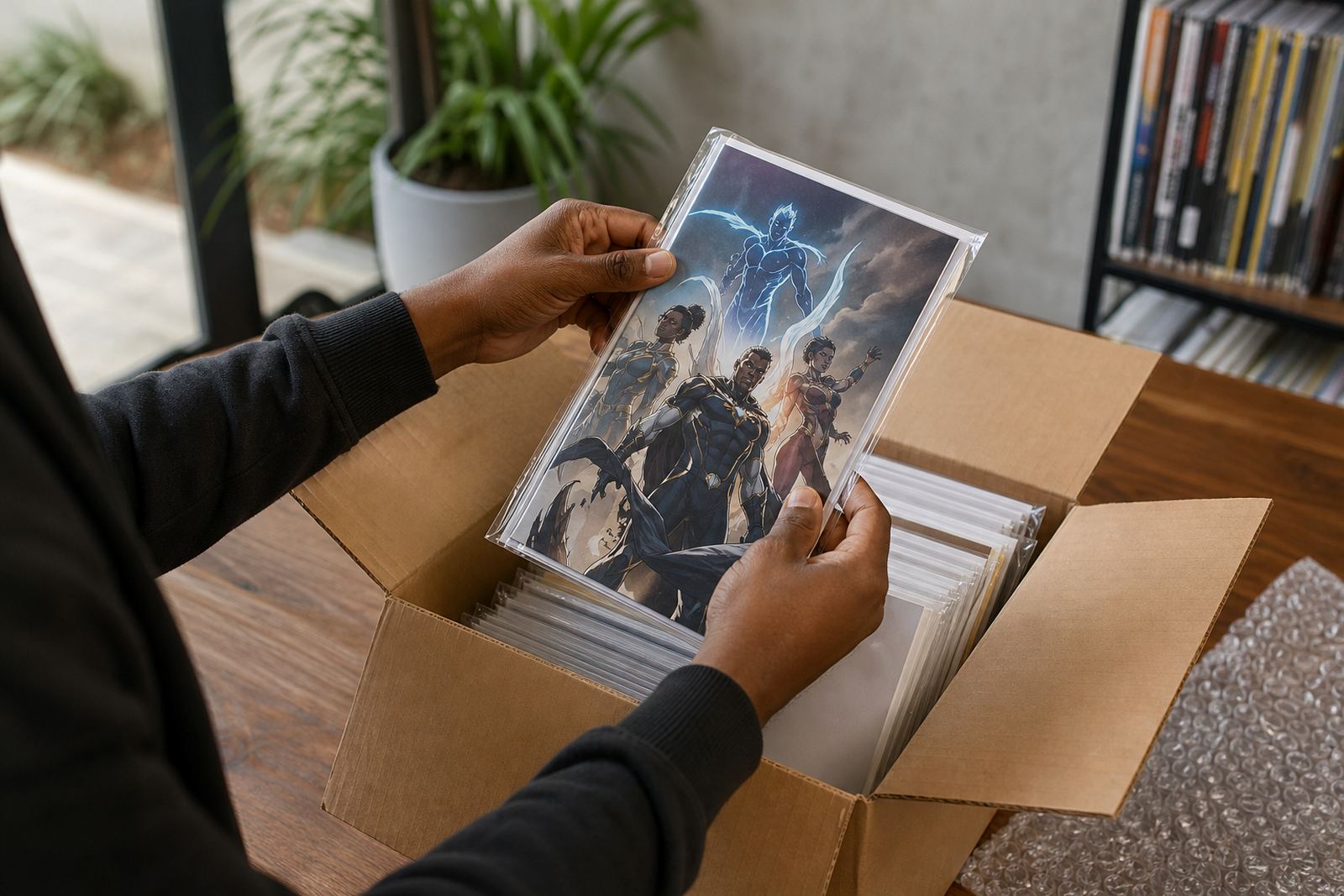
South African couriers do a lot of the heavy lifting for collectors from Cape Town to Johannesburg, Durban, Pretoria and Gqeberha, so the packing has to do its part. Put each comic in a sleeve with a board, then secure it in a rigid mailer or box with enough padding to stop movement. A comic that slides around in transit can pick up corner dents very quickly.
For larger orders or mixed collectables, separate hard items from paper items and fill empty space so nothing shifts in a sudden stop. If you are sending items for grading, include extra protection around the corners and make sure the package is clearly labelled for careful handling. A neat pack is not about looking fancy, it is about reducing risk.
- Use rigid outer packaging for courier parcels
- Keep paper items flat and separated from heavy pieces
- Mark fragile parcels clearly
- Do a final check before sealing the box
Build habits that make grading and display easier later
Safe handling is not only about today. It also keeps your collection in better shape if you later want grading guidance, display planning or a more organised storage setup. The less wear a comic picks up from repeated casual handling, the easier it is to assess honestly and the better it looks on a shelf or in a case.
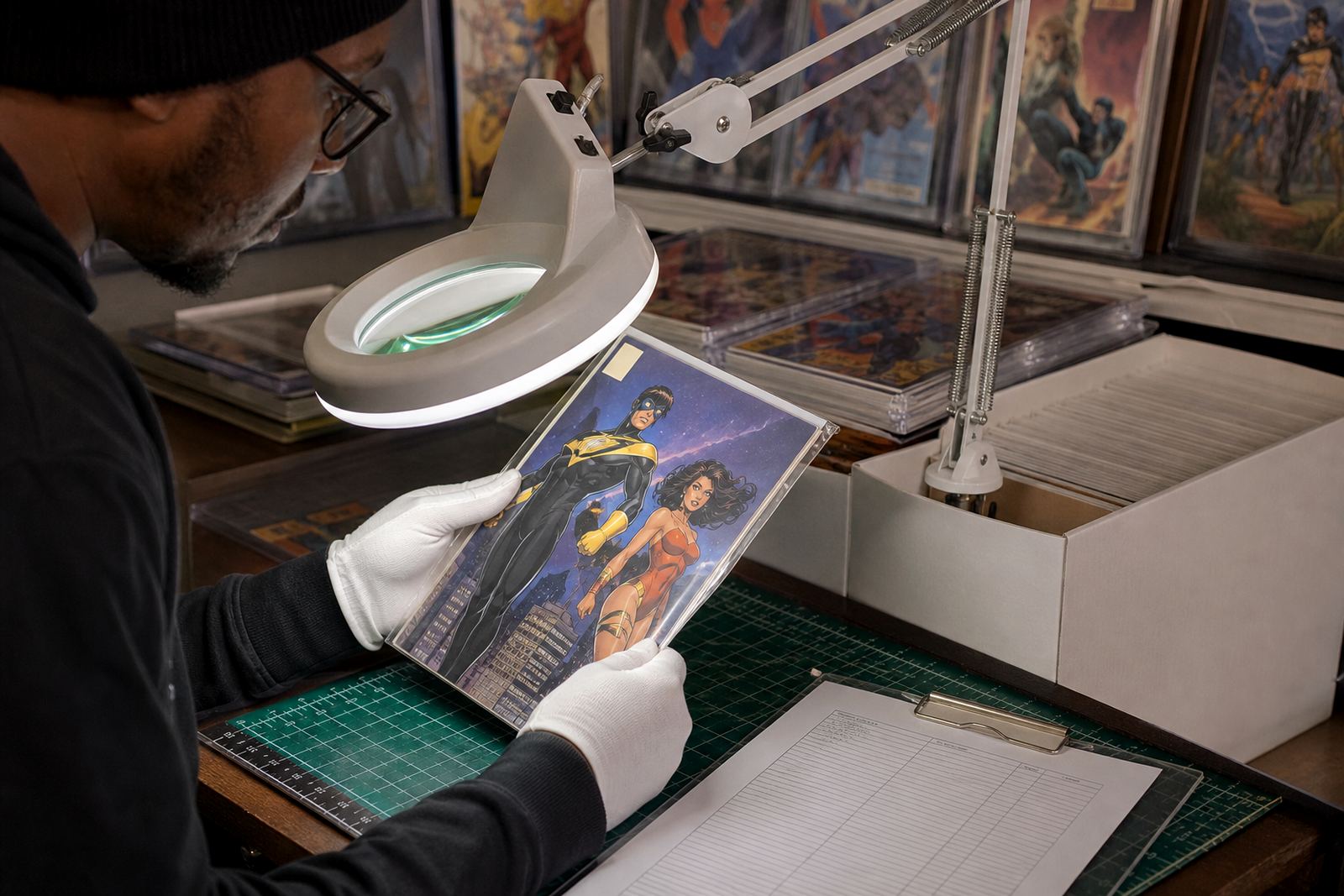
A simple routine helps: clean hands, short reading sessions, proper storage, and careful packing every time. One collector in Stellenbosch might only handle a key issue when checking the spine and cover under good light, while another in Bellville may sort a long box only once a month. Both can keep their books in stronger condition if they use the same basic habits. It takes a bit of discipline, but it pays off over time.
Name the title, issue or character you are hunting for, and our comic shop crew will help you track it down.
Contact form