
Why grading matters to collectors
Grading gives buyers and sellers a common way to talk about condition. A comic with sharp corners, a clean spine and flat pages will always be easier to trade than one with creases, colour rub or water marks, even if both copies are the same issue. That matters whether you are building a long term run or only picking up a few favourites for display.
In practice, grading helps with three things: price expectations, storage choices and peace of mind. If you know a comic is in lower condition, you can store it properly and keep moisture, dust and handling damage from getting worse. If you know it is near mint, you can treat it as a collectible first and a read copy second.
- Higher condition usually means better collector interest.
- Clear grading language reduces disputes when trading.
- Condition can change fast if storage is poor.
A good grade starts long before the comic is submitted.
What the condition terms usually mean
Most collectors use a simple scale from high grade to poor condition. The exact wording can vary between sellers, but the idea stays the same. Near mint or very fine means a comic shows very little wear. Fine means there is visible handling, though it still presents well. Good and fair usually mean the book is complete but has more noticeable wear, spine ticks, or small defects.
A few common issues affect grade quickly. Creasing on the cover, colour breaking along the spine, rust on staples, tears at the edges and writing on the cover all lower the grade. So does a badly rolled spine, a detached cover, or moisture staining from storage in a damp room. In Cape Town, coastal humidity can be a real factor, especially if books are kept near windows or on the floor.
- Check corners for blunting and folding.
- Look at the spine in natural light for stress marks.
- Open the comic gently to see if pages are attached.
- Watch for foxing, stains and wave marks from moisture.
How a pre-submission check helps
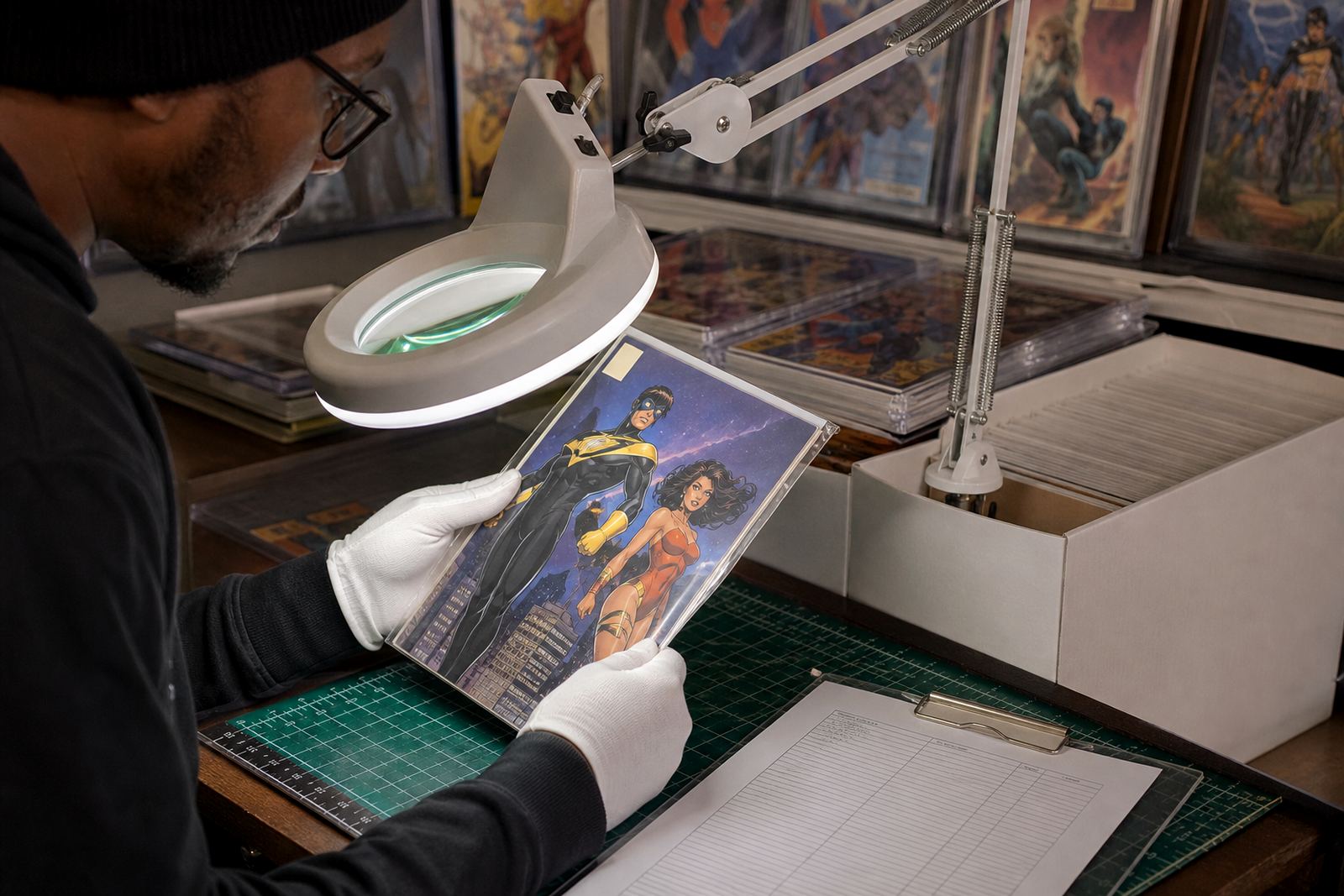
Before any comic is sent for grading, it should be checked properly. A pre-submission check is the point where you slow down and look for small defects that may affect the result. The aim is not to hide wear, but to understand the book as it is. That way you can decide whether it is worth submitting, storing differently, or keeping as a reading copy.
Good checking starts with clean hands, a flat surface and enough light. Hold the comic by the edges, not by the centre of the cover. If there is dust on the book, brush it away lightly rather than wiping hard across the surface. A soft brush can help with loose dirt, but don’t force anything into the spine or paper fibres.
- Inspect front and back covers separately.
- Check staples, pages and interior centre fold.
- Record any tear, chip, stain or crease before sending.
Storage habits that protect grade
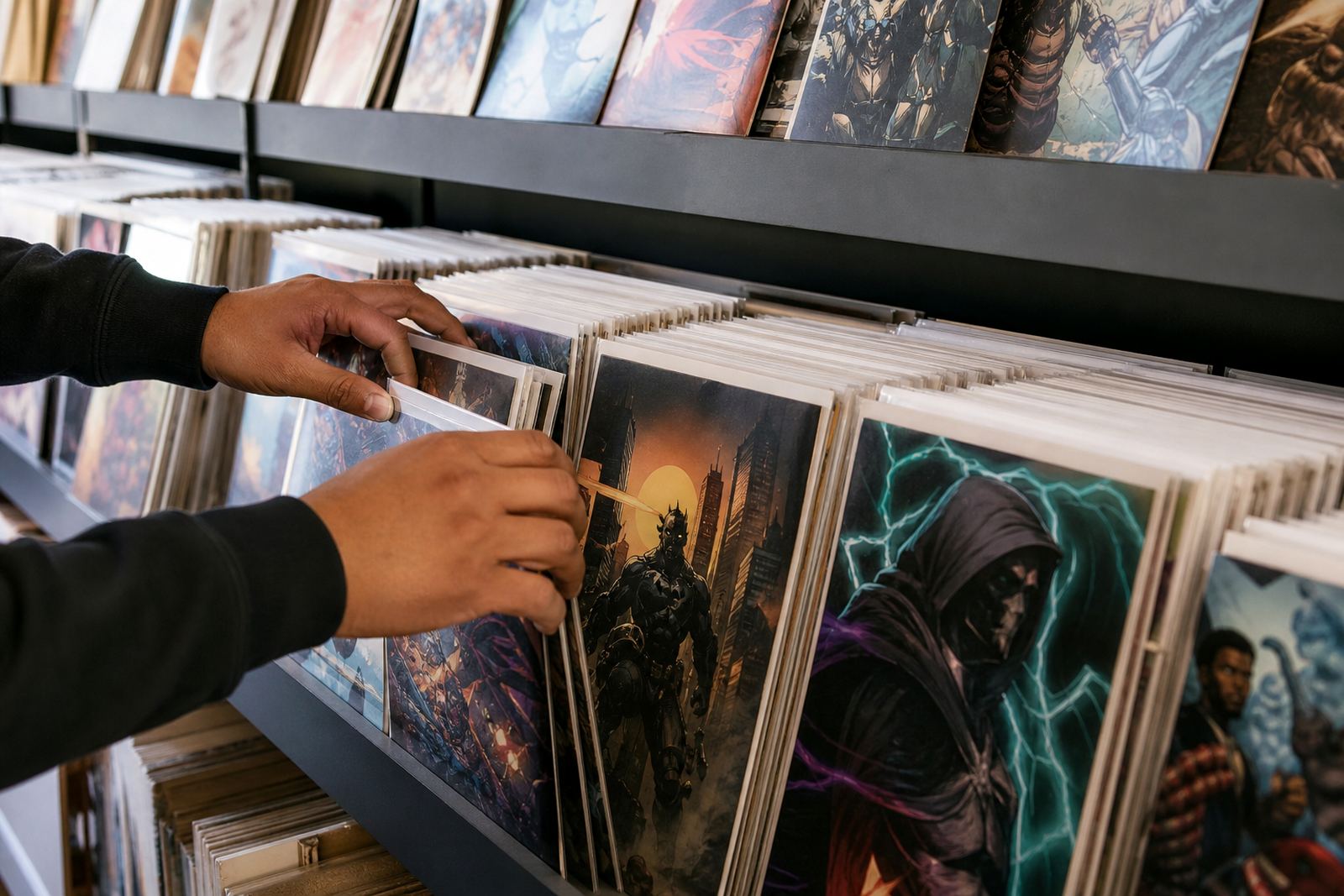
Good storage is one of the easiest ways to protect value. Comics should stand upright or lie flat in a cool, dry place, away from direct sun and damp air. A simple bag and backing board can help, but only if the bag is the right size and the board is clean and acid free. Tight storage can press against the spine, while loose storage can let books bend or curl over time.
For collectors in Johannesburg or Pretoria, dust and heat can be the main issues. In Durban and Gqeberha, moisture and salt air need more attention. Even in Observatory, a garage or spare room can become risky if the temperature shifts a lot between day and night. Storage is not only about keeping things neat, it is about preventing avoidable loss.
- Keep comics away from kitchens, bathrooms and sunlight.
- Use clean sleeves and boards sized for the book.
- Do not stack heavy boxes on top of valuable issues.
- Leave air movement around stored boxes where possible.
What collectors should expect from grading
Grading is not an exact science. Two experienced people may describe the same comic a little differently, especially when the defects are small. That is why collectors should expect clear notes, honest descriptions and a practical explanation of what affects the book most. A tiny spine tick near the top edge may matter less than a visible water stain, for example, but both should be mentioned.
It also helps to understand that grading looks at the comic as a whole. A bright cover can still hide a detached page, and an older book with softer paper can be fully complete while still showing age. Collectors often focus too much on one feature and miss the bigger picture. A fair grade should reflect the total condition, not only the first thing someone notices.
- Expect detail, not perfection in wording.
- Ask what was checked and what was not.
- Keep notes for your own records and future trades.
From the shop counter: A Cape Town collector
Picture a collector in Observatory who has been buying local superhero comics from a few different sources over the years. One issue has a clean cover but some spine wear from reading. Another has better corners but a small damp wave from being stored too close to a wall during winter. On paper they may look similar, yet their grading outcome will differ once the defects are listed properly.
That is where collector discipline matters. The better preserved copy may suit long term keeping, while the other might be left in a read file or used for display planning. If the owner wants to move books between Cape Town, Johannesburg, Durban, Pretoria or Gqeberha by courier, the packing has to match the condition. A comic in top shape should be boarded, sleeved and packed so it cannot shift in transit, because a corner bend during delivery can undo months of careful storage.
Grading is useful, but it works best when paired with honest handling. Know the condition, store it properly and only submit a book when you understand what it can realistically achieve.
Name the title, issue or character you are hunting for, and our comic shop crew will help you track it down.
Contact form