

Start with the books you read most often
In a flat, shared house or student room, storage has to earn its place. The first step is to sort your comics by how often you reach for them. Keep your current reads, key issues and favourite local hero stories close at hand, then move the long-term collection into deeper storage. That way you are not opening boxes every weekend just to find one issue.
A simple three-part split works well: read now, keep safe, and display a few. It also helps when you are buying more than one title at a time. You can decide immediately whether a comic should go into a reader box, a protective sleeve or a display space. In a small room, that bit of discipline makes a big difference.
- Keep one short box for active reading only
- Store key issues in sleeves and backing boards
- Limit display space to a few rotating favourites
- Move duplicate or less urgent items out of the main shelf area
A small room can still hold a serious collection if every comic has a proper place.
Use storage that suits Cape Town humidity
Small-room storage must handle more than just lack of space. In Observatory, and along much of the Cape coast, moisture can creep in through windows and walls. That is risky. Paper and moisture do not mix well, and heat from lights or electronics can cause warping over time.
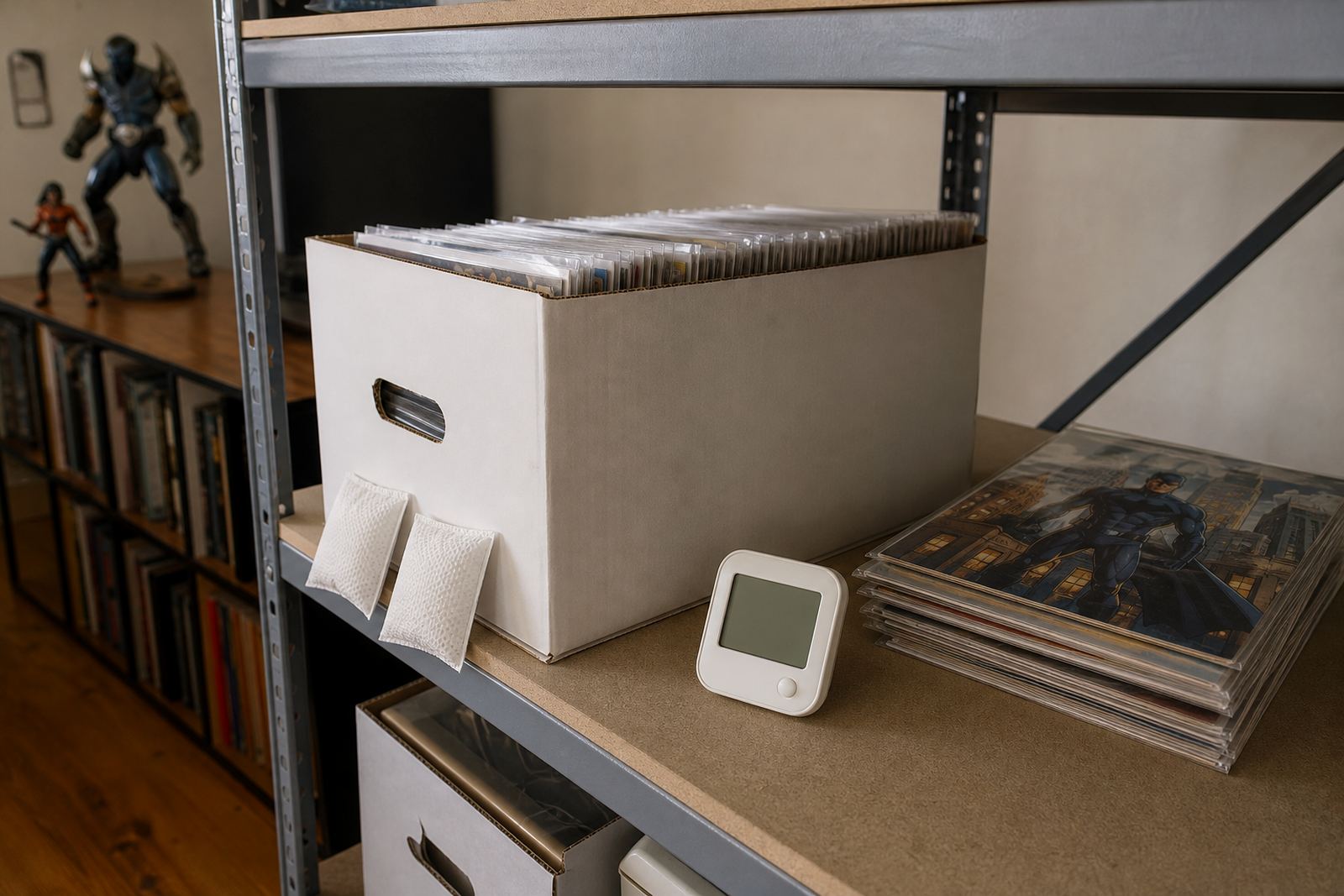
Choose closed containers or sturdy boxes that stay off the floor. Keep them away from bathrooms, kitchen steam and direct sun. If you have a shelf near a window, add a curtain or move the comics to the shaded side of the room. A small dehumidifier can help in very damp rooms, but even a simple airflow gap behind the storage unit is useful.
- Use sealed storage tubs only if they are clean and fully dry
- Leave a small gap between boxes and the wall
- Avoid placing comics under windows or next to geyser cupboards
- Keep torch batteries and charging cables away from paper stock
Pick the right sleeves, boards and box size
Collectors often run out of room because they buy storage after the comics already need it. The better approach is to match the container to the collection. Standard sleeves and backing boards are useful for single issues, while larger magazines or special editions may need different support. If an item is snug but not tight, that is usually a better fit than forcing it into a sleeve that bends the corners.
Short boxes are a practical option for small rooms because they stack neatly and take up less floor space than loose piles. If you prefer shelves, use upright magazine files or divided storage so comics do not slump forward. For graded or high-value items, a separate protected section helps keep them away from everyday handling. The aim is simple, keep the comic flat, dry and easy to find.
- Use sleeves that match the comic size, not one-size-fits-all storage
- Replace bent or yellowed boards before they mark the issue
- Do not overfill boxes, as pressure leaves spine dents
- Label each box by character, title, or reading order
Make one corner do the work of a full storeroom
You do not need a separate room to keep a collection in good order. A corner of the bedroom, a section of a wardrobe, or the top shelf of a study cupboard can work well if it is planned properly. Think vertically. Use the height of the room before you spread the collection across the floor. A narrow shelf and a couple of containers can often hold far more than expected.
For shared homes, it helps to keep the collection tidy and visibly contained. That avoids damage from moving bags, cleaning gear or accidental spills. It also makes it easier to pack up quickly when visitors come over. If you are in a student room in Stellenbosch, for example, a single labelled box under the bed and a small upright shelf near the study area may be enough for a solid starter collection.
- Use under-bed space only if the room stays dry and dust free
- Keep heavy boxes on the bottom shelf for safety
- Leave a clear walkway so nothing gets kicked or knocked over
- Store comics away from food, drinks and loose stationery
Protect comics you want to keep long term
Some comics are for reading, others are for keeping. If you know a comic matters to your collection, treat it differently from the start. Wash your hands before handling it, avoid folding corners and do not stack drinks or devices on top of it. Simple care in the first few weeks after purchase saves a lot of trouble later.
Grading is not only for expensive pieces. Even a regular issue can benefit from a careful pre-check if you want to keep it in strong condition. Look for corner wear, spine ticks, surface marks and moisture damage before you store it. If you are unsure about storage for a specific item, our team can help with grading guidance, pre-submission checks, cleaning advice and safe shipping prep when you need to move comics between rooms or cities.
If you travel between Cape Town and Johannesburg or send items to family in Durban, proper packing matters just as much as the shelf at home. A comic in good shape before postage is far less likely to arrive with bent edges or a crushed spine.
A practical setup for a small collector in Observatory
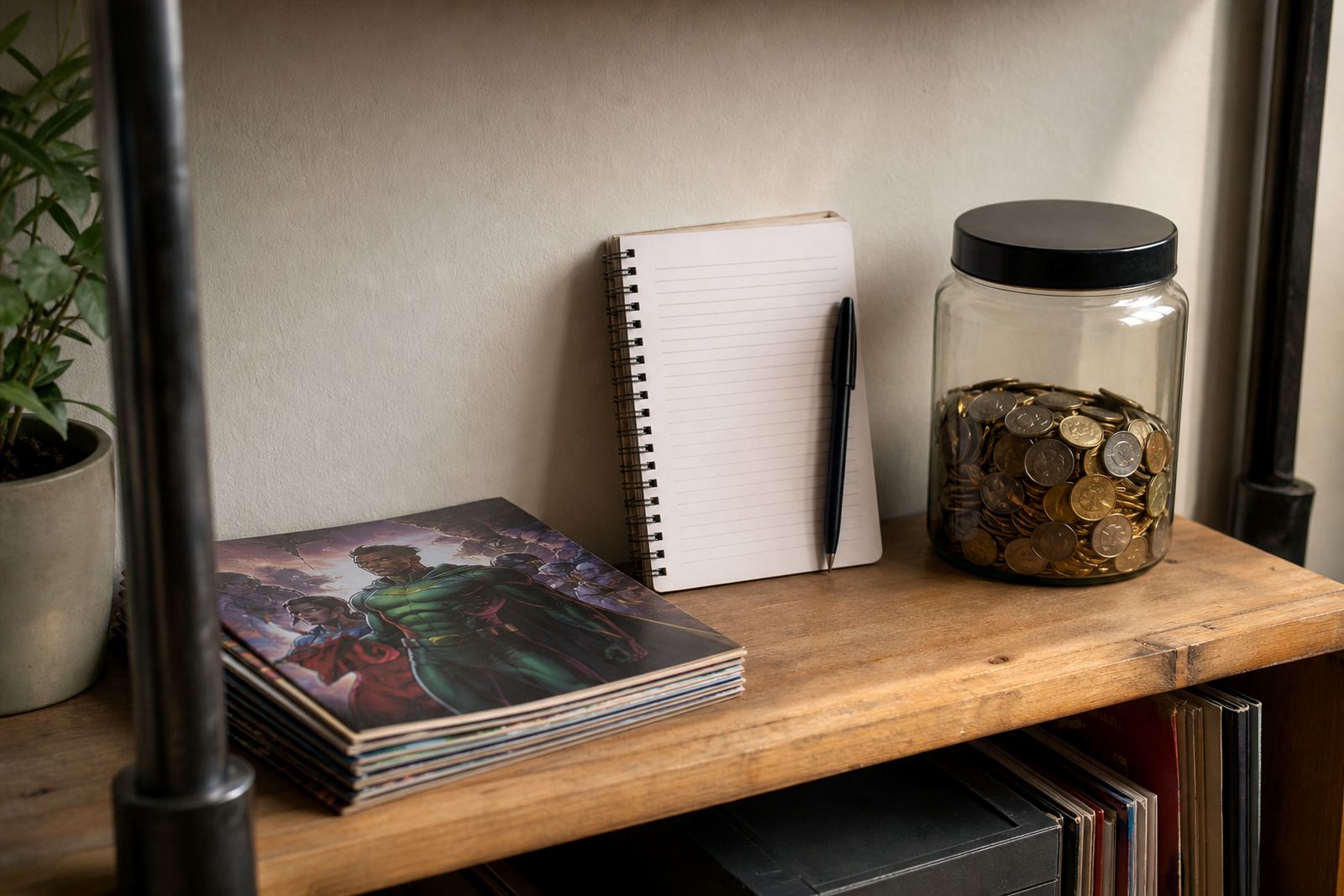
One of the easiest setups we see from collectors in Observatory is a simple three-zone system. Zone one is for reading, zone two is for storage, and zone three is for display. The reading comics stay in a small box near the bed or study table. The storage stock goes into a closed container in the cupboard. The display items sit on one shelf, rotated every few weeks so the room does not become overcrowded.
This keeps the collection manageable and makes cleaning easier too. Dust is less likely to settle on every issue if most of the stock is boxed. It also gives you room to add new comics without panic. When you know exactly where each piece lives, you spend less time searching and more time enjoying the stories.
If your collection is growing faster than your space, a storage plan can also help with wishlist sourcing, collection organisation and subscription curation. That way the comics you bring home match the room you actually live in, not the room you wish you had.
Name the title, issue or character you are hunting for, and our comic shop crew will help you track it down.
Contact form