
Start with one shared purpose for the collection
Household collections usually go off track when every person follows a different idea of what should be kept, read, traded or displayed. The easiest way to avoid that is to agree on the main purpose first. Some families want a reading collection for the lounge, while others want a small set of special issues for display and safe storage. A third option is a mix of both, which often works best in busy homes.
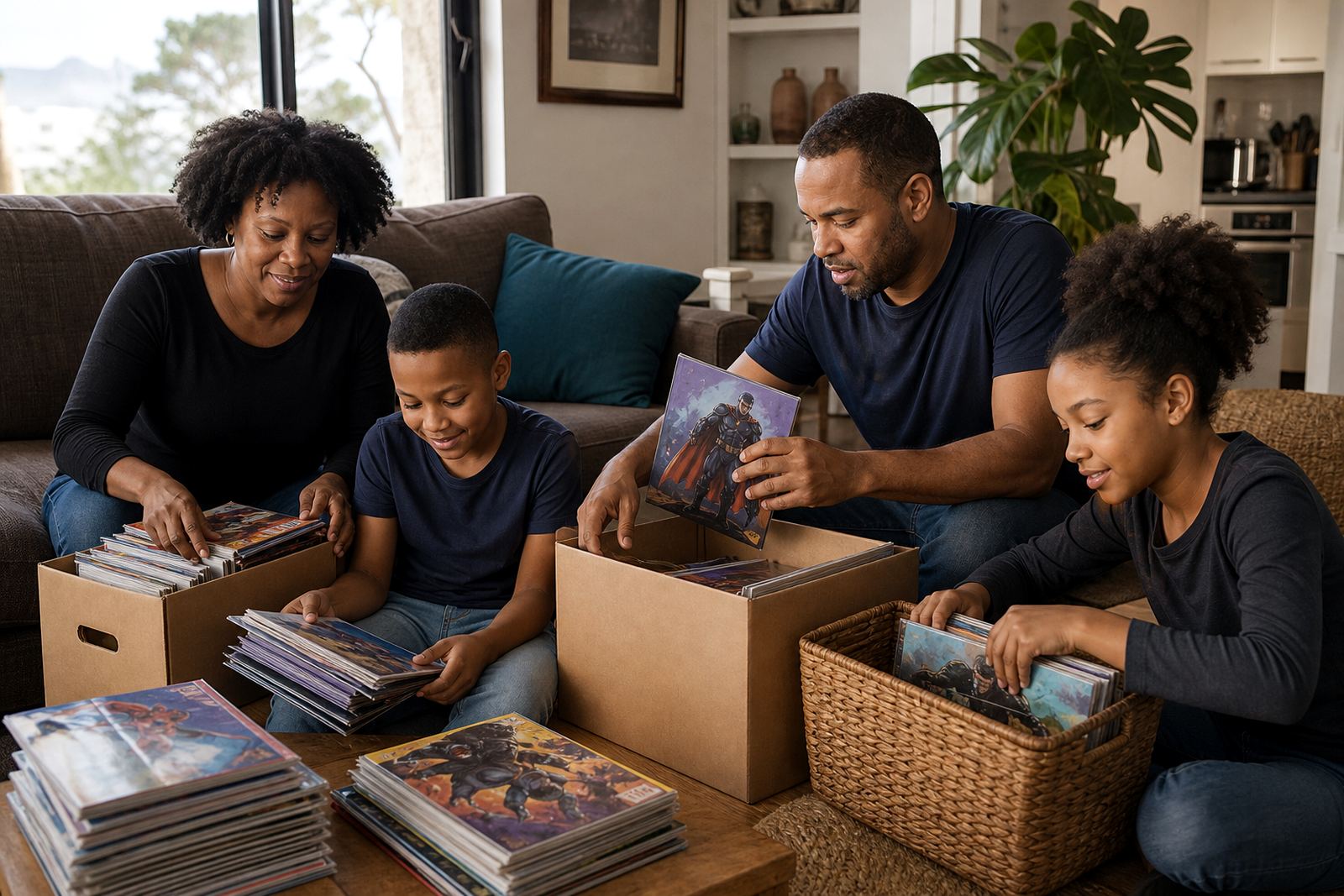
In a Cape Town household, for example, a parent may want local superhero comics that younger children can handle after school, while a teen might be more interested in first issue style covers and character art. If those goals are set early, everyone knows which comics are for regular reading and which ones should stay in sleeves, boxes or binders. It saves arguments later and keeps the collection tidy.
It also helps to decide who can add to the collection and what kind of items count. Some families only collect comics, while others include small figures, art prints, bookmarks or event items. There is no wrong answer, but there should be one clear rule so the collection does not become a cupboard of random bits and pieces.
A good family collection is one that everyone can enjoy and still find again later.
Use a simple sorting system that every age group can follow
The best systems are usually the simplest ones. Sort by reading level, hero, format or condition, then keep the same method every time. If a comic is moved, it should go back into the same place without needing a family meeting.
For most homes, a three part system works well: keep reading copies together, store better condition issues separately and place prized items in protected storage. You can also mark boxes or shelves with clear labels such as “shared reads”, “display only” and “needs checking”. That way no one accidentally bends a corner, and the collection stays usable for everyone.
- Use plastic comic sleeves for better condition issues.
- Store comics upright in sturdy boxes, not loose in piles.
- Keep one list of what is owned, what is on wishlist and what is for reading.
- Place younger children’s items on lower shelves for easy access.
If your home is near the coast, humidity matters too. In places like Observatory, Bellville and Stellenbosch, paper can react to damp air if storage is poor. A dry room, closed boxes and keeping comics off the floor makes a real difference. It is a small habit, but it prevents a lot of damage over time.
Choose reading copies and keep special issues separate
Family collections work better when not every comic has the same job. Reading copies can be handled often, shared at the breakfast table and packed for travel. Special issues, such as signed items, presentation copies or comics in very clean condition, need a quieter life. Keeping the two groups separate makes daily reading easier and protects items that may matter more later.
This is especially useful when children are involved. A child can enjoy a story more freely if they know which books are okay to read again and again. Adults can then keep the higher value or better condition items in safe storage. There is no need to hide everything away, just separate the collection so each piece gets the right treatment.
For households that buy comics online, it also helps to open packages carefully and check each item before it goes onto a shelf. Look for spine wear, corner bumps, moisture marks and loose inserts. A quick check after delivery means any issue can be noted straight away, rather than discovered weeks later when the damage may be harder to trace.
- Reading copies should be easy to reach and replace.
- Special issues should be sleeved, boarded and stored flat or upright in safe boxes.
- Keep certificates, notes and event slips with the item they belong to.
- Do not mix food, drinks or school bags with storage boxes.
Make grading talk part of the family routine
Grading can sound technical, but for families it is mostly about learning what condition means and why it matters. Children and adults can both understand that folds, tears, writing and damp marks lower condition. A good family habit is to do a quick pre-submission check before anything is sent in for grading or valuation guidance. That means looking at the comic under good light, checking the spine and confirming whether any cleaning or pressing advice is needed.
Families in Johannesburg or Durban may be buying from different sources and storing comics in different rooms, so a shared grading routine keeps everyone on the same page. One person can check corners, another can note surface marks and another can record the condition in a simple list. It sounds small, but it stops confusion when someone later asks, “Was this always like that?”
When you build grading awareness into the household, children also learn care and patience. They start to understand why a comic with sharp corners should not be used as a bookmark, and why a bag of books left in the boot of the car after a hot day can cause trouble. These lessons are practical, not fancy, and they stick.
Plan storage for South African homes, not just for shelves
Good storage is not only about having enough space. It is about choosing the right place in the home. A family collection should be stored somewhere stable, away from direct sunlight and away from bathroom humidity or kitchen steam.
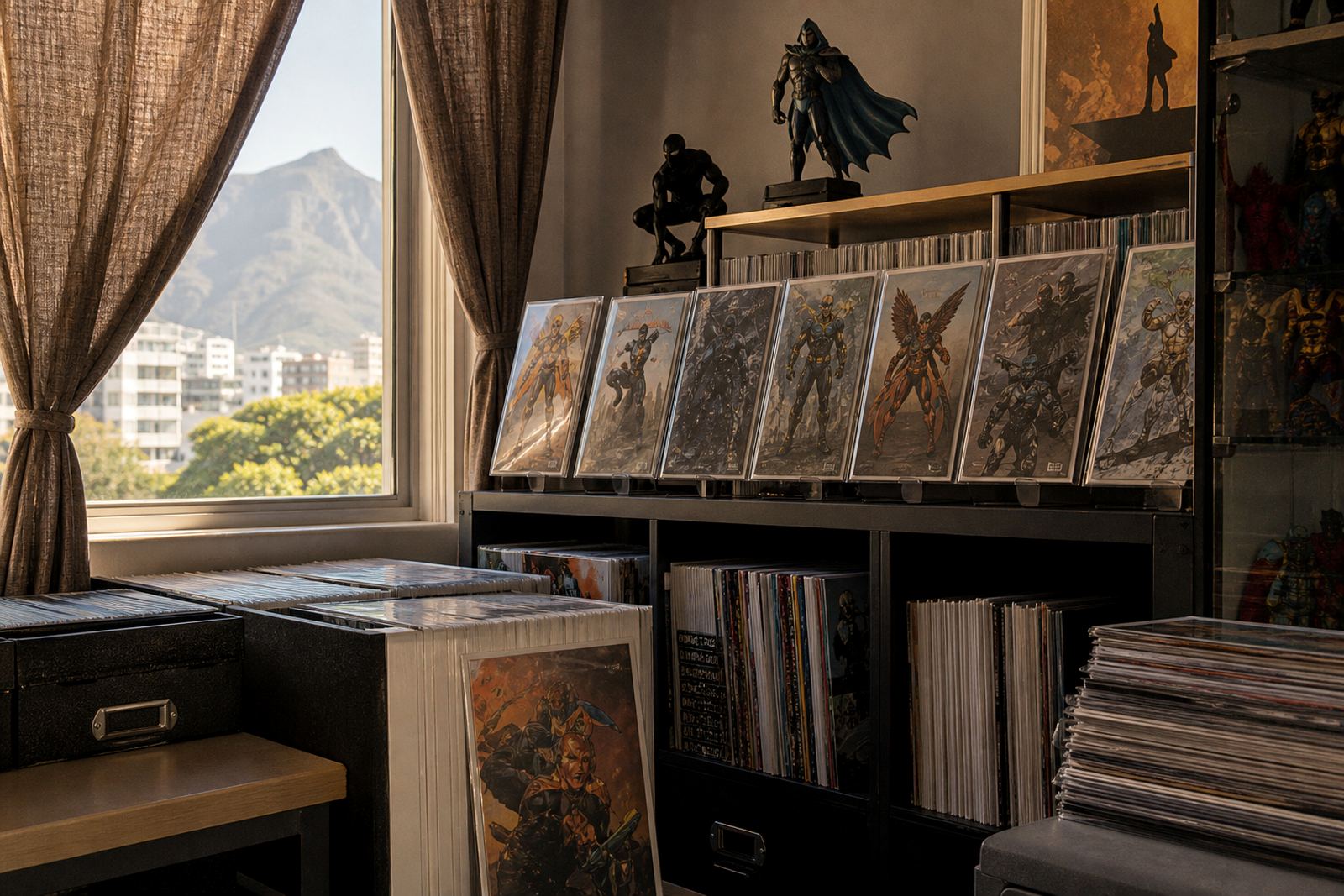
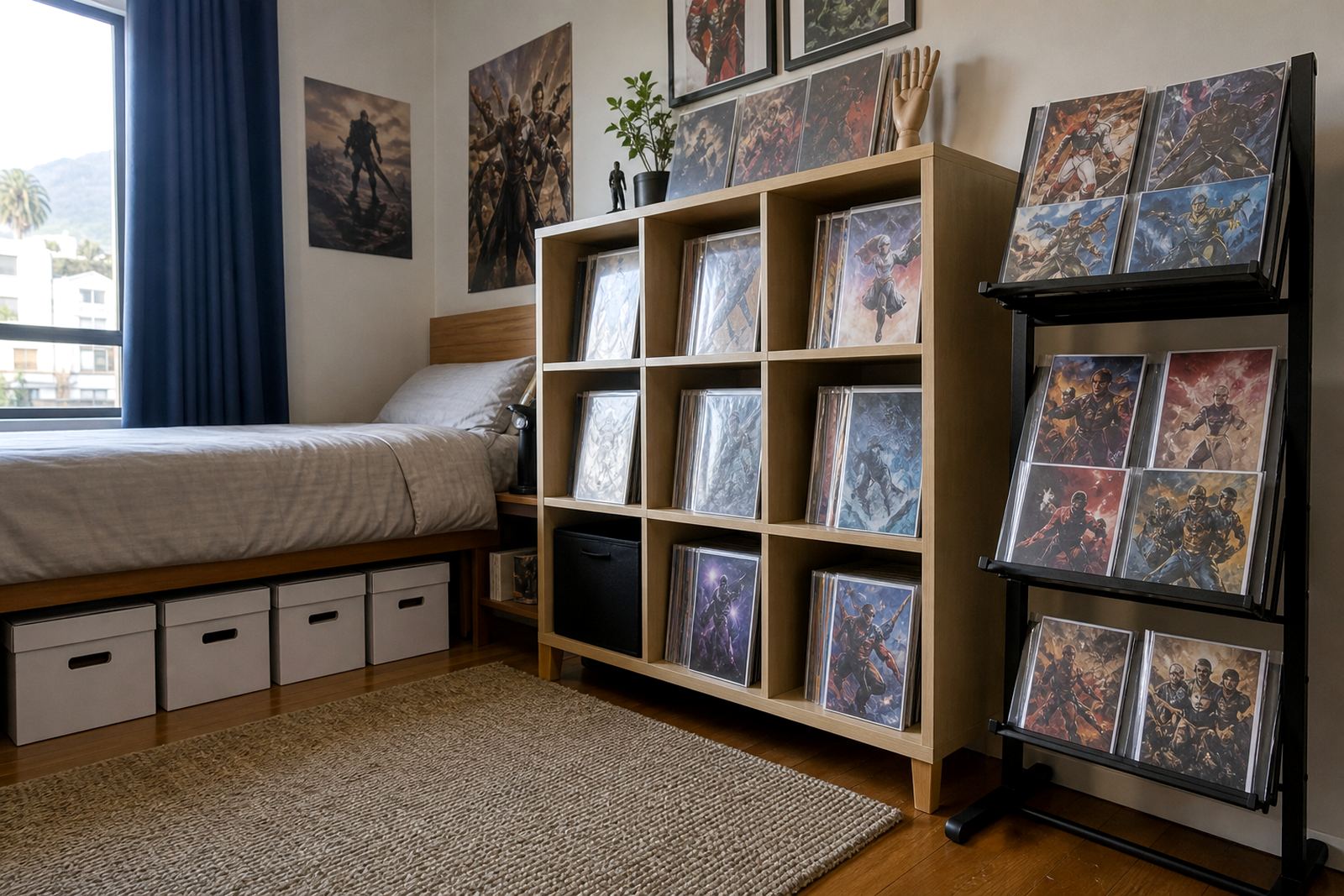
Closed shelving, plastic storage boxes and acid free sleeves are sensible starting points. If the collection is growing, separate the comics by category so no one has to dig through a full box to find one issue. In a smaller flat in Observatory, that might mean one box for shared reads, one for display items and one for protected collectables. In a larger home, the same idea can be used with shelves in a spare room or study.
Label everything clearly. If you ever have to move house, send items for safe shipping prep or make space for new school schedules, clear labels save time and reduce mistakes. It also makes it easier for other family members to help without guessing where things go.
Use the collection to bring the household together
A family comic collection should not feel like one person’s private project. It can become part of normal home life. Set aside a monthly reading evening, let each person choose a favourite issue, or create a simple wish list that includes birthdays, holidays and good behaviour rewards. That way the collection keeps growing with purpose, not just because something looked nice in the moment.
It also helps to assign small roles. One person can keep the list updated, another can handle new arrivals, and someone else can organise the display area. At a local level, this might also connect well with community events, swap days or collector meetups around Cape Town and nearby suburbs. Families often enjoy the social side just as much as the comics themselves.
When everyone has a role, the collection stays organised and the hobby becomes easier to maintain. There is less clutter, less duplicate buying and more room for the stories that actually matter. That is the real value of a family collection: it gives each person something to enjoy without turning the house upside down.
Name the title, issue or character you are hunting for, and our comic shop crew will help you track it down.
Contact form